
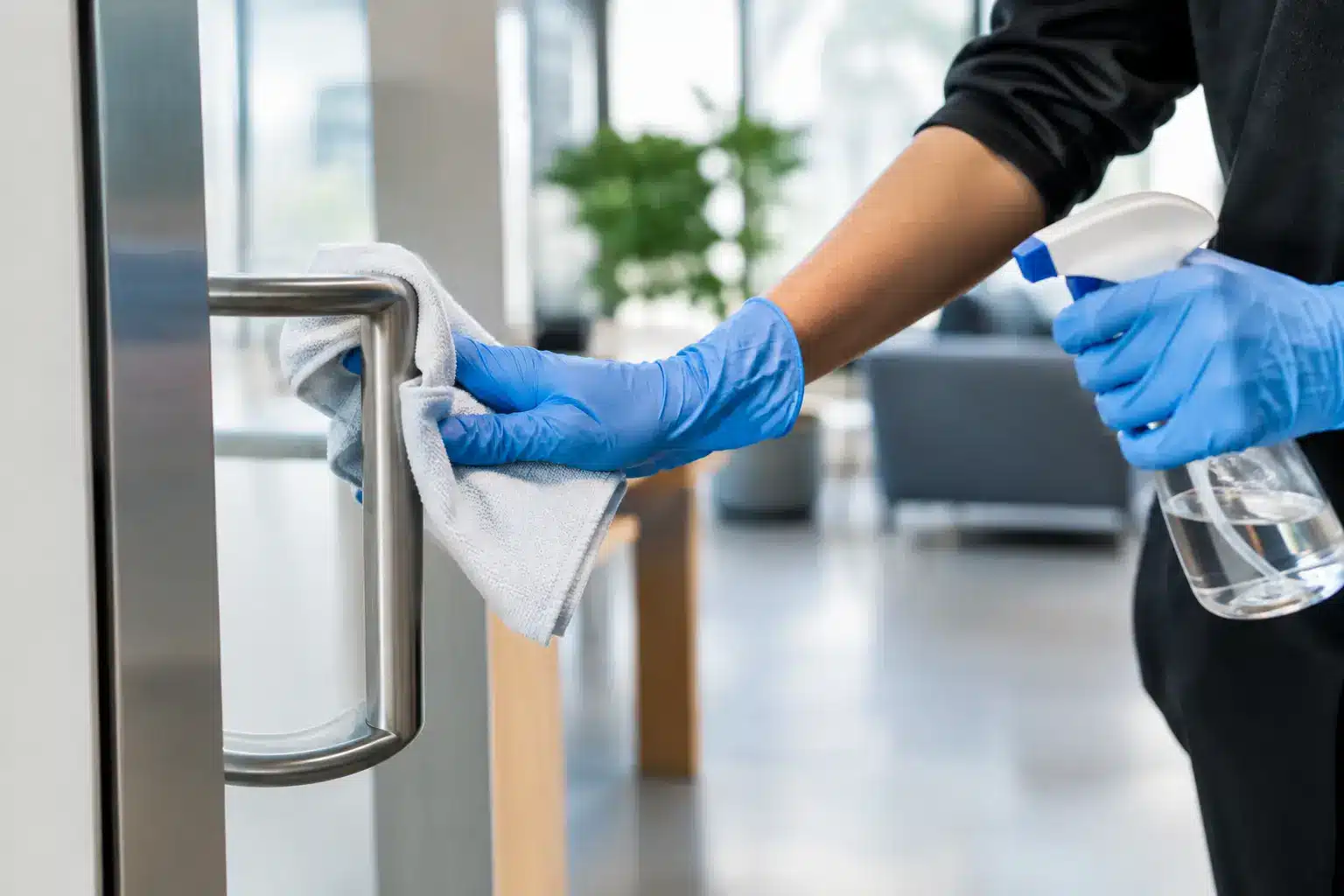

A door handle can be touched dozens of times between breakfast service and lunch. The same is true of card terminals, lift buttons, staff room kettles and washroom flush plates. Knowing how to sanitise shared touchpoints properly gives teams a practical way to reduce hygiene risks without creating unnecessary work or disrupting service.
For facilities managers, hospitality operators and cleaning contractors, the aim is not to treat every surface in the building the same way. It is to identify the points where hands repeatedly meet a surface, clean them at the right frequency and use a suitable sanitising product according to its directions. That approach supports a cleaner environment, protects surface finishes and helps staff work consistently during busy shifts.
How to sanitise shared touchpoints in a working environment
Sanitising is most effective when the surface is visibly clean first. Grease, food residue, dust and dried spills can stop a sanitiser from reaching the surface evenly. In commercial kitchens, for example, handles near cooking equipment may need a degreasing clean before sanitising. In offices and reception areas, a general cleaner may be sufficient before the sanitising stage.
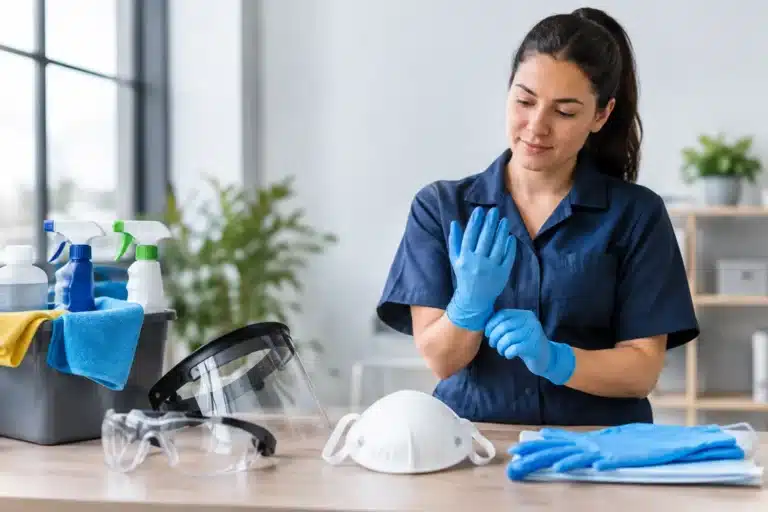
Start by putting on the appropriate PPE for the product and task. Read the label, particularly the dilution instructions, contact time and any surface restrictions. A product only performs as intended when it remains on the surface for the stated time. Wiping it away immediately may leave the area looking clean while reducing the hygiene benefit.
Apply the product to a clean cloth or directly to the surface where the label permits. Cover the whole touch area rather than only the centre of a handle or button. Allow the required contact time, then wipe or leave to air dry as directed. For food contact surfaces, follow the product instructions carefully regarding rinsing before the area returns to use.
Use clean cloths and change them regularly. A cloth that has already been used on a washroom door can transfer contamination to a meeting room table or a kitchen appliance control. Colour coded cleaning systems are particularly useful because they make the correct routine easier to follow under pressure.
Identify the surfaces people actually share
A reliable touchpoint routine begins with a walk through of the premises. Ask where staff, customers, guests and contractors place their hands during a normal day. The answer will vary by site, but common areas include entrance handles, push plates, handrails, light switches, shared desks, keyboards, telephones, touchscreens, card readers, taps, soap dispensers, flush controls, appliance handles and cupboard doors.
Do not overlook back of house spaces. Staff locker doors, clocking terminals, kettle handles, microwave buttons, delivery doors and cleaning cupboard handles often receive frequent use but may sit outside the main cleaning checklist. In a restaurant, the pass door, cold room handle and till screen can become priority touchpoints. In a care setting, bed rails, call points and chair arms may require a more frequent, carefully documented routine.
The right frequency depends on use, risk and the type of setting. A reception desk in a quiet office may need scheduled attention several times daily. A card machine used continuously in a busy café may need cleaning between periods of heavy use, alongside a clear hand hygiene routine for staff. During illness outbreaks or periods of increased concern, sites may choose to increase frequency in line with their own risk assessment and sector guidance.
Choose products that suit the surface and task
There is no benefit in using an aggressive product where a suitable surface safe sanitiser will do the job. Repeated use of an unsuitable chemical can dull plastics, damage screen coatings, corrode metals or affect painted finishes. Product selection should balance hygiene performance with the material being cleaned.
For general hard surfaces, use a professional grade sanitising product designed for the environment. In food areas, select products appropriate for food preparation and follow the stated dilution, contact time and rinsing requirements. For washrooms, the routine may combine cleaning and sanitising with limescale control, especially around taps and flush fittings. In offices, always check manufacturer guidance before treating electronic equipment. Screens, keyboards and payment devices may need a lightly dampened cloth rather than direct spraying.
Ready to use products can save time for small teams and quick response cleaning. Concentrates can offer better value where larger volumes are required, provided dilution is controlled accurately. Incorrect dilution creates two problems: a product may perform poorly if too weak, while an overly strong mix can waste stock and increase the chance of surface damage.
KleanPro Supplies supports routine cleaning programmes with professional grade products suited to demanding commercial and household environments, helping teams maintain dependable stock for recurring tasks.
Build the routine around the working day
The most effective schedules fit the way a building operates. If a cleaning task is impossible to complete during peak service, it will eventually be missed. Divide touchpoints into planned cleaning points and responsive cleaning points.
Planned cleaning points are completed at set times, such as before opening, after lunch service, during shift handover and at close. Responsive cleaning happens after a spill, a visibly soiled surface, a delivery, a period of heavy footfall or a known contamination incident. This combination prevents the team from relying solely on a checklist that may not reflect what has happened during the day.
Keep instructions short and specific. Instead of writing “clean reception”, state which surfaces are included: entrance handle, counter edge, visitor pen, card terminal, telephone, lift button and shared keyboard. Staff should know which product to use, where it is stored, whether PPE is needed and how long it must remain in contact with the surface.
A simple signed record can be useful in higher risk or customer facing environments. It provides accountability, highlights missed tasks and helps supervisors see whether the frequency is realistic. Records should support good practice, not replace it. A completed sheet is not evidence of a clean surface if products, cloths or trained staff were unavailable.
Prevent cross contamination while cleaning
Touchpoint cleaning can spread contamination when equipment is poorly controlled. Use separate cloths or disposable wipes for different zones, especially between washrooms, kitchens and general areas. Store clean cloths dry and protected from splash or dirt. Reusable cloths should be laundered through an appropriate process and replaced when worn.
Work from cleaner areas towards dirtier ones. In an office, this may mean starting with meeting rooms and desks before moving to reception and washrooms. In hospitality, clean dining areas before staff welfare spaces, then complete washrooms with dedicated equipment. This order reduces the chance of taking contamination from a higher risk zone back into a customer area.
Hand hygiene matters too. Staff should wash or sanitise their hands after removing gloves and before moving to another task. Gloves are useful for some cleaning activities, but they are not a substitute for hand hygiene. A gloved hand can transfer contamination just as easily if it touches several surfaces.
Train for consistency, not just compliance
A good procedure fails when staff have to guess. Demonstrate the correct method during induction and refresh it when products, layouts or risks change. Show teams the difference between spraying a surface and allowing adequate contact time. Explain why a fresh cloth matters and why a phone should not be handled while cleaning washroom touchpoints.
Supervisors should also check outcomes, not simply stock levels. Look for residue, streaking, missed edges, empty dispensers and worn cloths. Ask staff whether the cleaning frequency works around service demands. Their feedback often identifies practical issues before they become hygiene failures.
When touchpoint cleaning is organised around real use, correct products and clear ownership, it becomes a dependable part of the operation rather than a rushed extra task. The next time a team plans a shift, start with the surfaces every hand will meet.