

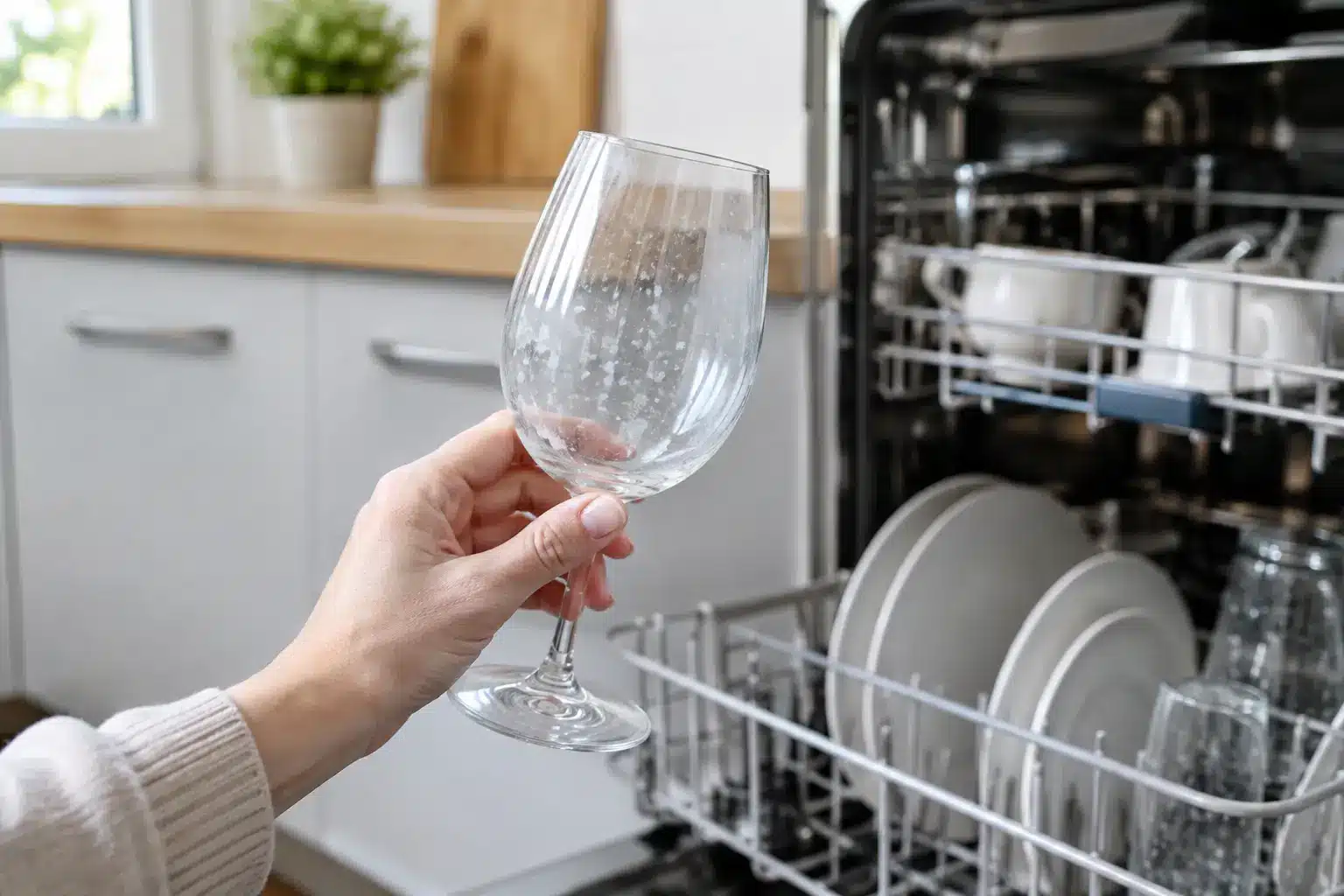

Cloudy wine glasses at breakfast service, speckled plates on a restaurant pass, or water marks on freshly washed mugs all create an avoidable impression of poor hygiene. The most common dishwasher spots causes are hard water minerals, incorrect detergent dosing, weak rinse performance and a machine that is no longer washing or draining as it should. The good news is that most spotting problems can be identified quickly and corrected without changing the whole washing process.
What dishwasher spots usually reveal
Dishwasher spots are rarely just a cosmetic issue. In commercial kitchens, hospitality settings and shared office spaces, they can slow down turnaround, lead staff to rewash clean items and increase detergent, water and energy use. On glassware, mineral deposits can also make a properly cleaned surface appear dull or greasy.
A spot is normally left behind when water dries before it can sheet cleanly from the surface. Anything dissolved in that water, particularly calcium and magnesium from hard water, remains on the item. Food residues, detergent residues and limescale can produce a similar result, but each leaves a slightly different clue.
White dots or a chalky haze usually point to minerals. A cloudy film that does not improve after rewashing may be etching, which is permanent surface damage rather than removable residue. Sticky streaks or a rainbow effect are more likely linked to excess detergent, poor rinsing or grease within the machine.
Dishwasher spots causes in hard water areas
Hard water is one of the leading dishwasher spots causes across the UK. Water contains naturally occurring minerals, and their concentration varies significantly by region. When hard water is heated in a dishwasher, minerals can settle on glasses, crockery, internal surfaces and heating components.
A dishwasher with an integrated water softener needs dishwasher salt to exchange those minerals before the wash water reaches the load. If the salt reservoir is empty, the softener setting is too low, or the system is not regenerating correctly, spotting can return even when detergent and rinse aid are used correctly.
For a busy commercial dishwasher, it is worth checking the local water hardness against the machine setting rather than relying on a default installation setting. A change of premises, a new machine or altered water supply arrangements can all affect performance. Facilities teams should also check salt levels as part of a routine close down process, especially where the machine runs several cycles each day.
Limescale inside the wash tank, spray arms or heating areas is another warning sign. Regular descaling helps protect wash performance, keeps water flowing freely and reduces the risk of energy being wasted while the machine works harder to heat scaled components. Use a descaler suitable for the machine and follow the manufacturer’s instructions, particularly where equipment is covered by warranty.
Detergent and rinse aid must work together
Detergent removes food soil, grease and stains. Rinse aid helps water run off the surface at the end of the cycle. Both are needed for clean, dry, presentable crockery and glassware, but more product is not always better.
Too little detergent can leave food residues and grease behind. Too much may leave a film, particularly if the machine is lightly loaded, the water is soft or the wash temperature is too low. Powder and tablet products should be stored somewhere dry, as moisture can cause them to clump and dissolve inconsistently.
Rinse aid is often the deciding factor in whether glassware leaves the dishwasher clear or covered in droplets. If the rinse aid reservoir is empty, the dosage is too low or the dispenser is blocked, water will cling to the surface and dry as visible marks. Increasing the setting gradually is better than making a large adjustment at once. If streaks develop, the dose may now be too high.
Commercial dosing equipment needs the same attention. Check that chemical containers are connected correctly, suction tubes are not blocked and dosing pumps are delivering the intended amount. A change in product concentration requires a corresponding change in dosing. Mixing products or replacing a professional formulation with an unsuitable domestic alternative can make results inconsistent and create unnecessary cost per wash.
Loading errors that leave water trapped
Even a well maintained dishwasher will spot items if water cannot drain away. Cups, bowls and glasses should be angled so their bases do not hold a pool of water. Avoid placing large trays or chopping boards where they block the spray from reaching smaller items.
Overloading is a common issue during peak service periods. When plates are pressed together, water cannot reach every surface and rinse water cannot escape. Items may look clean at first glance but still have residue around rims, handles or bases. Giving each item enough space improves results and reduces the need for a second cycle.
Glasses need particular care. They should be secured in suitable racks, not stacked or allowed to touch, as contact can chip rims and prevent full water coverage. For high volume hospitality operations, dedicated glass racks also make handling safer and speed up unloading.
Machine faults and maintenance checks
If spots appear suddenly after a period of reliable performance, inspect the machine before changing every chemical setting. Spray arms can become blocked by food debris, labels or limescale. Filters can fill quickly in kitchens handling starchy food, coffee grounds or heavy grease. Both reduce water circulation and leave soil and rinse water on the load.
Clean filters daily or as specified by the equipment manufacturer. Remove and rinse spray arms where this is safe to do, checking that each jet is open and able to rotate freely. Wipe door seals and the lower edges of the door, where residue can build up and return to the wash water.
Drainage matters too. Standing dirty water, slow emptying or unpleasant odours can indicate a blocked filter, drain hose issue or drain obstruction. Do not continue running cycles in a machine that is not draining correctly. Apart from poor results, it can create a hygiene concern and place strain on the appliance.
Wash temperature should reach the level required by the dishwasher manufacturer and your operating procedures. Water that is not hot enough may struggle to remove grease and activate the detergent effectively. If the temperature is inconsistent, report it for inspection rather than compensating by adding extra detergent.
Is it spotting or permanent glass damage?
Before treating every cloudy glass as a limescale problem, test one item. Soak or wipe it with a suitable acidic descaling solution, following the product directions and wearing appropriate protective equipment. If the cloudiness lifts, it was mineral residue. If it remains unchanged and the surface looks dull, scratched or iridescent, the glass may be etched.
Etching often develops through repeated exposure to overly strong detergent, very soft water, excessive heat or long wash cycles. Once glass is etched, it cannot be restored to a clear finish. Review chemical concentration and machine settings before replacing stock, otherwise new glassware may develop the same problem.
A practical routine for consistent results
Reliable dishwashing is best managed as a simple daily system rather than a response to visible marks. At the start of the shift, confirm there is detergent, rinse aid and dishwasher salt where required. During service, avoid overloading and scrape heavy food debris before items enter the machine. At close down, clean filters, inspect spray arms and leave the interior clean according to the machine guidance.
For sites with recurring spotting, keep a short record of water softness settings, chemical changes, machine temperatures and maintenance dates. This gives managers a clear starting point when results change and helps prevent staff from making repeated, untested adjustments.
Professional grade dishwasher chemicals and maintenance products can support consistent results when they are matched to the machine, water conditions and workload. KleanPro Supplies supports practical cleaning routines with dependable stock for commercial teams and quality conscious households alike.
Clear glassware and mark free crockery do more than improve presentation. They show that the cleaning process is under control, allowing staff to focus on service rather than rewashing what should have been ready first time.