
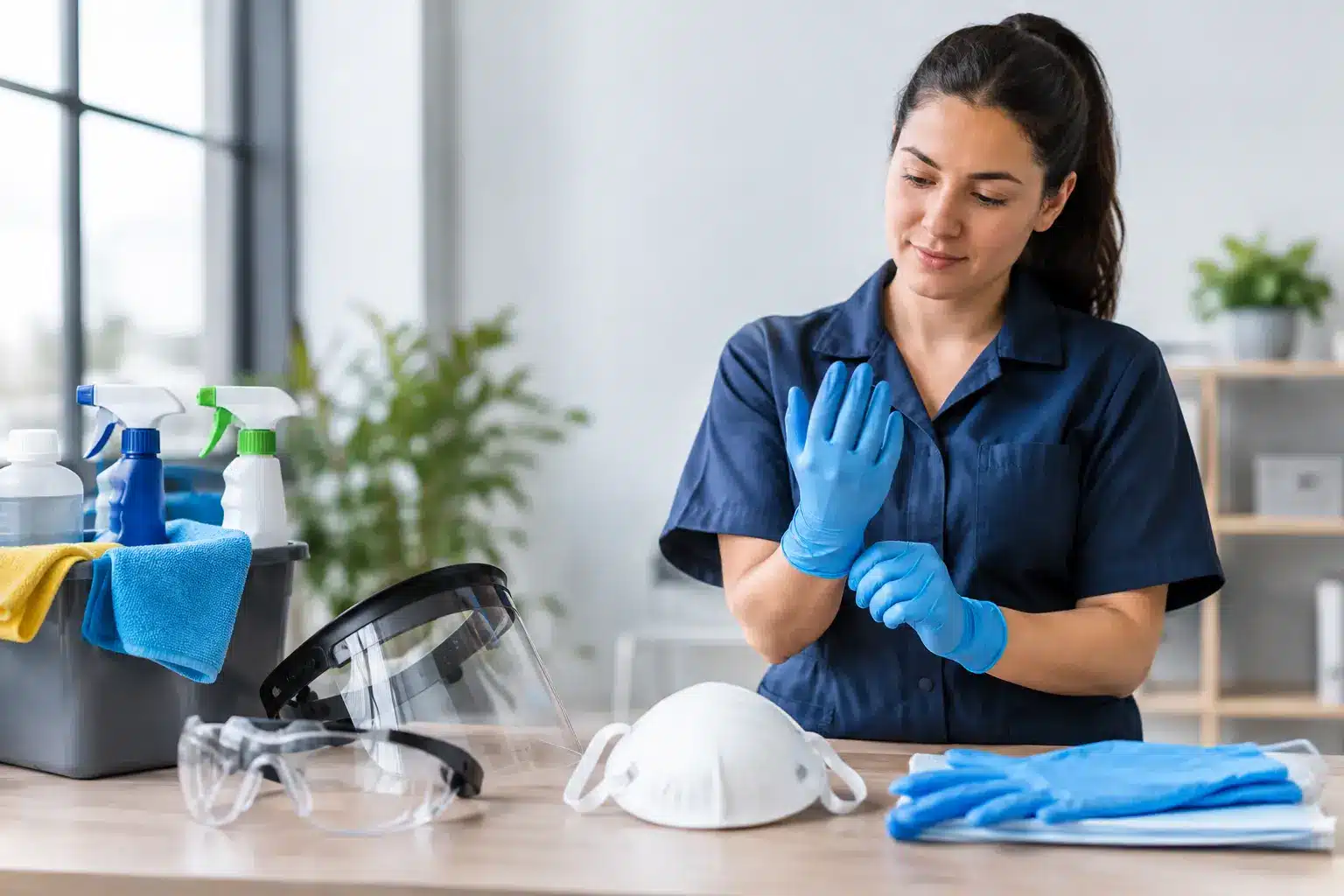

A cleaner decanting a concentrated degreaser, mopping a busy entrance and clearing a blocked washroom drain faces three very different risks. Effective PPE selection for cleaning staff starts with the job, the product and the setting, rather than issuing the same gloves and apron for every task. The right equipment helps protect people, supports consistent standards and avoids the disruption caused by skin irritation, slips, chemical splashes or avoidable absence.
PPE should sit within a wider safe system of work. Safer products, correct dilution, clear labelling, ventilation, training and suitable equipment can reduce exposure before personal protective equipment is needed. Where a risk remains, staff need PPE that is suitable, fits properly, is available when required and is understood by the person wearing it.
Start with the cleaning task and risk assessment
A practical assessment looks at what staff touch, splash, breathe in and walk across during a shift. Review the safety data sheet for every chemical in use, along with the product label and task instructions. This identifies hazards such as corrosive ingredients, irritating vapours, harmful dusts or slippery residues.
Consider the environment as well. A hotel housekeeper may need protection from detergents, sharps risks in waste and repeated wet work. A commercial kitchen cleaner may handle oven cleaner, degreasers and hot surfaces. A facilities team working in washrooms may encounter drain chemicals, biological contamination and wet floors. The same product can create a different level of risk depending on whether it is sprayed, diluted, used in a confined area or applied above shoulder height.
Consulting the team is worthwhile. Cleaners can point out where gloves tear, goggles steam up, footwear slips or an apron catches on equipment. PPE that is technically appropriate but uncomfortable or impractical is less likely to be worn correctly.
PPE selection for cleaning staff begins with gloves
Gloves are often the most frequently used item of cleaning PPE, but disposable gloves are not automatically suitable for all chemical tasks. Selection should be based on the chemical, its concentration, the expected contact time and the manufacturer’s compatibility guidance. A glove that protects against one detergent may not give adequate protection against a strong descaler, solvent or drain treatment.
For general cleaning and short contact tasks, nitrile disposable gloves are commonly chosen because they provide a useful barrier and suit many users. They should be changed between areas or tasks where cross-contamination is a concern, and immediately if torn, contaminated inside or heavily soiled. Single-use gloves are not a substitute for hand hygiene.
For prolonged use, concentrated chemicals or work involving rough surfaces, reusable chemical-resistant gloves may be a better choice. Look for relevant chemical protection performance, often identified through EN ISO 374, and sufficient cuff length to protect the wrist. Heavier gloves can reduce dexterity, so they may not be the best option for every task. Staff who need to handle small fittings or operate equipment may require a balance between protection and control.
Wet work can damage skin even where no aggressive chemical is involved. Where possible, rotate tasks, allow hands to dry fully and provide suitable hand care products. Persistent redness, cracking or itching should be reported early, before it develops into occupational dermatitis.
Protect eyes and face from splashes
Chemical splashes can happen during dilution, dispensing, scrubbing at height, emptying machines or unblocking drains. Safety spectacles offer frontal protection, but they may leave gaps at the sides. Enclosed goggles provide stronger splash protection and are often more appropriate when handling corrosive products or working close to liquid chemicals.
A face shield can add protection when there is a greater risk of a forceful splash, but it does not normally replace goggles. The eyes still need a close fitting barrier underneath. Select equipment marked to the relevant eye protection standard, commonly EN 166, and make sure it is clean, clear and stored where it will not become scratched or contaminated.
Fogging is a common reason for non-compliance. Anti-fog options, correct fit and regular cleaning can help, but ventilation and work method matter too. If a product is being sprayed in a small room, reconsider whether a lower spray method, ready-to-use format or improved airflow would reduce the hazard more effectively.
Respiratory protection needs careful control
Respiratory protective equipment is not a routine answer for everyday cleaning. It may be required where a task produces dust, mist or vapour that cannot be adequately controlled by product choice, ventilation and working method. Examples can include applying certain specialist chemicals in poorly ventilated areas or dealing with airborne dust during restoration work.
The filter must match the hazard, and disposable masks are not interchangeable with chemical vapour respirators. A particulate filter does not protect against solvent vapours. Tight-fitting masks also require face-fit testing for each wearer, and facial hair can prevent an effective seal. Staff need training on fitting, pre-use checks, storage and replacement intervals.
If respiratory protection appears necessary for a regular cleaning activity, revisit the process. A change to a less hazardous formulation or application method may offer a more reliable solution than asking staff to wear a mask throughout a demanding shift.
Footwear prevents injuries beyond the cleaning cupboard
Slips are one of the most common causes of injury in cleaning work. Floors may be wet from mopping, contaminated by grease in kitchens or affected by changing weather at entrances. Suitable work footwear should have a slip resistant sole, secure fit and enough support for long periods on foot.
The required level of protection depends on the location. Safety footwear with toe protection may be appropriate for cleaners moving stock, waste bags, machinery or heavy containers. In food preparation areas, footwear should also be easy to clean and suitable for the conditions. Footwear that is worn smooth, split or difficult to fasten has reached the point where replacement is safer than repair.
Good footwear supports safer movement, but it does not remove the need for warning signs, sensible cleaning routes and prompt management of spills. Plan work so that freshly cleaned areas are not immediately crossed by staff, guests or customers wherever this is possible.
Clothing, aprons and protection from contamination
Workwear provides a visible professional standard, but it can also form part of PPE selection. A waterproof apron protects uniform and skin during washroom cleaning, dishwashing, chemical dispensing and tasks involving contaminated waste. Choose an apron length and material that suits the work without creating a trip or snagging hazard.
Disposable aprons can help control contamination between rooms or care settings, provided they are removed correctly and disposed of after use. Reusable protective clothing can reduce waste where laundering arrangements are reliable. It should be inspected for damage and cleaned according to the manufacturer’s instructions. Contaminated workwear should not be taken home for ordinary washing where it could expose household members.
For high-visibility duties, such as cleaning car parks or service yards, garments need to be appropriate for vehicle movement and site rules. Thermal layers may be needed for cold stores or outdoor work, while allowing staff to move freely and remove layers as temperatures change.
Fit, training and stock control make PPE work
Employers must provide suitable PPE where the assessment identifies a need, but issue alone is not enough. Staff need a clear explanation of when each item is required, what it protects against, how to put it on and remove it, and when it must be replaced. This is especially important when gloves, aprons and eye protection are used around hazardous cleaning chemicals.
Keep different sizes available. Poorly fitting gloves can split or reduce grip, while oversized goggles can leave openings around the face. Record issue, inspection and replacement arrangements, particularly for reusable equipment. A simple check before shifts can identify cracked visors, damaged glove cuffs, worn soles or missing stock before a task begins.
Procurement should prioritise consistent specification. Switching between glove materials or footwear styles without reviewing compatibility and fit can create unnecessary risk. KleanPro Supplies can support organisations that need dependable access to cleaning PPE alongside the chemicals and consumables used each day, helping teams maintain a practical, repeatable standard.
A well-chosen item of PPE should make safe work easier, not harder. When staff can reach for the right gloves, footwear or eye protection at the point of use, clean confidently and replace worn items without delay, protection becomes part of a reliable cleaning operation rather than an afterthought.