
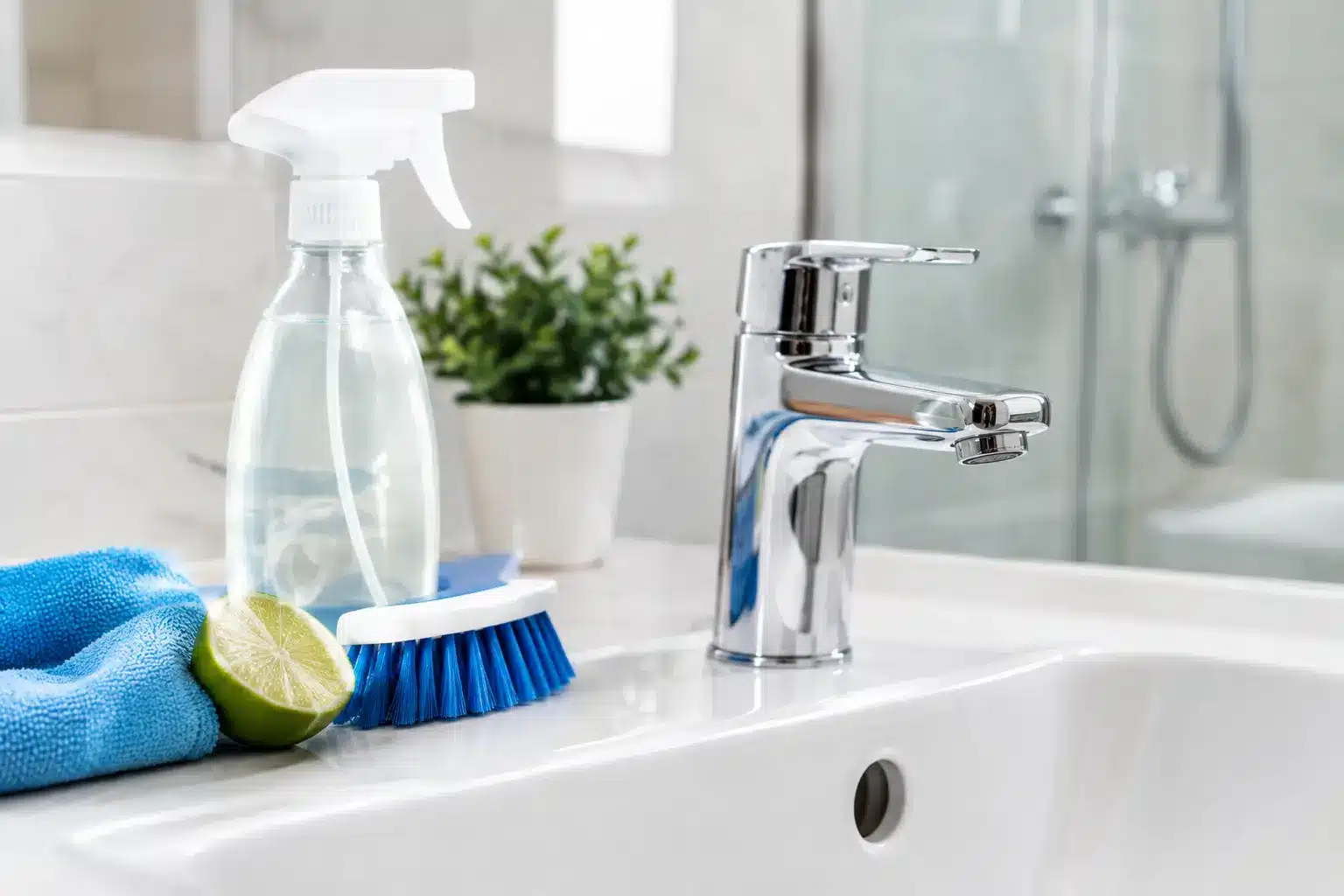

A cloudy shower screen, white crust around a tap base and a toilet bowl that never looks fully clean all point to the same issue, mineral deposits left behind by hard water. The best limescale remover for bathrooms is not simply the strongest bottle on the shelf. It is a purpose made descaler that removes calcium deposits efficiently while remaining suitable for the surface, the cleaning routine and the people using the washroom.
For a busy hotel, office, restaurant or managed property, the right choice protects the appearance of fittings and reduces repeat cleaning. At home, it makes the difference between a bathroom that looks clean after a quick wipe and one that stays bright between deeper cleans.
Choosing the best limescale remover for bathrooms
Limescale is mainly made up of calcium and magnesium minerals carried in the water supply. When droplets dry on chrome, glass, ceramic or grout, those minerals remain. Fresh deposits may look like faint water marks. Left untreated, they become a rough, chalky layer that traps soap residue and dulls otherwise clean surfaces.
An acidic bathroom cleaner is generally the most effective option because acid breaks down mineral deposits. Citric acid and lactic acid formulations are often well suited to routine bathroom descaling. They can remove everyday scale on taps, basins, shower screens and ceramic sanitaryware without relying on an unnecessarily harsh product. Stronger acidic formulations may be appropriate for heavy build up, but only where the label confirms surface compatibility and staff can follow the required safety controls.
The best choice depends on the surface as much as the stain. Ceramic toilets and glazed basins can normally tolerate a suitable bathroom descaler well. Chrome taps, shower valves and plated fittings need more care, particularly if their coating is already worn. Natural stone, including marble, limestone, travertine and some terrazzo, must not be treated with standard acidic limescale removers. Acid can etch the finish, leaving permanent dull patches that look worse than the original deposit.
For commercial cleaning teams, a product that works consistently at the stated dilution and contact time is often better value than a more aggressive product used unpredictably. It supports clearer training, reduces surface damage and makes it easier to maintain washrooms to a reliable standard across every shift.
Match the formulation to the bathroom task
A spray cleaner is practical for vertical surfaces such as shower tiles, screens and tap bodies. It allows controlled coverage and limits wasted chemical, provided the trigger produces an even spray. A thicker gel is often more useful inside toilet bowls or on heavily scaled areas because it clings for longer instead of running away immediately.
For routine bathroom cleaning, look for a formulation that tackles both limescale and soap film. Bathrooms rarely suffer from minerals alone. Body oils, shampoo residue and soap scum can sit over the scale, especially on shower screens and around bath edges. A cleaner designed for bathroom deposits reduces the need to use one product for degreasing and another for descaling.
Where there is visible, hardened scale around taps or in a toilet bowl, allow sufficient contact time. Spraying and wiping straight away rarely gives the acid time to work. Apply the product as directed, leave it for the recommended period, then agitate gently with a non scratch pad, cloth or dedicated toilet brush before rinsing thoroughly. More force is not always the answer. Excessive scrubbing can mark acrylic baths, polished metal and protective coatings.
A strong acidic product has its place in severe cases, such as neglected shower areas or toilet bowls with established mineral rings. However, it should not become the everyday answer. Frequent use of an unsuitable strong descaler can affect metal finishes, grout, seals and surrounding surfaces. A planned routine using a surface appropriate cleaner is safer and usually more economical.
How to remove limescale without damaging fittings
Start by identifying the surface and checking the product instructions. This sounds basic, but it prevents costly mistakes in guest bathrooms, care settings and high specification homes. Do not assume that a cleaner safe for ceramic is also safe for stone, enamel, aluminium or plated brass.
Apply the remover to a cool surface. A hot shower screen or warmed tap can cause product to dry too quickly, reducing its effectiveness and making streaks more likely. Ventilate the room, wear suitable gloves and avoid breathing in spray mist. In commercial settings, follow the site risk assessment and ensure the product is stored and labelled correctly.
Never mix a limescale remover with bleach or another cleaning chemical. Combining acidic cleaners with chlorine based products can release harmful fumes. This is a basic washroom safety rule, yet it remains one of the most serious preventable chemical incidents in cleaning operations. Use one product, rinse thoroughly, and only then move to the next stage if another cleaner is needed.
For shower screens, work from the top down and rinse with clean water. Finish with a dry microfibre cloth or squeegee to remove the remaining water. On taps, apply the product to a cloth rather than spraying directly into joints or onto adjacent sensitive materials. This gives better control and helps protect handles, seals and nearby stone worktops.
Toilet bowls need a slightly different approach. Flush first to wet the bowl, apply gel beneath the rim and around the waterline, then leave it for the label stated contact time. Brush thoroughly, paying attention to the outlet and rim channels where deposits can affect appearance and water flow. If thick scale remains after one treatment, repeat the process rather than extending the contact time beyond the manufacturer guidance.
Prevent scale from becoming a daily complaint
The best descaling result is easier to maintain than to recover. In hard water areas, high touch fittings and shower screens should be wiped dry daily where possible. This small task stops minerals settling and reduces the chemical needed during scheduled cleaning.
A weekly descaling clean is usually suitable for standard domestic bathrooms and lower traffic washrooms. Hotels, leisure facilities, staff changing rooms and customer toilets may need more frequent attention, particularly on shower screens, taps and toilet bowls. The correct frequency depends on water hardness, usage levels, ventilation and how quickly surfaces dry.
Cleaning teams benefit from a simple system: use the same approved product on the right surfaces, follow the same contact time, and inspect the same problem areas. Tap aerators, shower heads, toilet rims and screen edges are common places for scale to return first. Recording recurring issues can also reveal an operational cause, such as a leaking tap, poor extraction or an inconsistent cleaning schedule.
Product control matters as much as product performance. Buying suitable bathroom descaler in volumes that match usage helps sites avoid running out and substituting unsuitable chemicals. KleanPro Supplies supports professional and domestic customers with dependable access to cleaning essentials, helping teams maintain a consistent approach rather than reacting to each new washroom problem.
When a limescale remover is not enough
Not every mark in a bathroom is limescale. Orange or pink staining may indicate bacterial growth or residue that needs a suitable disinfecting clean after scale has been removed. Black marks in silicone sealant may be mould, while a dull patch on marble may be acid damage rather than a deposit. Treating the wrong problem with more descaler can make the finish worse.
If a shower screen remains cloudy after a correctly used limescale remover, inspect it closely. Etching from previous chemical use can permanently alter glass, and worn coatings on fittings may not recover their shine. In these cases, replacement or specialist restoration may be more realistic than repeated cleaning.
A well chosen bathroom descaler, used at the right interval and with proper surface checks, keeps washrooms brighter, safer and easier to maintain. The aim is not to use the harshest chemical available. It is to remove the deposits efficiently, protect the finishes that matter and give every user confidence that the bathroom is genuinely clean.