
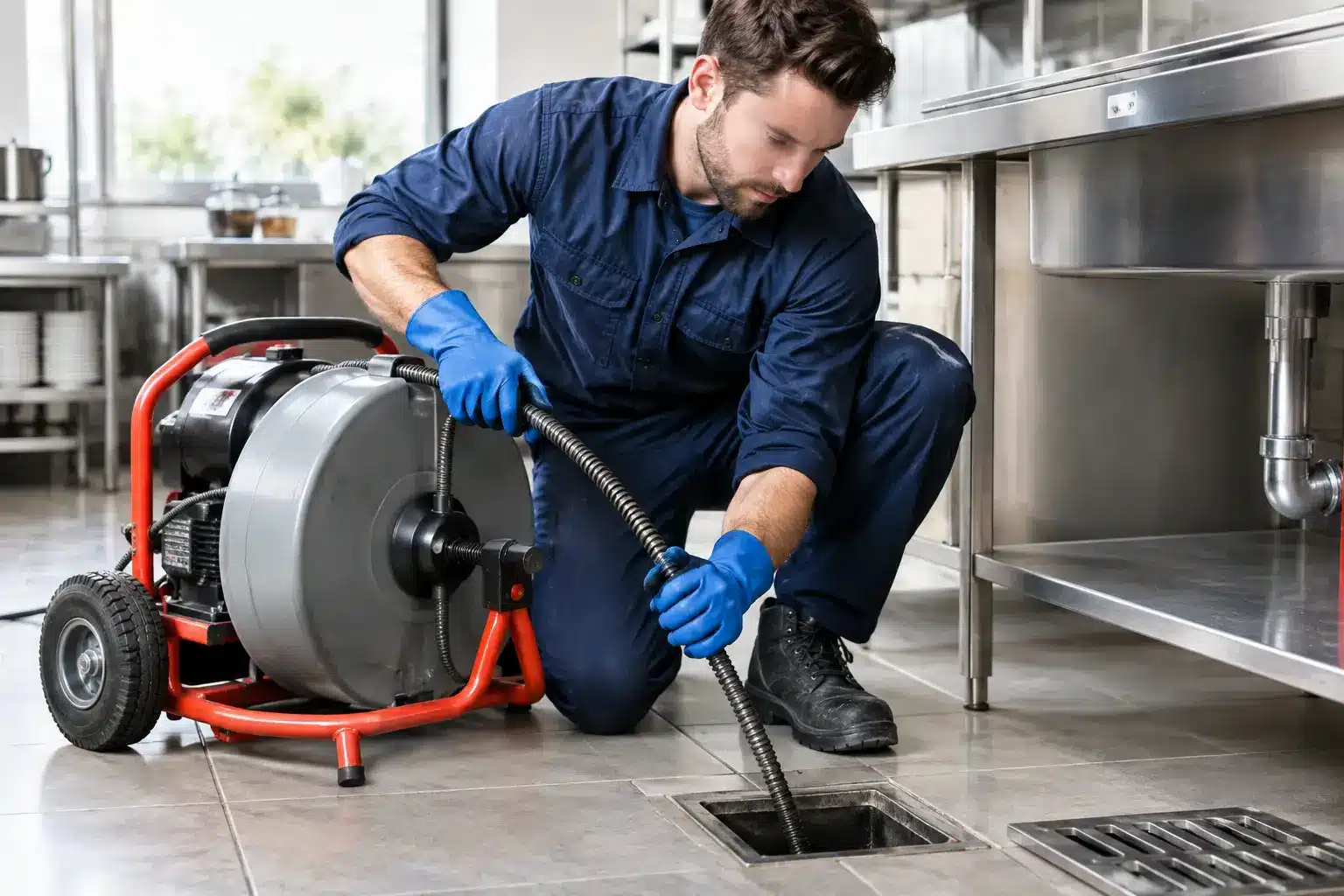

A slow drain during a busy service is rarely a minor inconvenience. In a commercial kitchen, washroom or shared workplace, standing water can delay cleaning, create odours and raise hygiene concerns quickly. Choosing the right commercial drain unblocker helps teams restore flow efficiently while protecting pipework, following site safety procedures and avoiding repeat callouts.
The strongest choice is not always the most aggressive chemical. The cause of the blockage, the type of drainage system and the setting all matter. A kitchen sink carrying fats needs a different response from a washroom basin affected by hair and soap residue.
What a commercial drain unblocker needs to do
Commercial drains are exposed to more frequent use and more concentrated waste than most domestic systems. Food debris, grease, detergent residue, hair, paper and scale can gradually narrow a pipe until water begins to back up. In hospitality and facilities settings, this can happen at precisely the point when staff have least time to deal with it.
A professional grade drain unblocker should break down the material causing the obstruction, rather than merely mask the symptom. It should also be suitable for the intended application when used as directed. This means checking whether the formulation is intended for sinks, basins, shower drains, floor drains or urinals, and whether it is compatible with the pipework on site.
The expected result should be a clear, free flowing drain that is easier to maintain. However, no chemical product can resolve every drainage problem. A foreign object, collapsed pipe, serious scale build up or obstruction further along the line may require a drainage contractor. Repeated blockages in the same outlet should be investigated rather than treated again and again.
Match the product to the source of the blockage
Before using a commercial drain unblocker, look at where the problem has developed and what normally enters that drain. This simple check prevents wasted product and helps staff choose a safer, more effective cleaning method.
In commercial kitchens, fats, oils and grease are a common cause. When warm oil cools inside pipework, it can solidify and trap food particles. A suitable heavy duty formulation can help break through this build up, but good kitchen practice remains essential. Wipe pans and utensils before washing, use sink strainers and make sure grease management procedures are followed.
Washroom and changing room drains commonly collect hair, soap, skin oils and limescale. A product designed to penetrate organic matter may be more appropriate here. Where hard water is contributing to slow drainage, regular descaling of the surrounding fittings can also help reduce deposits entering the system.
Office kitchens often suffer from a mixture of coffee grounds, milk residue and food waste. These blockages may appear less severe, but they can create unpleasant smells and an unhygienic sink area if left untreated. Staff guidance is often as valuable as the product itself. Food scraps should go into the correct waste stream, not down the plughole.
Check pipework and follow the label
The label, safety data sheet and site risk assessment should guide every use. Commercial drain unblockers may be highly alkaline, acidic or oxidising, depending on their formulation. Each type has different handling requirements and compatibility limits.
Never assume a product is suitable for every drain material. Older buildings may have pipework, seals or fittings that need particular care. If you are unsure what the system contains, consult the building maintenance records or seek advice before treatment. The cost of a quick fix is not worthwhile if it damages a seal, trap or drainage connection.
Dosage and contact time matter too. Using more than directed does not necessarily clear a blockage faster. It can increase risk, create stronger fumes and leave a hazardous volume of chemical sitting in the pipe. Use the stated quantity, allow the recommended time and rinse through only when the instructions say to do so.
Never mix drain products with one another or add bleach, descaler or any other cleaner to the drain at the same time. Chemical reactions can produce heat, splashing or harmful fumes. If another product has already been used, follow the product guidance and allow for a thorough flush before considering further treatment.
Safe use in busy working environments
Drain treatment should be planned around the working area, especially in food preparation spaces, public washrooms and healthcare settings. Restrict access while the product is being used and make sure employees know the drain is under treatment. This avoids accidental use of taps or sinks while chemicals are present.
Appropriate personal protective equipment should be selected from the safety data sheet and risk assessment. This may include protective gloves, eye protection and protective clothing. Good ventilation is particularly important in small washrooms, cleaner cupboards and enclosed kitchen areas.
Keep the original container closed when not in use and store it securely away from food, incompatible chemicals and unauthorised users. Decanting into an unlabelled bottle creates unnecessary risk and should be avoided. Clear product labelling, documented training and accessible safety information make routine maintenance much easier to manage across shifts.
If a product splashes onto skin or into eyes, follow the first aid instructions immediately. Where a drain is completely blocked and liquid is already standing in the basin, proceed with extra caution. Adding a powerful product to a full sink can increase the risk of overflow or splashback. In some cases, it is safer to isolate the area and call a qualified drainage professional.
Preventing recurring drainage problems
A commercial drain unblocker is valuable when an obstruction occurs, but prevention usually delivers better value over time. Regular checks can identify a slow drain before it becomes a closure risk, particularly in kitchens with heavy food production or washrooms used by visitors throughout the day.
Cleaning teams should remove visible debris from strainers and traps as part of their routine schedule. Kitchen managers can reinforce correct disposal of oil, food waste and coffee grounds. Facilities teams can monitor drainage patterns, including outlets that drain slowly after peak use or repeatedly produce odours.
A planned maintenance routine should be proportionate to the site. A small office kitchenette may need a simple weekly check, while a hotel kitchen or high use public washroom may need closer monitoring and more frequent preventive treatment. Keep a record of issues, treatments and contractor visits. This can reveal patterns that are not obvious when incidents are handled separately.
Drain odours deserve attention even when water is still flowing. They can indicate decomposing organic material, a dry trap, a partial obstruction or a wider drainage fault. Addressing the cause early supports a cleaner environment and reduces the chance of a more disruptive blockage later.
Choosing a supplier for dependable maintenance stock
For organisations managing several sites or high demand cleaning schedules, availability matters as much as product performance. Running out of essential maintenance products can force teams into unsuitable substitutions or delayed action. Buying in practical quantities and keeping agreed stock levels helps maintain consistency across locations.
Look for clear product information, straightforward safety documentation and support that reflects the realities of commercial cleaning. KleanPro Supplies supports professional buyers with cleaning essentials suited to demanding kitchen, washroom and facilities environments, including products for planned maintenance as well as immediate response.
The right commercial drain unblocker should give staff a controlled, effective way to deal with ordinary blockages without compromising safety or pipework. Used correctly, alongside sensible disposal habits and regular checks, it helps keep the less visible parts of a building working as reliably as the spaces customers and visitors see.