

A slow draining sink during service is more than an inconvenience. Water can back up around food preparation areas, staff lose access to essential wash stations, and a minor grease blockage can quickly become a hygiene and trading problem. Knowing how to unblock commercial kitchen drains safely helps protect daily operations while reducing the risk of damage to pipework.
Commercial kitchen drains deal with a demanding mix of fats, oils, food debris, detergent residue and hot water. Unlike a lightly used domestic sink, they may receive a continuous volume of waste through a long shift. The right response depends on whether the issue is local to one sink, connected to the grease trap, or further along the drainage line.
Act quickly, but protect the kitchen first
If water is rising in a sink or floor drain, stop using the affected area straight away. Do not continue rinsing plates, emptying pans or running the dishwasher into a drain that is already struggling. Overflow can spread contaminated water across the floor and create a slip risk as well as a food hygiene concern.
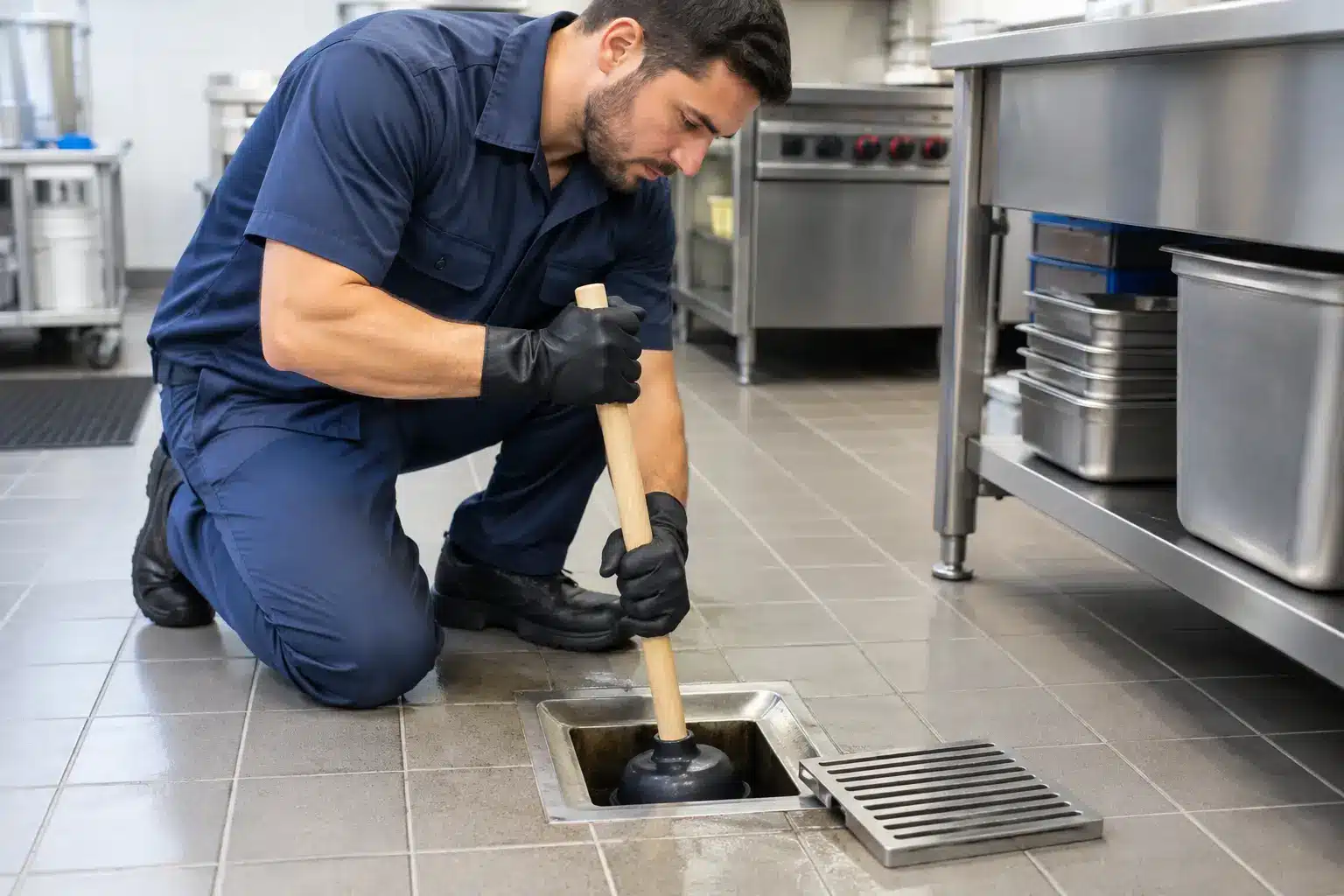
Remove standing water where practical, using suitable equipment that will not be used for food handling. Keep staff away from the area until it is dry and safe. If the blocked drain serves a food preparation sink, move preparation activity to another approved area or pause it until the issue is controlled.
Before attempting treatment, make sure staff have the appropriate PPE(Personal Protective Equipment) gloves and eye protection must be worn at all times. Drain residues may contain hot grease, sharp food waste and cleaning chemicals. Never mix drain products, bleach, descaler or degreaser in the pipework. Chemical reactions can release harmful fumes or create enough heat to damage fittings.
How to unblock commercial kitchen drains safely
Start by identifying where the restriction is likely to be. A single slow sink may point to debris in the trap or waste pipe beneath it. Several slow drains, unpleasant odours or water coming up through a floor gully suggest a wider issue, often involving the grease management system or main drainage run.
Clear the sink waste and trap
Allow hot equipment and water to cool before working underneath a sink. Remove the plug, strainer and any visible food matter first. In many kitchens, the immediate cause is a compacted mixture of rice, vegetable peelings, coffee grounds, fat and detergent residue caught near the outlet.
Place a container beneath the trap and carefully remove it if the fitting allows. Empty the contents into a suitable waste container, not another sink or drain. Clean the trap thoroughly, check the seals and refit it securely. Run a controlled amount of water afterwards to confirm that the flow has improved and that there are no leaks.
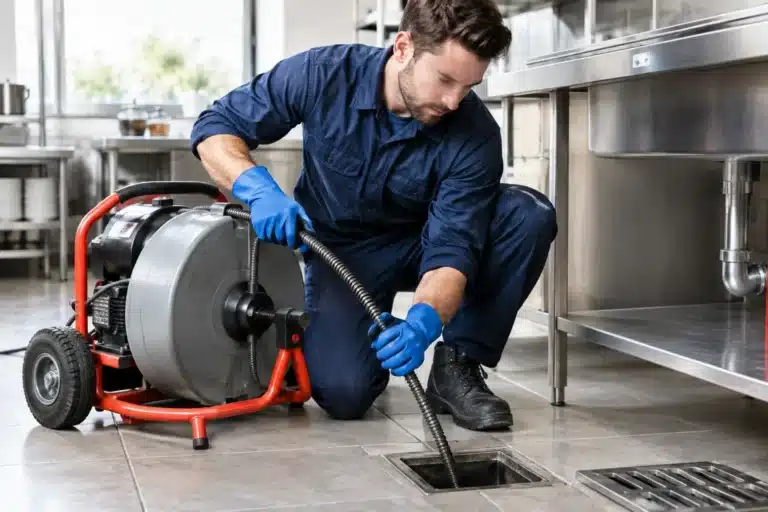
Do not force rigid tools into pipework if you are unsure of the pipe layout or material. Older waste pipes, plastic fittings and poorly supported joints can crack or separate under pressure. A hand operated drain auger can help with a shallow obstruction, but only where staff have been trained to use it safely.
Check the grease trap or grease management unit
Grease is a leading cause of commercial kitchen drainage failure. When fats, oils and grease cool, they adhere to pipe walls and capture food particles. Over time, the internal diameter of the pipe narrows until normal service water cannot pass freely.
A grease trap that has not been emptied at the required interval may allow grease to pass into downstream pipework. Check the service record and inspect the unit in line with its operating instructions. If grease or solids are above the recommended level, arrange emptying by a competent contractor rather than pushing the material further into the drain.
Good grease management is not simply a maintenance task. It supports odour control, reduces callouts and helps kitchens meet their environmental responsibilities. Staff should scrape plates, trays and pans into food waste bins before washing. Even small changes at the pot wash station can significantly reduce the load entering the drainage system.
Use a suitable professional drain treatment
Where the trap is clear but drainage remains slow, a professional grade drain treatment may help break down grease and organic build up. Choose a product designed for commercial drainage and follow the manufacturer instructions precisely, including dilution, contact time and any surface or pipe compatibility guidance.
Enzyme and biological maintenance products can be useful for regular grease control, particularly where a kitchen needs an ongoing routine rather than an emergency response. Stronger chemical drain unblockers may be appropriate for certain local blockages, but they require more care. They should never be used after another chemical product unless the pipe has been thoroughly flushed and the product instructions explicitly permit it.
Avoid treating drain chemicals as a substitute for removing solid waste or servicing a full grease trap. If the pipe is physically blocked by food debris, wipes, broken utensils or hardened deposits, chemicals may sit in the line without resolving the obstruction. This increases the hazard for the person who later opens the trap or calls a drainage engineer.
When a commercial kitchen drain needs a professional
There is a clear point at which further attempts can cost more than a prompt callout. Contact your local qualified drainage contractor if water backs up through multiple outlets, a floor drain overflows, the blockage returns after cleaning, or there is a strong sewer odour. These signs can indicate a blockage beyond the internal waste pipe, a damaged drain line or a problem with the grease management system.
A contractor can inspect the drain using specialist equipment, remove hardened fat deposits and identify defects such as collapsed pipes, root ingress or poor drainage falls. This is particularly valuable in older hospitality premises, shared buildings and sites with complex drainage routes.
Record the incident, the affected outlets, products used and the action taken. For facilities managers and multi site operators, this information makes it easier to spot repeat faults and schedule preventative work before a busy period. It also gives cleaning teams a clear procedure to follow when the same symptoms appear again.
Preventing kitchen drain blockages during daily service
The most effective drain programme combines staff habits, regular cleaning and planned maintenance. Closing checks should include emptying sink strainers and removing visible food waste. At the end of service, flush relevant drains with water at a temperature suitable for the system and use the approved maintenance product where required by your cleaning schedule.
Grease traps need a documented inspection and emptying routine based on kitchen volume, menu type and unit capacity. A site preparing large quantities of fried food or cooking with oils will need more frequent attention than a small café with limited hot food production. There is no single interval that suits every operation.
Keep the right equipment close to the point of use: sink strainers, waste containers, suitable gloves, eye protection and clearly labelled cleaning products. When supplies are consistent, staff are less likely to improvise with unsuitable chemicals or pour food waste into a sink during a busy shift. KleanPro Supplies supports this practical approach with professional cleaning and drain care products suited to demanding working environments.
Train new team members on what must not enter the drain. Cooking oil, fat, coffee grounds, flour heavy mixtures, rice, pasta, wipes and labels all create problems when they build up in pipework. A short reminder near the pot wash area is often more effective than dealing with the same avoidable blockage every fortnight.
A clear, well maintained drain should be almost invisible to the operation. Give it regular attention before service pressures expose the problem, and your kitchen team can focus on safe food, clean equipment and a smooth shift.