
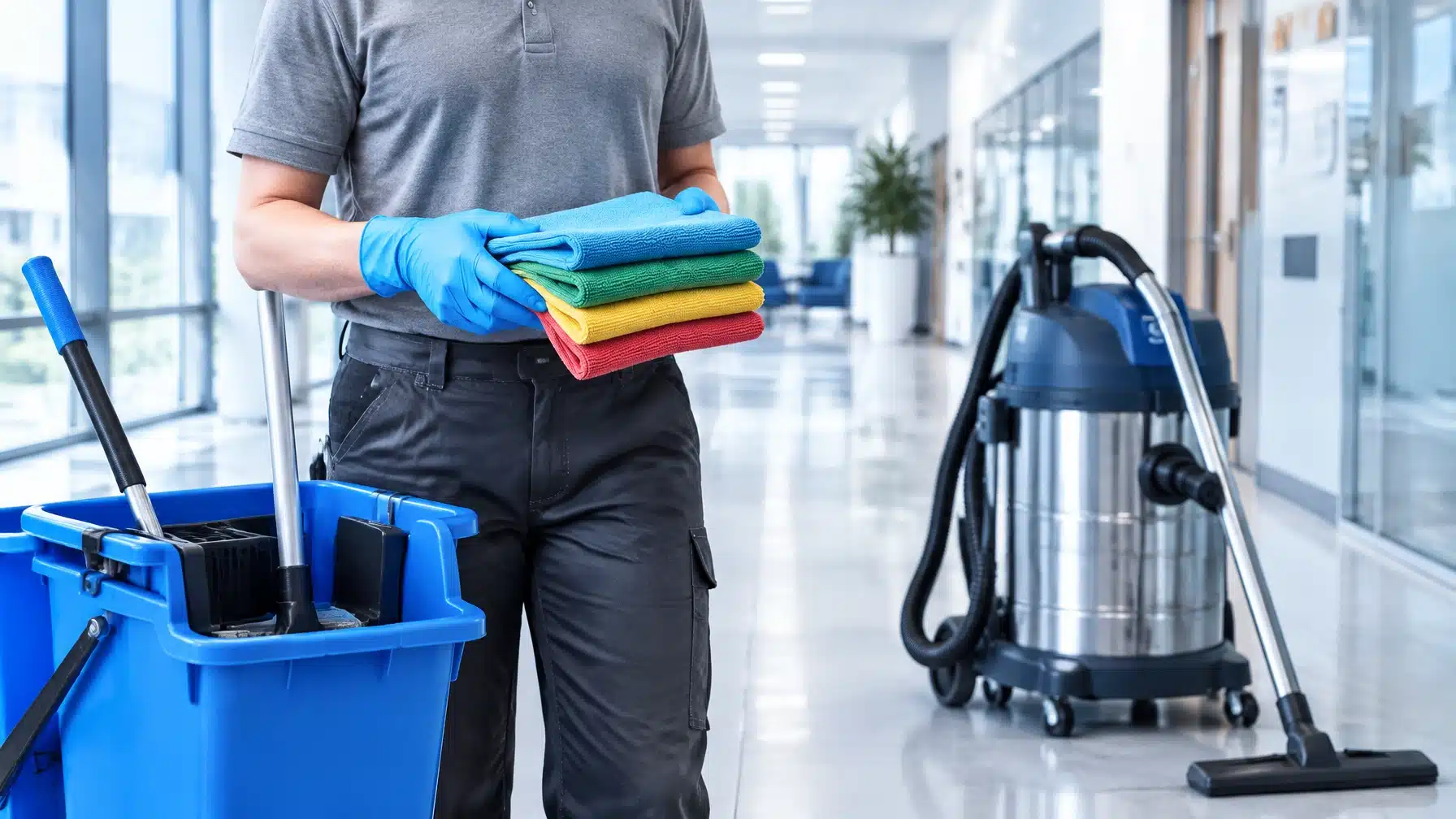

Cleaning tools are meant to collect dirt, dust and microbes. But once used, they can also carry them somewhere else. A cloth can move contamination from one surface to another. A mop can leave traces behind as it travels across a floor. A vacuum can release dust if it is unsuitable, damaged or emptied carelessly.
The risk is not limited to large commercial sites. It matters anywhere people share kitchens, washrooms, offices or living spaces. Good cleaning depends not only on the right method and product, but also on what happens to the tools before, during and after use.
This is a practical guide to how cloths, mops and vacuums can spread what you are trying to remove, and how a consistent system can keep that risk under control.
How a cleaning tool becomes a carrier
A cloth or mop absorbs or collects soil as it is used. If it then touches another surface without being changed or properly cleaned, some of that material may be transferred. The tool becomes a link between the first surface and the next.
The amount transferred depends on several factors, including the type of contamination, the material, how wet the tool is, the pressure used and how it is handled afterwards. It is not accurate to assume that every used cloth will spread harmful germs. However, research shows that cloths and other textiles can transfer microorganisms during cleaning. A 2025 systematic review of 21 studies in healthcare settings found that transfer varies enormously with the conditions, from less than 1 percent to 100 percent of microorganisms moved, and reported the highest transfer rates of all in experiments where a contaminated solid surface was wiped with a cleaning cloth, at 85 to 100 percent. Moisture and friction both increased transfer. See the 2025 systematic review of microorganism transfer to and from textiles.
For day to day cleaning, the important point is simple: a tool that has collected contamination should not be treated as clean merely because it looks clean, has been rinsed, or is being used with a cleaning solution. Separate tools by task, change them at appropriate points, and make laundering and drying part of the cleaning process.

Colour coding creates clear boundaries
Colour coding helps cleaning staff recognise which tools belong in which areas. The British Institute of Cleaning Science, or BICSc, recommends a widely used scheme:
- Red for toilets, urinals and washroom floors
- Yellow for washroom sinks, mirrors, tiles and surfaces
- Green for food and drink preparation areas
- Blue for general, lower risk areas such as offices and corridors
BICSc describes colour coding as a way to reduce the risk of cross contamination. It is not compulsory across the cleaning industry, although individual workplaces may have their own requirements. The full guidance is available from BICSc colour coding.
The scheme works only when the colours remain distinct in practice. A red cloth that is used in a kitchen because the blue ones have run out defeats the purpose. So does a mop head stored with clean materials after use, or a bucket used across unrelated areas without being emptied and cleaned.
Make the system easy to follow. Store tools in clearly separated places, explain the colour scheme during induction, and use pictures or numbers alongside colours where helpful. BICSc also notes that colour identification can be difficult for some people, so a simple additional label or symbol can make the system more inclusive.
The same logic extends beyond cloths. A glass cleaner used on a washroom mirror belongs in the yellow zone with the tools that serve it, while an all purpose cleaner and its applicators used on desks and shared spaces sit with the general blue equipment. Products that cross zones, such as an all purpose floor cleaner used in several areas, need their own separate applicators for each zone rather than one shared set.
A professional bathroom cleaner, an all purpose cleaner or a heavy duty degreaser may be suitable for a particular task when used according to its directions. None of them makes a contaminated cloth safe to carry into another area. Product choice and tool separation are different parts of the cleaning routine.
Cloths and sponges: appearance is not a safety check
Kitchen cloths and sponges are used repeatedly on wet, soiled surfaces. Food residue and moisture can remain within their fibres or pores, and a quick rinse may not remove everything. They can then transfer microorganisms to hands, worktops and other surfaces.
Studies have found high and varied bacterial levels in used dishwashing sponges. In a 2022 study, researchers examined used sponges and brushes collected from consumers in Norway and Portugal. Bacterial levels varied widely, and Portuguese sponges had a median total count of 10.3 log colony forming units per item. The researchers also found that brushes generally had lower bacterial levels than sponges, and that Salmonella declined more quickly on brushes left to dry than on sponges. Earlier work by Scott and Bloomfield found that bacteria survived on cloths after drying and were transferred to hands, surfaces and utensils on contact. The research does not mean that every sponge contains a harmful pathogen, but it does show why a sponge should not be assumed hygienic because it appears acceptable. Read the 2022 study of kitchen sponges and dishwashing brushes and the 1990 study on the survival and transfer of microbial contamination via cloths.
Visual checks still matter for wear and visible soil. They simply cannot confirm that a tool is free from microorganisms. A worn, stained or unpleasant smelling cloth should be removed from use, but a clean looking cloth may still need to be changed or laundered according to the schedule.
For households, avoid using the same sponge across food preparation surfaces, general kitchen cleaning and sanitary areas. For workplaces, set a clear change point for cloths, such as when moving between rooms, zones or tasks. Do not put a used cloth back into a shared bucket of clean solution. Place it in the designated laundry container or discard it if it is intended for single use.
Drying is also important. Damp tools stored in a pile or closed container can remain wet between uses. Where reusable tools are used, allow them to dry fully in a clean, ventilated place before storage. In a commercial kitchen, keep dishwashing tools separate from cleaning cloths used on other surfaces, and establish replacement and laundering routines that staff can follow consistently.
Microfibre and cotton: material matters, but handling matters more
Microfibre cloths and mop heads are often selected for professional cleaning because research has found that they can remove more bacteria than some cotton alternatives in particular settings. In one study, microfibre cloths reduced transfer of Clostridium difficile spores to environmental surfaces compared with cotton cloths. The study is available through PubMed.
This is useful evidence, but it is not a reason to treat microfibre as self cleaning. A used microfibre cloth can still carry contamination. If the same cloth is used across multiple surfaces, or if it is poorly laundered, the advantages of the material can be lost. A 2009 study also found that microfibre could spread bacteria when used incorrectly. A 2010 hospital study compared new and reprocessed microfibre cloths with other commonly used cloths and found that performance depended on the condition of the cloth, reinforcing that laundering and product lifespan matter. See the 2010 study on new and reprocessed microfibre cloths.
For mopping, a fresh head or pad for each room or defined zone is a straightforward way to reduce transfer. In larger settings, this may mean using several pads during one shift rather than dipping one mop repeatedly into a bucket and moving on. Follow the manufacturer’s laundering instructions and the site’s infection control requirements. Damaged fibres, poor attachment or residue from an unsuitable wash cycle can reduce cleaning performance.
A practical routine is to work from cleaner areas towards dirtier ones, change the pad before moving to a different risk zone, and keep used pads separate from clean stock. Where a room has a higher hygiene requirement, follow the relevant site procedure rather than relying on a general office cleaning routine.

Vacuums and dust: capture is only part of the job
A vacuum collects dust, but the machine must keep that dust contained. Damaged hoses, poor seals, blocked filters, the wrong equipment or careless bag changes can release some of the material back into the room. The issue becomes more serious where the dust is hazardous, for example during certain building or maintenance tasks.
The UK Health and Safety Executive warns that brushing or blowing dust can put it back into the air, where it can be breathed in. Its guidance recommends vacuuming dust where appropriate and says not to use compressed air to remove it. See HSE guidance on vacuuming dust.
This matters for everyday tasks as much as industrial ones. A heavy duty cleaner can lift baked on grease and a professional cleaning products range can be matched to every surface in the building, but the tools that collect what those products loosen, and the trade cleaning supplies team that manages them, decide whether the residue is removed or redistributed.
For hazardous dust, a standard domestic vacuum should not be assumed suitable, even if it has a high efficiency filter. HSE guidance on hazardous dust highlights the need for industrial vacuum equipment with an appropriate M class or H class rating, selected according to the material and the risk assessment. The rating applies to the machine and its containment performance, not simply to the presence of a filter described as HEPA.
M class and H class machines are intended for different levels of dust hazard. The correct choice depends on the substance, the task and applicable workplace controls. If the work involves asbestos, silica or another high risk material, do not treat a general purpose vacuum as an acceptable substitute. Follow the relevant HSE guidance and use equipment and procedures specified for that task. HSE’s guidance on using a Class H vacuum explains the need for suitable equipment and safe handling.
The same principle applies when emptying a machine. Follow the manufacturer’s instructions, avoid creating a cloud of dust, and use the disposal method required for the material collected. Check hoses, seals and filters as part of routine equipment checks. If airflow is reduced, the machine is damaged or dust is escaping, take it out of use until it has been checked.

Cleaning equipment can create other hazards
A cleaning routine can leave floors wet and create trip hazards. HSE notes that damp smooth floors and trailing leads from vacuums or buffing machines can cause slips and trips. Even a well wrung mop can leave a thin film of water on a smooth floor. Warning signs are important, but barriers or restricting access provide stronger protection where practical. Clean in sections, use nearby sockets to limit cable runs, and keep people out until the floor is safe to walk on. See HSE guidance on slips and trips in cleaning.
Electrical safety also deserves attention, particularly when using equipment around water. HSE guidance warns that faulty steam or water pressure cleaners can cause fatal electric shocks. Inspect cables and plugs before use, remove faulty equipment from service, keep water away from electrical parts and use RCD protection where appropriate. Follow the equipment instructions and site procedures. The relevant HSE electrical safety guidance gives further detail.
These are not separate from hygiene. A damaged tool may be unsafe to operate and less effective at containing what it collects. A wet floor may also expose the cleaner and other building users to avoidable risk.
A practical system for managing cleaning tools
A reliable tool management routine does not need to be complicated. It should be clear enough that staff can follow it during a busy shift.
Assign tools to areas and tasks. Use colour coding or another clear system to keep washroom, kitchen and general area tools separate.
Set change points. Decide when cloths and mop heads must be replaced, such as between rooms, risk zones or patient areas, as appropriate to the setting.
Keep used materials apart. Provide a designated laundry container or disposal point. Do not return used cloths or mop heads to clean stock.
Launder reusable tools correctly. Follow the manufacturer’s instructions and any site requirements. Store clean items separately and allow them to dry fully.
Set replacement triggers. Remove items that are worn, damaged, no longer cleanable or not working as intended. Do not rely on appearance alone to determine whether an item is hygienically clean.
Check vacuum condition and suitability. Inspect the machine, hose, seals and filters. For hazardous dust, confirm that the equipment class and disposal method match the risk assessment.
Protect people while cleaning. Route cables away from walkways, restrict access to wet floors, and make sure staff know how to report defective equipment.
Review the routine with the team. A brief induction and periodic reminders can help maintain the colour scheme, laundering process and equipment checks, particularly where staff or tasks change.
For homeowners and businesses alike, a sound cleaner supply plan includes the consumables, tools, storage and routines needed to use them safely. The right professional cleaning products can help with the task, but dependable results also depend on changing, cleaning and storing the equipment correctly. An all purpose cleaner applied with a cloth that has already crossed half the building will not deliver the result on the label. These are practical considerations whether you are reviewing janitorial supplies for a workplace, checking heavy duty cleaning products for an industrial site, or comparing options at a cleaning supplies shop.
Keep the tools from undoing the work
Cloths, mops and vacuums are essential to cleaning, but each can become a route for contamination or dust if used and stored without care. Colour coding helps establish boundaries. Fresh cloths and mop heads help prevent transfer between areas. Proper laundering, drying and storage keep reusable materials ready for their next use. Suitable, maintained vacuum equipment helps capture dust rather than releasing it.
A consistent routine makes these steps easier to manage. When tools are treated as part of the hygiene system, cleaning is more likely to remove contamination without carrying it on to the next surface.