
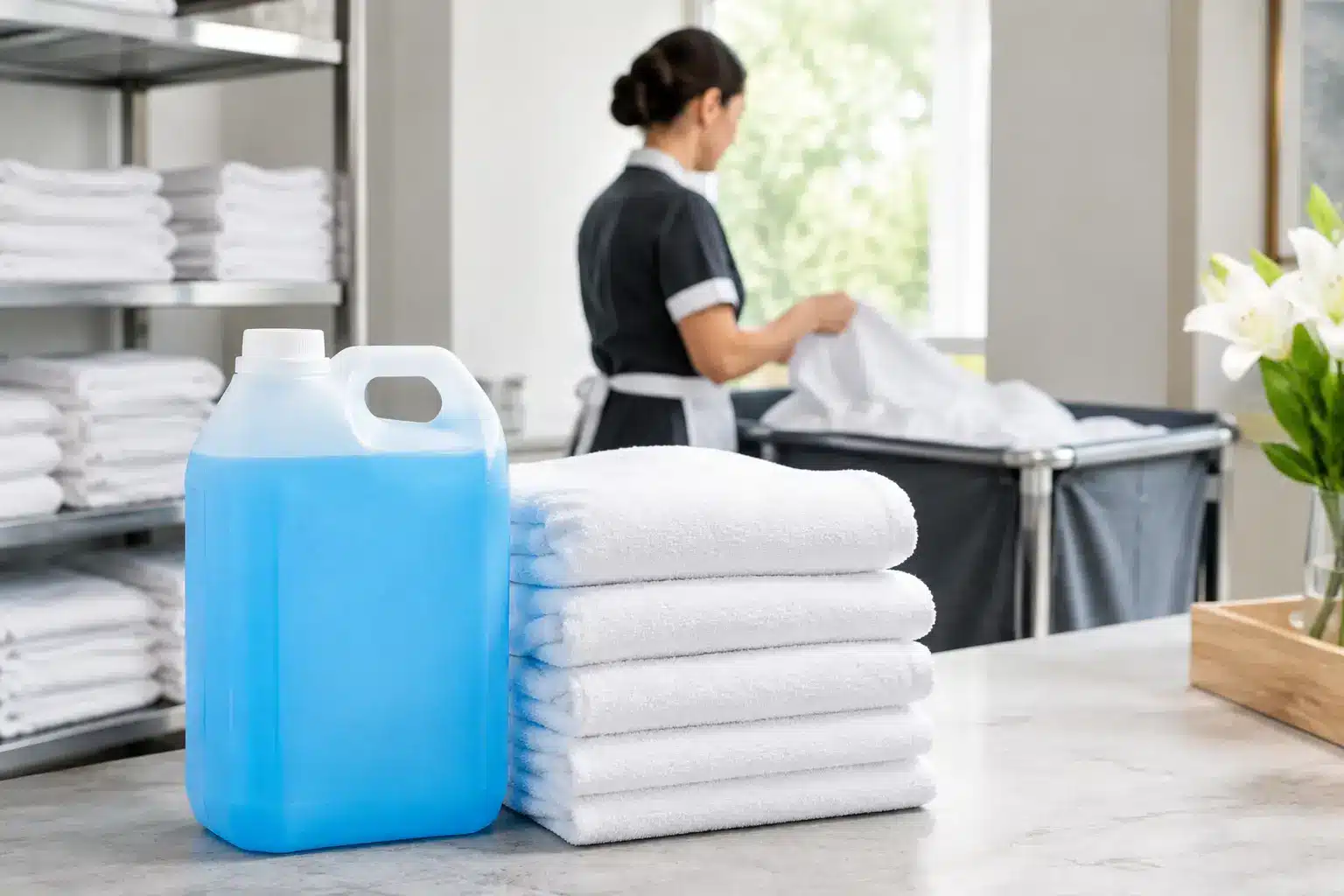

A towel with a faint make-up mark or a pillowcase that smells less than fresh can undo hours of careful housekeeping. Hospitality laundry detergent has a direct effect on guest comfort, linen life, staff productivity and the cost of running a busy laundry room. For hotels, guest houses, serviced accommodation and holiday lets, the right product needs to deliver consistent results across changing loads, not simply leave fabric smelling perfumed.
What Hospitality Laundry Detergent Must Deliver
A commercial laundry faces a different workload from a typical household machine. Sheets, towels, table linen, kitchen cloths and staff uniforms can all arrive with different soils, fabrics and turnaround requirements. The detergent must lift body oils, make-up, food marks and general soil while helping whites retain their appearance and coloured items stay presentable.
Consistency matters as much as cleaning power. A product that performs well on one heavily soiled towel load but leaves residue on the next can create extra rewash work, complaints from housekeeping and unnecessary product spend. Reliable formulations, clear dilution guidance and repeatable wash routines give teams a process they can follow even when shifts are busy or staff change.
The best choice also depends on the water supply, machine capacity and wash temperature used on site. Hard water can reduce cleaning efficiency and leave fabrics feeling rough if the detergent system is not suited to it. A supplier should be able to help operators match products to their laundry conditions rather than treating every operation as the same.
Start with the Laundry You Actually Process
Before choosing a detergent, look at what enters the linen room over an average week. Bedroom linen often carries body oils, cosmetics and occasional food spills. Towels need to feel soft, clean and fresh without a heavy fragrance that may irritate sensitive guests. Restaurant linen can need more focused treatment for grease, sauces, wine and tea or coffee stains.
Care homes, spas and leisure facilities may need a more carefully controlled process because of higher volumes of towels, uniforms and potentially contaminated textiles. In these settings, detergent selection should form part of a wider laundry procedure that considers segregation, wash temperature, machine loading and staff handling. Detergent alone cannot compensate for poor sorting or an overloaded drum.
Fabric type should guide the decision too. Cotton sheets may tolerate a more intensive programme than delicate blends, while microfibre cloths can lose performance if washed with unsuitable products or excessive conditioner. Check textile care labels and test a new product on a controlled load before applying it across all stock.
Soil Type Changes the Requirement
Not every mark needs the same response. Enzyme-based detergents can be effective against common organic stains such as food and body soil when used in line with the stated wash conditions. Greasy kitchen textiles may require a stronger degreasing approach, while tannin stains from tea, coffee and wine may benefit from prompt treatment before washing.
The operational lesson is simple: do not let heavily stained items sit for days. The longer soil remains on fabric, the more difficult it can be to remove and the more likely it is that staff will resort to repeated washes. A clear process for identifying, treating and separating problem items protects both linen quality and labour time.
Powder, Liquid or a Managed Dosing System?
Powder and liquid detergents can both have a place in hospitality. The best format depends on volume, storage, staff routines and the level of control required.
Powder detergents are often practical for operations with predictable loads and adequate dry storage. They can offer good value, particularly when bought in volume, but staff need to measure them accurately and keep packs protected from moisture. Poor measuring can lead to inconsistent results, residue or product waste.
Liquid detergents are easy to dispense and can be well suited to fast-paced laundry rooms. They may be used manually or connected to dosing equipment, depending on the machine and volume of washing. Automatic dosing can improve consistency, reduce direct handling and make it easier to monitor consumption, although it requires proper installation, staff awareness and regular checks.
For a small guest house, a quality detergent with clear manual dosing instructions may be entirely appropriate. A larger hotel or contract laundry processing loads throughout the day may gain more from a controlled dosing arrangement. The right answer is the one that helps the team deliver the same standard every time without creating unnecessary complexity.
Balance Wash Temperature, Hygiene and Fabric Care
Lower temperature laundry programmes can help reduce energy use and may protect certain fabrics. However, they are not automatically the right setting for every load. Cleaning performance, hygiene requirements and stain removal must all be considered, especially where towels, healthcare textiles or heavily soiled linen are involved.
Use the wash programme recommended for the fabric and follow product instructions closely. Some detergents are formulated to work effectively at lower temperatures, while others perform best within a particular temperature range. If the wash is too cool for the soil present, the result may be dull linen, lingering odours or repeated washing that removes any intended saving.
Avoid using more detergent as a substitute for the correct programme. Overdosing can leave deposits in fabric and machines, make towels feel less absorbent and increase rinse demands. Under dosing has its own cost, because stains remain and linen has to be washed again. Accurate dosing protects quality at both ends of the scale.
Do Not Treat Conditioner as an Afterthought
Conditioner can improve the feel of towels and reduce static in some textile loads, but it should be used with care. Too much conditioner can affect absorbency, which is particularly unhelpful for bath towels, kitchen cloths and cleaning textiles. It may also contribute to product build up if rinse cycles are insufficient.
A fresh scent can support the guest experience, but fragrance should never be used to mask incomplete cleaning. Linen should smell clean because soil and residues have been effectively removed. Where guests or staff may be sensitive to fragrances, a lighter fragrance or fragrance-free option may be the more suitable choice.
Make Detergent Part of a Reliable Laundry Routine
The strongest laundry results come from a disciplined routine. Sort whites, colours, towels, bedding and specialist textiles according to their needs. Do not overload machines, as water and detergent must circulate through the load to remove soil effectively. Clean dispenser drawers, filters and machine seals regularly so old residues do not transfer odours back onto freshly washed linen.
Keep a simple record of recurring problems. If white sheets are greying, towels feel stiff or particular stains keep returning, review the product dose, water conditions, machine loading and programme selection. This evidence is more useful than changing products at random.
Stock control deserves the same attention. Running out of detergent during a full occupancy period can force teams to use unsuitable alternatives or delay linen turnaround. Commercial operators benefit from holding enough product for expected demand while arranging dependable replenishment before reserves become critical. KleanPro Supplies supports this approach with professional grade laundry care products and supply options suited to regular commercial use.
Choosing on Cost per Wash, Not Pack Price
The cheapest container is not always the lowest cost choice. Compare the recommended dose, number of washes, expected rewash rate and effect on linen lifespan. A detergent that costs slightly more per pack may reduce staining, improve first wash results and cut the labour involved in reprocessing items.
It is also worth considering waste. Accurate dosing, sensible load planning and products matched to the soil type prevent excess chemical use and reduce unnecessary water and energy consumption. These practical gains can be significant across a year of regular washing.
When guests expect crisp sheets, soft towels and spotless table linen, laundry cannot be left to guesswork. Choose hospitality laundry detergent around your fabrics, machine settings, water conditions and daily workload, then give staff a clear process they can repeat with confidence. That is how a busy laundry room keeps pace without compromising the standard guests notice.