
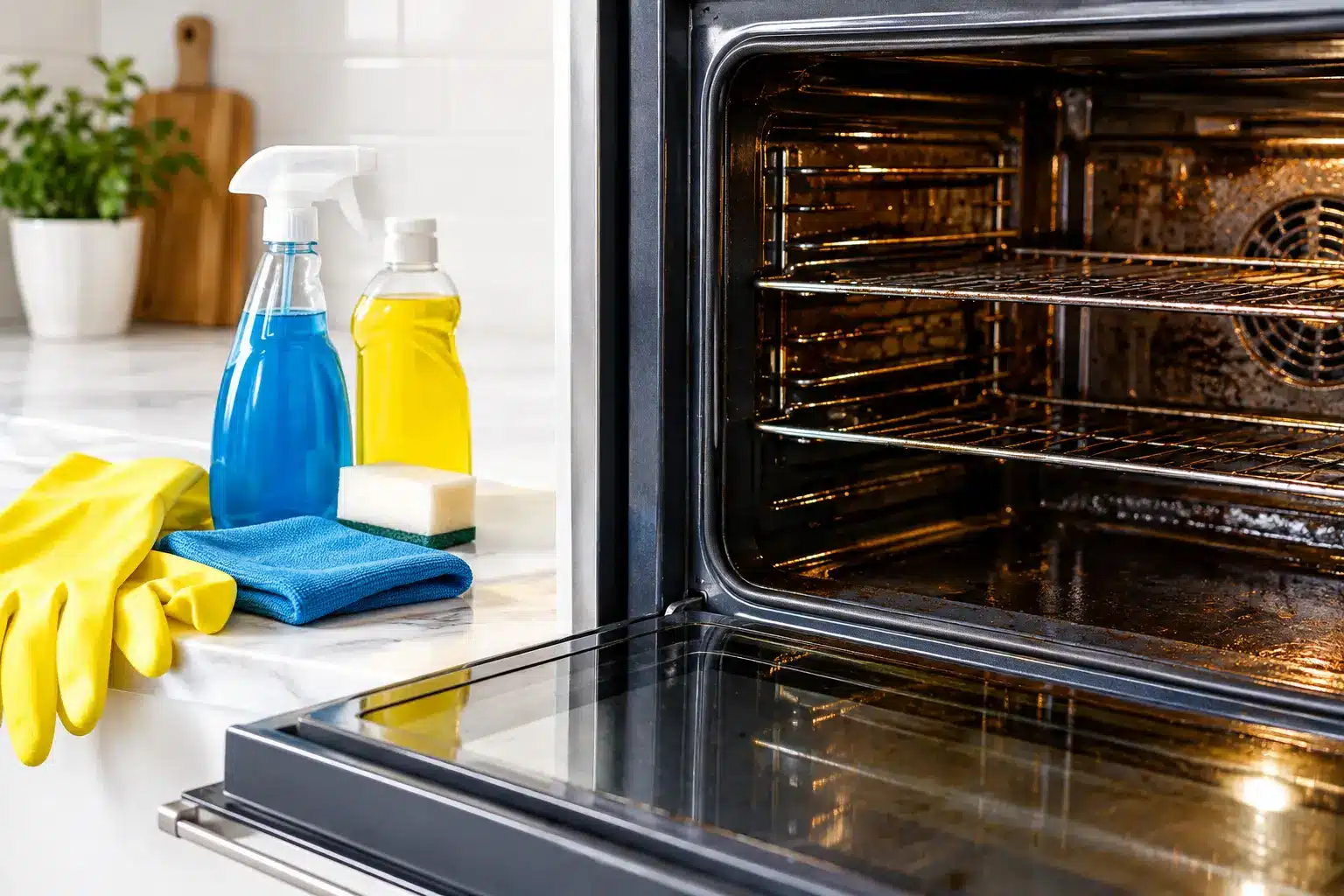

A greasy oven is not simply an appearance issue. Baked on fat can smoke during service, transfer odours between dishes, affect cooking performance and make routine cleaning take far longer than it should. Choosing the best products for greasy ovens means matching the cleaner to the soil, the surface and the working conditions, rather than relying on one harsh product for every task.
For catering teams, facilities managers and household users with demanding kitchens, the aim is consistent hygiene with less scrubbing, reduced downtime and no avoidable damage to equipment. The most effective system usually combines a strong oven cleaner for carbonised deposits, a degreaser for surrounding surfaces and the right tools for controlled application.
What makes oven grease difficult to remove?
Fresh cooking fat is usually manageable with a suitable kitchen degreaser and regular wiping. The problem starts when splashes remain through repeated heating cycles. Oils polymerise, turning into a dark, sticky or hard film that clings to oven doors, racks, trays, fan covers and cavity walls.
This is why washing up liquid alone often disappoints on neglected ovens. It may lift loose grease, but it is not designed to break down thick, heat hardened deposits quickly. Excessive scrubbing then becomes the fallback, increasing labour time and the risk of scratching enamel, glass or stainless steel.
A professional cleaning product earns its place when it provides reliable soil removal at a practical contact time. Strength matters, but control matters just as much. An unnecessarily aggressive formula can create safety concerns, leave residue where food is prepared or shorten the life of sensitive finishes.
Best products for greasy ovens: choose by the job
There is no single product that is best for every greasy oven. A lightly soiled domestic appliance, a commercial combi oven and the exterior of a range all present different cleaning challenges. Start by identifying whether the main issue is baked on carbon, fresh grease, burnt food or a mixture of each.
Heavy duty oven cleaner for baked on deposits
A dedicated oven cleaner is the right choice for the oven cavity, racks and trays where grease has been repeatedly exposed to high temperatures. These formulations are made to soften and release stubborn carbonised soil, reducing the effort required with a non scratch pad or brush.
Apply only to cool equipment unless the product instructions state otherwise. Ensure good ventilation, wear suitable gloves and avoid spraying electrical components, heating elements, seals and fan openings unless the cleaner is specifically approved for those areas. Allow the stated dwell time to do the work. Wiping a product away too soon is one of the main reasons staff apply more chemical than necessary.
For very heavy build up, it is often more effective to repeat a controlled application than to leave a product on for longer than recommended. Once the soil has lifted, remove all residue thoroughly with clean water and a clean cloth. This final step is essential in food preparation environments.
Kitchen degreaser for doors, hobs and external surfaces
A quality degreaser is designed for the grease that gathers around the oven rather than deep inside it. It is useful on exterior panels, handles, splashbacks, tiled walls, extractor surrounds, worktops and the area beneath or beside cooking equipment, subject to surface compatibility.
In busy kitchens, this is the product used most often because it supports daily cleaning before grease has time to harden. A professional grade degreaser, such as an appropriate Mistolin Pro formulation, can help teams deal with routine kitchen soil efficiently while keeping standards consistent across shifts.
Do not assume that stronger concentration always delivers a better result. Follow the dilution guidance where provided. Using a concentrate correctly helps control cost per clean, reduces waste and gives staff a repeatable process. For ready to use products, apply sparingly and work from cleaner areas towards heavier contamination to avoid spreading grease.
Soaking cleaner for racks and removable trays
Oven racks, grill pans and baking trays can be difficult to clean in place. Where the equipment and site procedure allow, removing them for soaking can reduce manual effort considerably. A suitable soaking solution keeps the cleaning chemical in contact with the soil and reaches the corners that a cloth cannot.
Use a container large enough to prevent splashing and keep it clearly separate from food preparation equipment. Never mix products in the soak tank. Chemical mixing can create hazardous fumes or reduce effectiveness, particularly when strong alkaline cleaners are involved. Rinse items fully, dry them and inspect for any remaining residue before returning them to service.
Scrapers, pads and brushes for controlled agitation
Chemicals remove grease more efficiently when paired with the correct tool. A plastic scraper can lift softened deposits from flat enamelled surfaces. A non scratch pad is useful for glass and suitable coated surfaces, while a stiff brush can reach rack joints and tray corners.
The trade off is surface protection. Abrasive wire wool, metal blades and excessively aggressive pads can permanently mark oven glass, damage coatings and create areas where grease adheres more easily in future. Test a discreet area when working on unfamiliar equipment, particularly older appliances with worn finishes.
A practical cleaning method for commercial ovens
The safest cleaning routine is one that staff can complete correctly during a busy shift. Build it into the closing procedure rather than saving all oven cleaning for a weekly deep clean. Frequent light cleaning prevents the labour intensive build up that disrupts service.
First, isolate the appliance in line with the manufacturer guidance and allow it to cool. Remove loose food debris and take out racks or trays where practical. Apply the selected oven cleaner to areas with burnt on soil, avoiding components identified as unsuitable by the appliance manufacturer.
Leave the cleaner for its stated contact time. During this period, clean external panels and nearby splashbacks with a compatible degreaser. Agitate only where necessary, then remove loosened soil with disposable towels or designated cleaning cloths. Rinse thoroughly with clean water, paying close attention to corners, rack supports and door edges.
Dry the oven, replace removable items and check that no chemical residue, debris or cleaning tools remain inside. Recording deep cleans and identifying recurring grease hotspots can help managers plan labour, improve staff training and spot equipment issues such as poor extraction or leaking door seals.
Surface safety and food hygiene should guide the choice
A cleaner that removes grease quickly but damages a surface is not a cost effective solution. Always check whether the product is suitable for enamel, stainless steel, aluminium, glass, chrome or painted finishes. Aluminium is particularly sensitive to some strong alkaline products, and oven seals can be affected by unsuitable chemicals.
In commercial kitchens, use products according to the label and site risk assessment. Store chemicals securely, retain safety information and make sure staff understand required personal protective equipment. Decanting into unlabelled bottles creates unnecessary risk and makes dilution control much harder.
Food contact surfaces require particular care. If a degreaser or oven cleaner is used in an area that may contact food, follow the label directions for rinsing. Cleaning chemical is not a substitute for sanitising where sanitising is required by your hygiene procedure. These are separate stages with different purposes.
How to prevent grease returning so quickly
The best way to reduce deep cleaning costs is to stop grease becoming baked on in the first place. Wipe spills once the appliance is safe to handle, clean trays after use and include handles, controls and extractor surfaces in the daily routine. These small tasks protect presentation as well as hygiene.
For high volume operations, keep the right products close to the point of use and make responsibilities clear by shift. Running out of degreaser often leads to improvised cleaning with unsuitable products, poor results and more work later. Reliable stock levels and consistent products allow teams to clean to the same standard every time.
A greasy oven does not need a more complicated process. It needs the right cleaner, enough contact time, careful rinsing and a routine that prevents yesterday’s splashes becoming next month’s deep clean.