

A missed spill beneath a fryer, greasy extractor filters or a poorly cleaned chopping board can quickly become more than a housekeeping issue. A reliable restaurant kitchen cleaning checklist gives every member of the team a clear standard, protects food safety and prevents small cleaning jobs becoming costly operational problems.
Commercial kitchens need a routine that works during a busy service as well as at close. The right approach separates cleaning by frequency, assigns ownership and uses products suitable for the surface and task. This avoids wasted labour, unnecessary chemical use and the confusion that follows when everyone assumes somebody else has done the job.
Set the standard before cleaning begins
Cleaning is most effective when the kitchen is prepared properly. Store food away from the area being cleaned, switch off equipment where safe to do so and allow hot surfaces to cool. Remove loose food debris before applying a detergent or degreaser. A chemical cannot work properly through layers of burnt food, grease and residue.
Use colour coded cloths, scorers and mop heads to reduce the risk of moving contamination from washroom, floor or raw food areas into food preparation zones. Separate equipment should also be available for front of house and kitchen work. Cloths and mop heads need washing, disinfecting and drying between uses, then replacing when worn or heavily stained.
Staff should follow the dilution and contact time shown on the product label. More chemical is not always better. Overdosing can leave residue, damage sensitive finishes and increase cost per clean. For food contact surfaces, use an appropriate food-safe sanitiser and follow the label instructions on rinsing.
Restaurant kitchen cleaning checklist for every shift
The following tasks should be completed throughout service and checked again before handover. Assign them to a named role rather than leaving them as a general expectation.
Food preparation and service areas
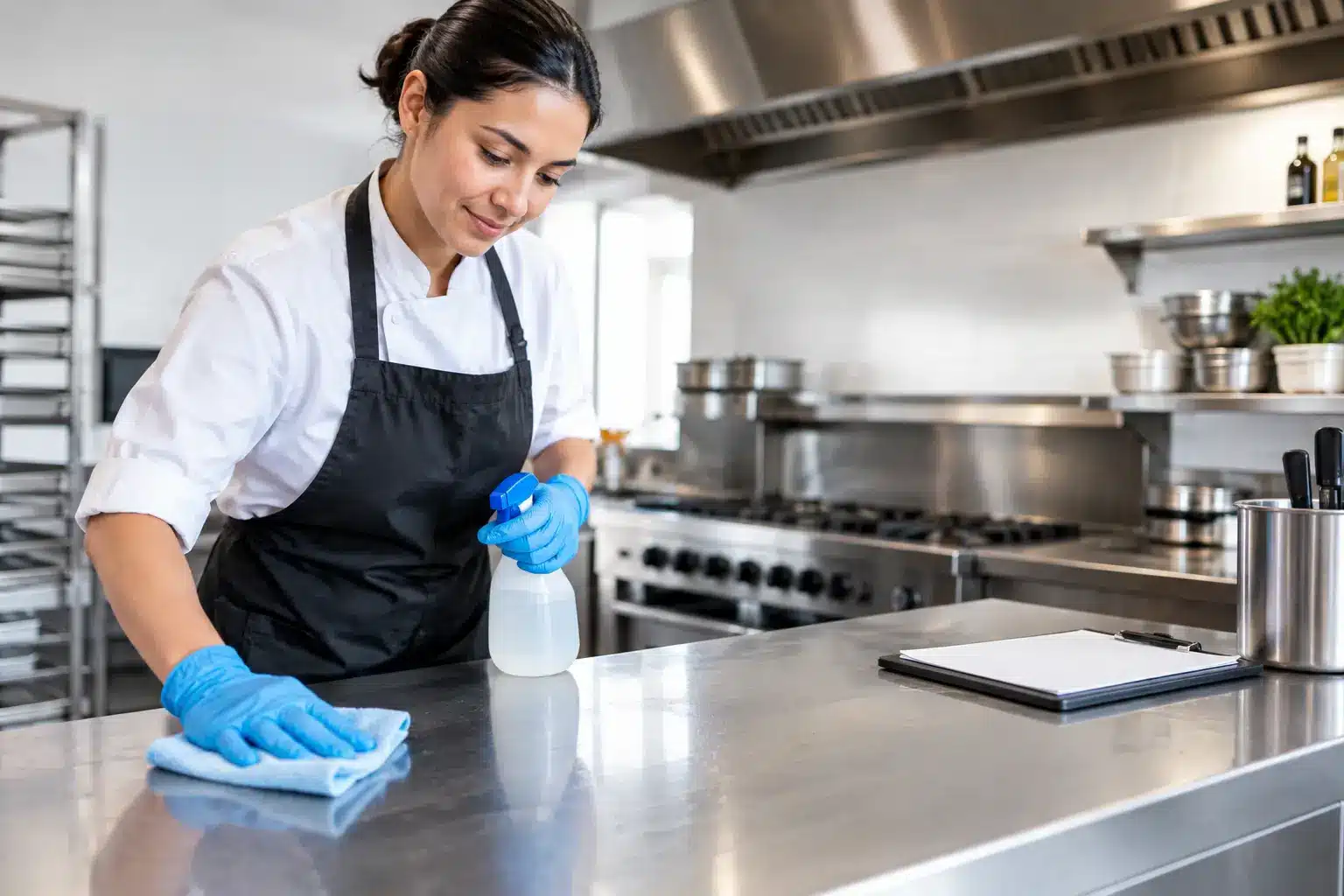
- Clean and sanitise preparation benches, chopping boards, scales, handles and small equipment between tasks, particularly after handling raw food.
- Empty food waste before bins overflow. Clean the bin rim, lid and surrounding floor if there are spills, then fit a fresh liner.
- Wipe external surfaces on fridges, freezers, ovens, microwaves and hot holding equipment. Pay attention to handles, control panels and frequently touched doors.
- Clean spills immediately. Wet or greasy floors create a slip risk, while splashed sauces and food particles can attract pests.
- Wash utensils, pans and gastronorm containers promptly. Leave sufficient air drying space rather than stacking wet items where water can collect.
Sinks, dishwashing and glass washing
Empty sink strainers regularly and remove visible food debris. Clean and sanitise sink bowls, taps and drain boards at the end of each shift. Dishwashing machines should be checked for detergent, rinse aid and salt where applicable, with filters cleaned in line with the machine manufacturer instructions.
A machine that produces cloudy glassware or leaves food residue needs attention early. Check wash temperature, spray arms, filters and chemical levels before assuming the crockery is at fault. Regular descaling may be needed in hard water areas to maintain reliable performance.
Floors and low level surfaces
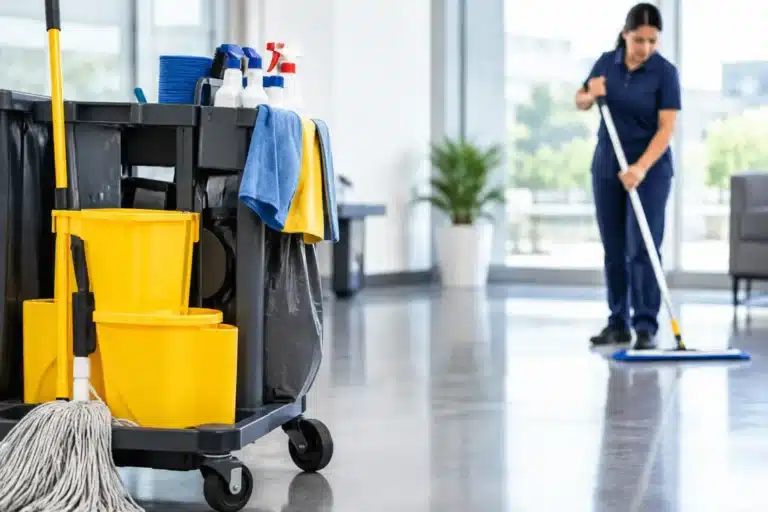
Sweep or vacuum dry debris before mopping. Apply a suitable floor cleaner at the correct dilution, giving particular attention to cook lines, corners, walk-in refrigeration entrances and areas beneath preparation tables. Display wet floor signage until the area is dry.
Do not simply mop around equipment. Food, oil and moisture collect behind and underneath units, especially around fryers and dishwashing areas. Where equipment can be moved safely, include these spaces in the closing routine.
End of day cleaning that protects the next service
Closing checks should leave the kitchen ready for safe opening, not just looking presentable. Start with cooking equipment once it has cooled. Remove grease from hob surfaces, splashbacks, oven doors, fryer exteriors and surrounding walls using a professional kitchen degreaser appropriate for the material. Stainless steel benefits from a product that cuts grease without leaving a dull film or causing scratching.
Fryers require particular care. Filter oil according to the kitchen procedure, wipe down exterior surfaces and clean the surrounding floor thoroughly. A build up of grease around fryer legs, cable routes and wall edges is both a hygiene concern and a fire risk.
Clean inside refrigeration units as spills occur, then inspect shelves, door seals and handles as part of the close. Discard out of date food, label open products clearly and ensure containers are covered. Never spray chemicals directly around exposed food.
Finish by cleaning and sanitising food preparation surfaces, sinks and touch points. Empty internal bins, remove waste to the designated collection point and clean the bin area. Check that mops, buckets and cleaning tools are washed, stored off the floor and left to dry.
Weekly jobs that are easy to overlook
A daily routine cannot cover every surface properly. Weekly cleaning gives the team time to deal with the areas that affect equipment life, pest control and the overall standard of the kitchen.
Ventilation and grease control
Clean accessible extractor filters and canopy surfaces at the frequency required by your cooking volume. Heavy frying, grilling and high output cooking can demand more frequent attention than a low volume café kitchen. Keep records of specialist duct cleaning where required, as this is a key part of fire risk management.
Refrigeration and storage
Remove stock shelf by shelf so internal fridge and freezer surfaces can be cleaned thoroughly. Check seals for damage, clear debris from drainage channels and inspect shelving for rust, cracks or residue. Clean dry stores, rotate stock and look for evidence of pests, leaks or damaged packaging.
Equipment and difficult areas
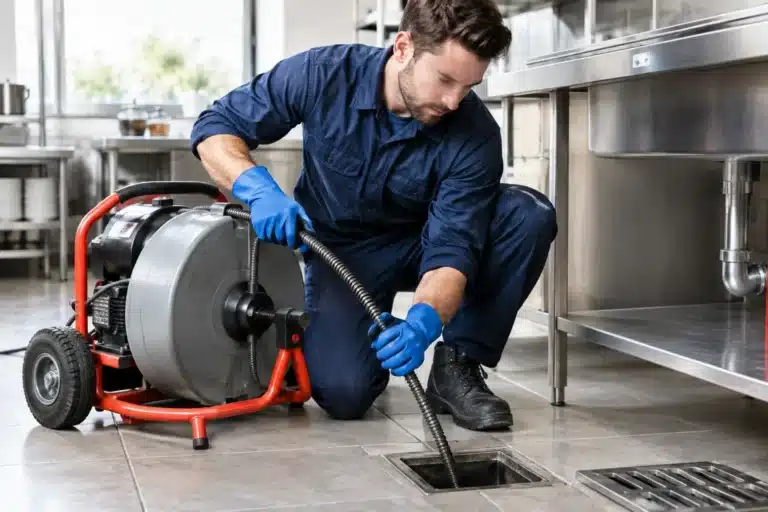
Pull out movable equipment, clean walls and floors behind it, and inspect plugs, cable routes and guards for grease. Deep clean microwave interiors, oven racks, dishwasher filters and accessible drainage points. Report damaged seals, loose tiles, cracked chopping boards and failed equipment before they become a hygiene issue.
Build a checklist people will actually use
The most detailed cleaning schedule is of little value if it is not practical during a pressured shift. Keep the checklist in the cleaning area or on a staff noticeboard, with clear sections for opening, service, close and weekly tasks. A signed record creates accountability, but it should be supported by supervisors carrying out spot checks rather than treated as paperwork alone.
Include the product, dilution, contact time and any PPE required beside higher risk tasks. This helps new starters work safely and gives experienced staff a consistent method. It also makes stock control easier: when the cleaning routine is defined, managers can forecast demand for degreaser, sanitiser, dishwasher chemicals, cloths, gloves and paper products.
Choose professional grade products that match the surface and the soil. A heavy duty degreaser may be right for cook line grease but unsuitable for delicate finishes. A sanitiser is not a substitute for removing visible dirt first. Good results come from using the correct product in the correct order, with enough time to work.
KleanPro Supplies supports commercial kitchens with dependable access to practical cleaning essentials, including professional formulations for grease, dishwashing, drains and everyday surface care. Consistent supply means teams are less likely to substitute unsuitable products when the kitchen is busy.
A clean kitchen is maintained through repeatable actions, not occasional deep cleans.
Give staff a checklist they can complete confidently, review it against the realities of your workplace and service pattern, and adjust the frequency where grease, traffic or food risk demands more attention.