Newsletter Subscribe
Subscribe for news, offers and a welcome 5% discount on us.
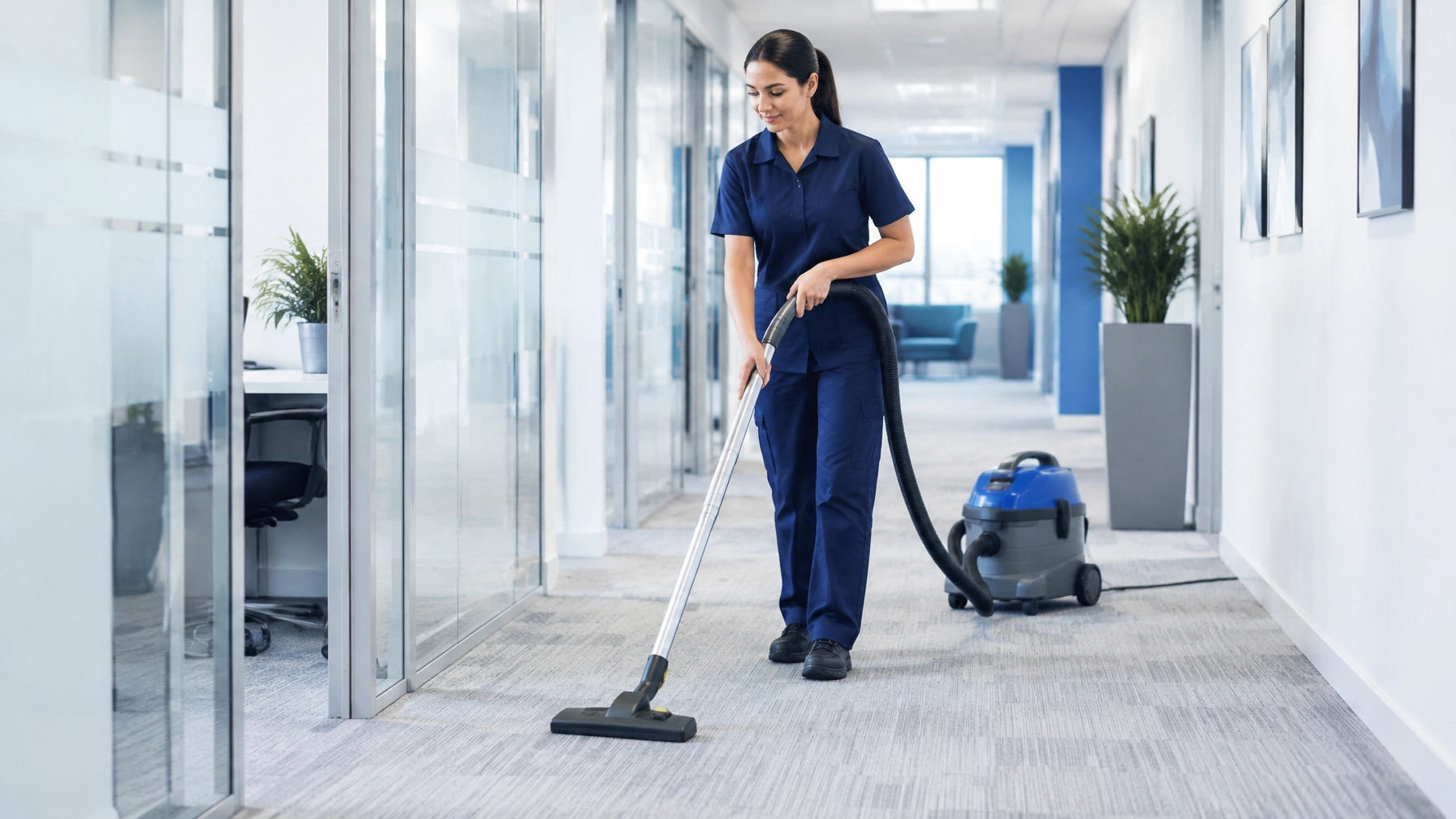
The word HEPA on a vacuum cleaner can sound like a complete assurance about the air it releases. It is not. HEPA describes a class of high efficiency filter, but a filter specification does not, by itself, confirm how well a complete vacuum contains dust, whether it is suitable for a particular hazard, or whether it meets a legal duty at work.
For facilities managers, contract cleaners, hospitality teams and homeowners choosing commercial grade equipment, the useful questions are more specific. Which standard is being claimed? Was the filter tested, or the whole machine? What type of dust will the vacuum collect? And does the task require a particular machine class?
Understanding those distinctions makes it easier to read product information accurately and specify equipment that supports a suitable cleaning and safety plan.
Vacuuming collects settled dust, but it can also affect the air in a room. Particles may escape through the exhaust, while movement of the floor head can lift settled dust back into the air. The result depends on the machine, its condition, its seals and the way it is used.
Research by Knibbs and colleagues found that vacuum exhaust could be a source of indoor exposure to fine particles and bacteria. Emissions varied substantially between machines and tended to increase as machines aged. The researchers also reported that motor characteristics were a major factor in particle output. Some machines released bacterial cell equivalents at rates approaching one hundred thousand per minute. These results are not a prediction of what every vacuum will emit, but they show why a filter label alone does not tell the whole story. (Knibbs and colleagues, Environmental Science and Technology)
A study published in Building and Environment in 2020 likewise found that vacuum cleaning can affect indoor air through both exhaust emissions and the disturbance of settled dust. In the machines tested, those with high efficiency filtration generally released fewer fine particles and bioaerosols. The findings support a practical conclusion: effective filtration can reduce emissions, but it cannot guarantee that vacuuming releases nothing into the room. (Study in Building and Environment)
This is relevant to routine cleaning as well as dust control work. Our article on how cloths, mops and vacuums can spread what they remove looks at the wider importance of keeping cleaning equipment in good condition and using it appropriately.
HEPA stands for high efficiency particulate air, and the name describes a family of filters rather than a single product. In Britain, the relevant classification standard is BS EN 1822, which covers high efficiency air filters and groups them into three broad families.
BS EN 1822 classifies high efficiency air filters according to their performance at the most penetrating particle size, often shortened to MPPS. This is the particle size at which a particular filter is least efficient. It is typically around 0.2 to 0.3 microns, although the exact point depends on the filter.
The standard groups filters into three broad categories:
| Group | Classes | Integral efficiency at MPPS |
|---|---|---|
| EPA, efficient particulate air | E10 to E12 | From 85 per cent (E10) to 99.5 per cent (E12) |
| HEPA, high efficiency particulate air | H13 and H14 | 99.95 per cent (H13) and 99.995 per cent (H14) |
| ULPA, ultra low penetration air | U15 to U17 | From 99.9995 per cent upwards |
For H13, the required integral efficiency is at least 99.95 per cent at the relevant particle size. Integral efficiency is the average performance across the filter as a whole. The standard also considers local efficiency, which identifies the weakest point found during a scan test. For H13, the maximum permitted local penetration is 0.25 per cent, equivalent to a local efficiency of 99.75 per cent.
H14 has a higher required integral efficiency of at least 99.995 per cent. These percentages describe filter performance under a defined test method. They do not automatically describe the performance of a vacuum cleaner assembled around that filter.
Air can pass around a filter if it is poorly seated, or escape through gaps in the casing, joints, seals or other parts of the airflow path. For that reason, the quality of the filter media and the design of the whole machine both matter.
Which? has explained that a HEPA filter does not guarantee that a vacuum will retain particles effectively. Its reporting describes how a poorly fitted filter or inadequately sealed airflow path can allow particles to bypass the filter and leave through the exhaust. Which? also tests particles entering and leaving the complete machine, rather than relying only on the filter’s stated grade. (Which? on HEPA filters and vacuum performance)
Terms such as “HEPA type” and “HEPA style” are not equivalent to a stated H13 or H14 classification under BS EN 1822. They may be used as marketing descriptions, but do not establish that the filter has been tested to that standard. Nor do they establish that the complete vacuum has passed a whole machine leakage test.
When comparing products, look for clear documentation that identifies what was tested. A filter certificate or datasheet may be useful evidence about the filter itself. It is not a substitute for documentation showing how the assembled machine performs.
For occupational dust control, another classification is often more relevant than a HEPA grade. Annex AA of the safety standard for industrial vacuum cleaners, published in Britain as BS EN 60335 part 2 69, defines dust classes L, M and H. These are classes for the complete machine in relation to hazardous dust, not grades of filter media.
The classes relate to dust hazard and machine penetration:
| Machine class | General meaning | Maximum machine penetration |
|---|---|---|
| L | Light hazard dust, with an occupational exposure limit greater than 1 mg per cubic metre | Below 1 per cent |
| M | Medium hazard dust, with an occupational exposure limit at or above 0.1 mg per cubic metre | Below 0.1 per cent |
| H | High hazard dust, including carcinogenic and pathogenic dusts | Below 0.005 per cent |
Those figures describe the permitted dust that can penetrate the machine under the relevant test conditions. They are not a simple translation of H13 and H14 figures. Class M and Class H machines are also subject to whole machine leakage testing. A certified filter alone does not give a vacuum an L, M or H classification.
Class M and Class H machines must have an acoustic or visual alarm that warns the operator before airflow in the suction hose falls below 20 metres per second. HSE guidance on local exhaust ventilation explains how an examiner can check the performance of extraction units and their indicators. (HSE guidance on LEV examination and airflow indicators)

There is no single rule that makes every vacuum cleaner used at work a Class H machine. The required control depends on the substance, the task, how much dust may be produced and the results of the employer’s risk assessment.
Under the Control of Substances Hazardous to Health Regulations 2002, employers must assess exposure to hazardous substances and prevent it or adequately control it. HSE guidance recommends using vacuum cleaning or wet methods to clean dust, and warns against dry sweeping and compressed air where they would disturb dust and make it airborne. Where a vacuum is used for hazardous dust, the appropriate machine class should be established through the task risk assessment and the control plan. HSE’s EH44 guidance on dust in the workplace sets out these general principles.
The distinction is especially important where vacuum equipment forms part of local exhaust ventilation, including on tool extraction used to capture dust at source. If an employer relies on LEV to control exposure, COSHH requires the equipment to be maintained and thoroughly examined and tested at least every 14 months by a competent person. The examination record must be kept for at least five years. These requirements relate to LEV used for exposure control. They should not be taken as a blanket testing interval for every vacuum used for ordinary housekeeping. HSE’s HSG258 guidance explains the design, testing and maintenance of LEV.
For asbestos, the restrictions are more specific. HSE’s EM4 equipment and method sheet says never to use a domestic vacuum cleaner for asbestos related work, even if it is fitted with a HEPA filter, because such machines are not adequate for asbestos and will allow fibres to pass straight through. It advises hiring or buying a Class H vacuum that conforms to BS 8520 part 3, the British Standard covering the operation, cleaning and maintenance of Class H vacuum cleaners containing a filter conforming to BS EN 1822. The guidance also explains that a Class H vacuum is not mandatory for every nonlicensed asbestos task, although it is useful on many of them, and that any asbestos work requires proper training and controls. For hired machines, EM4 expects the hire company to have the cleaner thoroughly examined and tested at least once every six months and to provide a valid certificate, and it warns users not to accept a vacuum whose certificate has expired. Owners of Class H machines must arrange a new examination and test when the certificate expires. (HSE EM4, Using a Class H vacuum cleaner for asbestos)
A separate legal requirement concerns the condition of work equipment. Under Regulation 5 of the Provision and Use of Work Equipment Regulations 1998, equipment must be maintained in an efficient state, in efficient working order and in good repair. This applies to vacuum cleaners used at work. Keep maintenance records up to date where they are used.
HSE research on dust exposure during industrial cleaning reinforces why cleaning activity itself needs consideration. Dust control is not only a matter of the vacuum specification: work methods, equipment condition and how collected material is handled all affect exposure.
UK ecodesign rules for certain vacuum cleaners set requirements that include dust re emission, rated input power and motor lifetime. For covered models, requirements introduced from 1 September 2017 include dust re emission no higher than 1.00 per cent, rated input power below 900 watts and motor lifetime of at least 500 hours. The relevant measure, Regulation (EU) 666/2013, is listed in UK government guidance on designated standards for vacuum cleaners.
These requirements are useful context, but their scope is limited. They do not establish that a vacuum is HEPA class, that it is suitable for hazardous workplace dust, or that it is an L, M or H machine. Ecodesign compliance and occupational dust classification answer different questions.

Even a correctly specified machine can perform poorly if its filter is blocked, damaged or incorrectly fitted. Follow the manufacturer’s maintenance schedule and replace or clean filters at the stated intervals rather than waiting for an obvious failure. Many final HEPA filters are not designed to be washed. Washing one when the manufacturer does not permit it can damage the media or reduce its effectiveness. For machines used on asbestos, EM4 goes further and says never to clean inside the vacuum yourself and never to attempt to remove or change the bag, which should be done by a competent person under controlled conditions.
Use a built in gauge or airflow indicator where provided, and respond to alarms or a noticeable reduction in suction. Check that seals, filter seating and collection bags are fitted correctly. Keep maintenance records where required by your workplace system and make sure staff know how to carry out routine checks safely.
Emptying the machine is another point at which dust can be released, regardless of how effective the filter is during normal operation. Bagged machines can make disposal less dusty because the collection bag can be sealed before removal, although the exact result depends on the design and the disposal method. Bagless machines may require extra care to reduce exposure while emptying. Which? has also reported that bagged models performed better in its tests of dust released during emptying.
For asbestos and other high hazard tasks, do not treat emptying or filter changes as ordinary housekeeping. Follow the machine instructions and the relevant control procedures, and use a competent person where required.

For facilities teams and buyers comparing equipment, a short documentation check can separate a meaningful specification from a broad marketing claim:
Identify the intended class. For hazardous dust work, look for the stated L, M or H machine class and its test reference, not just HEPA wording on the filter.
Check what has been tested. Establish whether the claim relates to filter media, dust re emission or leakage from the complete machine.
Look at the machine design. Check for a sealed body, secure gaskets and a filter that seats properly. Confirm that replacement filters and bags are available.
Check the alarm on M and H machines. Confirm that the machine has an acoustic or visual warning for low airflow, as required for these classes.
Consider safe disposal. Assess whether bagged or bagless collection is appropriate for the substance and the way the machine will be emptied.
Review use and maintenance requirements. Check filter replacement instructions, airflow monitoring, service requirements and any examination and test records that apply to the task.
Noise, weight and ergonomics also matter, particularly where equipment is used for long shifts or across multiple areas. They are important operational considerations, but they do not replace evidence of filtration performance or a suitable dust class.
For teams that need to verify the wider cleaning process, our guide to audits, inspections and honest testing offers a practical approach to checking standards and recording results. This is useful for organisations sourcing professional cleaning supplies in the UK, including janitorial supplies and trade cleaning supplies, where clear specifications need to support consistent work across sites.
HEPA is a filter classification. H13 and H14 tell you about tested filter performance at a challenging particle size. They do not, on their own, show how well the assembled vacuum contains dust or whether it is suitable for a regulated workplace task.
For hazardous dust, the complete machine classification, risk assessment, work method and maintenance arrangements matter. For asbestos, a HEPA label on a domestic vacuum is not an acceptable substitute for suitable Class H equipment and the controls described by HSE.
A reliable choice starts with the substance and task, then checks the evidence for the whole machine. That is a more dependable basis for selection than the word HEPA alone. For teams reviewing equipment alongside their everyday consumables, our cleaning supplies shop lists the commercial grade products and machines used across professional sites.