Newsletter Subscribe
Subscribe for news, offers and a welcome 5% discount on us.
What causes black mould? Learn how moisture, poor ventilation and building faults create it, and how premises teams can prevent its return safely indoors.
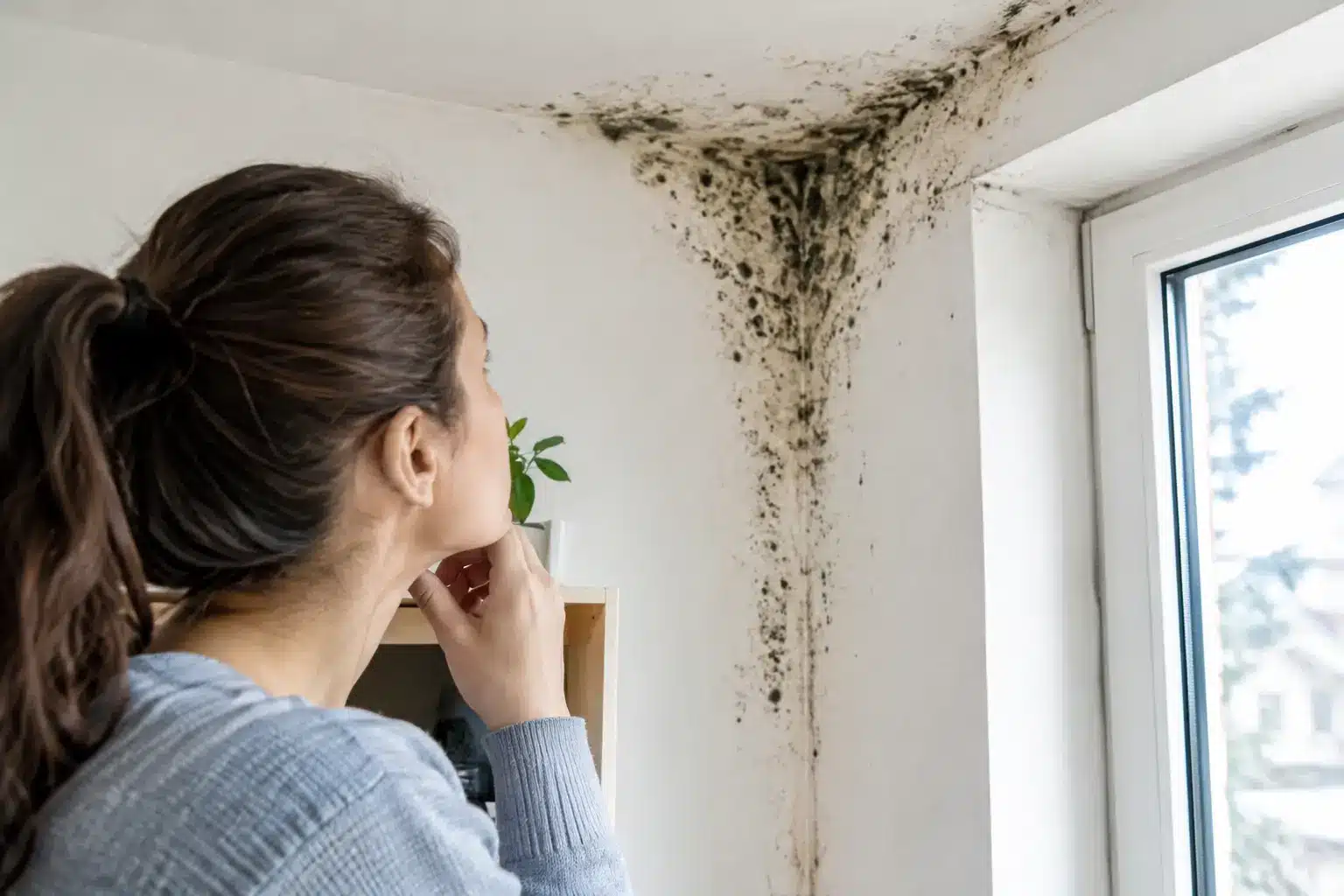
A black patch around a window reveal, behind a wardrobe or across a washroom ceiling is rarely just a cleaning issue. It is evidence that moisture has been present for long enough to support fungal growth. Understanding what causes black mould helps facilities teams, landlords, hospitality operators and householders deal with the source, rather than repeatedly wiping away the visible marks.
Black mould develops when mould spores, moisture, a suitable temperature and a surface containing organic material come together. Spores are always present in indoor and outdoor air. The controllable factor is moisture. Once an area remains damp, condensation, a leak or poor drying conditions can allow mould to colonise painted plaster, sealant, timber, fabric, paper faced plasterboard and dust deposits.
The term black mould is commonly used for dark green or black growth seen indoors. Appearance alone cannot reliably identify a particular species. That matters because the correct response is based on the size of the affected area, the amount of moisture, the material involved and who uses the building, not simply the colour of the growth.
Mould can establish surprisingly quickly where conditions remain damp. A surface may look dry during a daytime inspection yet become wet with condensation every night. In occupied buildings, recurring moisture is often linked to everyday activities such as showering, cooking, drying laundry and cleaning floors, combined with limited ventilation or inadequate heating.
Condensation occurs when warm, moisture laden air meets a colder surface and turns into water droplets. Windows, external corners, poorly insulated walls, cold water pipes and the back of large furniture are frequent problem areas. In a hotel bedroom, for example, a guest showering with the bathroom door open can raise humidity quickly. In a busy staff kitchen, boiling pans and a poorly performing extraction system can produce the same effect.
Condensation is more likely during colder months because surfaces are colder while buildings are kept closed. It is also common in spaces with uneven heating. Turning heating off for long periods can allow wall and window temperatures to fall, increasing the chance that airborne moisture will settle on them.
Cleaning routines can unintentionally contribute if surfaces are left wet, particularly in washrooms, changing areas and kitchens. Professional cleaning products are most effective when paired with sound drying practice. Staff need enough time, airflow and suitable equipment to remove excess water from floors, tiled walls and fixtures after cleaning.
Ventilation removes moist air before it settles on cold surfaces. When extractor fans are underpowered, blocked, noisy or simply not used, humidity can build up fast. A fan that runs only while a light is on may not provide enough post shower extraction. Similarly, a kitchen canopy that is poorly maintained will not adequately control steam and grease laden vapour.
In commercial premises, ventilation faults are often gradual. Filters become dirty, grilles are covered, ductwork performance declines or occupancy changes without the system being reassessed. A small office converted into a staff changing room, for instance, may suddenly have far more wet clothing, body heat and moisture than it was designed to handle.
Natural ventilation can help, but opening windows is not always practical in secure buildings, healthcare settings, food preparation areas or roadside locations. The right approach depends on the site. Mechanical extraction, controlled ventilation, dehumidification and a realistic cleaning schedule may all be needed where opening windows is unsuitable.
A hidden leak can feed mould continuously, even when occupants follow good ventilation habits. Common sources include failed sealant around baths and showers, leaking waste pipes, damaged roofs, blocked gutters, cracked render, defective pointing and overflowing tanks. Water can travel along joists or behind wall finishes, so the visible mould may be some distance from the actual fault.
Rising damp and penetrating damp need professional assessment because they require different repairs. Penetrating damp usually enters from outside through faults in the building fabric. Rising damp is associated with moisture moving upwards from the ground, though it is sometimes wrongly diagnosed where condensation or plumbing leaks are the real cause.
Facilities teams should treat new staining, blistering paint, soft plaster, a persistent musty smell or repeated mould in one location as a maintenance report, not a cleaning failure. Cleaning can improve appearance and hygiene, but it cannot stop water entering a wall or floor void.
How a room is used has a direct effect on mould risk. High occupancy creates more humidity through breathing, bathing, cooking and laundry. Small rooms with closed doors, dense storage and little air movement are particularly vulnerable. Stock rooms, utility cupboards, basement areas and staff accommodation deserve regular checks because problems can develop out of sight.
Furniture placed tightly against an external wall reduces airflow and creates a colder pocket behind it. In homes, this is often seen behind wardrobes, beds and sofas. In commercial settings, racking, boxed stock and display units can have the same effect. Leaving a small gap for air movement and avoiding overfilling storage against cold walls can reduce risk.
Wet items also need managing promptly. Damp mop heads, cloths, uniforms and floor mats should be washed, dried and stored correctly. Leaving them in enclosed cupboards adds moisture and can introduce odours and mould growth to an otherwise clean area.
Visible mould should be removed safely, but surface treatment is only one part of the job. If a wall remains cold and damp, marks can return within weeks. Repainting over mould without drying the substrate and addressing the moisture source usually conceals the issue temporarily.
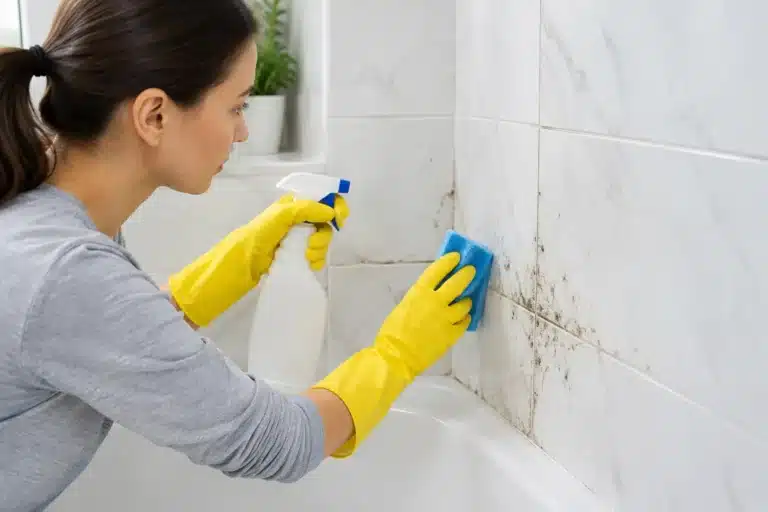
For small, localised areas on sound surfaces, a suitable mould cleaning product can be used according to its label instructions. Wear appropriate gloves and eye protection, keep the room ventilated and avoid mixing cleaning chemicals. Never dry brush mould, as this can disturb spores and spread contamination to nearby surfaces.
Porous materials require more caution. Mould affected ceiling tiles, insulation, carpets, heavily damaged plasterboard or soft furnishings may need replacement, especially if they cannot be fully cleaned and dried. In food premises, healthcare environments or areas used by people with respiratory conditions, the response should be proportionate to the risk and documented within the site’s cleaning and maintenance procedures.
Large areas of mould, repeated contamination, water damaged building materials or suspected sewage contamination should be assessed by a competent specialist. This is particularly important where the source cannot be identified or staff could be exposed during removal.
Effective prevention is operational. It begins with recording where mould appears, when it returns and what conditions were present. A pattern around one window may point to condensation and insulation. Growth below a ceiling may indicate a roof or pipe leak. Evidence allows maintenance budgets and corrective work to be directed properly.
A practical site routine should include regular checks of washrooms, kitchens, changing rooms, external walls, ceiling voids, window frames and low use storage areas. Extractor fans should be tested, cleaned and maintained. Leaks should be reported quickly, and affected surfaces dried as soon as possible. Cleaning teams should have reliable products, clear dilution guidance and enough equipment to leave areas clean and dry.
For organisations managing several premises, consistency matters. KleanPro Supplies supports professional cleaning routines with dependable stock for washrooms, kitchens and general housekeeping, helping teams maintain the day to day standards that complement effective building maintenance.
The most useful response to black mould is not a stronger cleaner alone. It is a clear chain of action: remove the immediate contamination safely, dry the area, investigate the moisture and keep checking until the conditions that allowed it to grow have changed.