Newsletter Subscribe
Subscribe for news, offers and a welcome 5% discount on us.
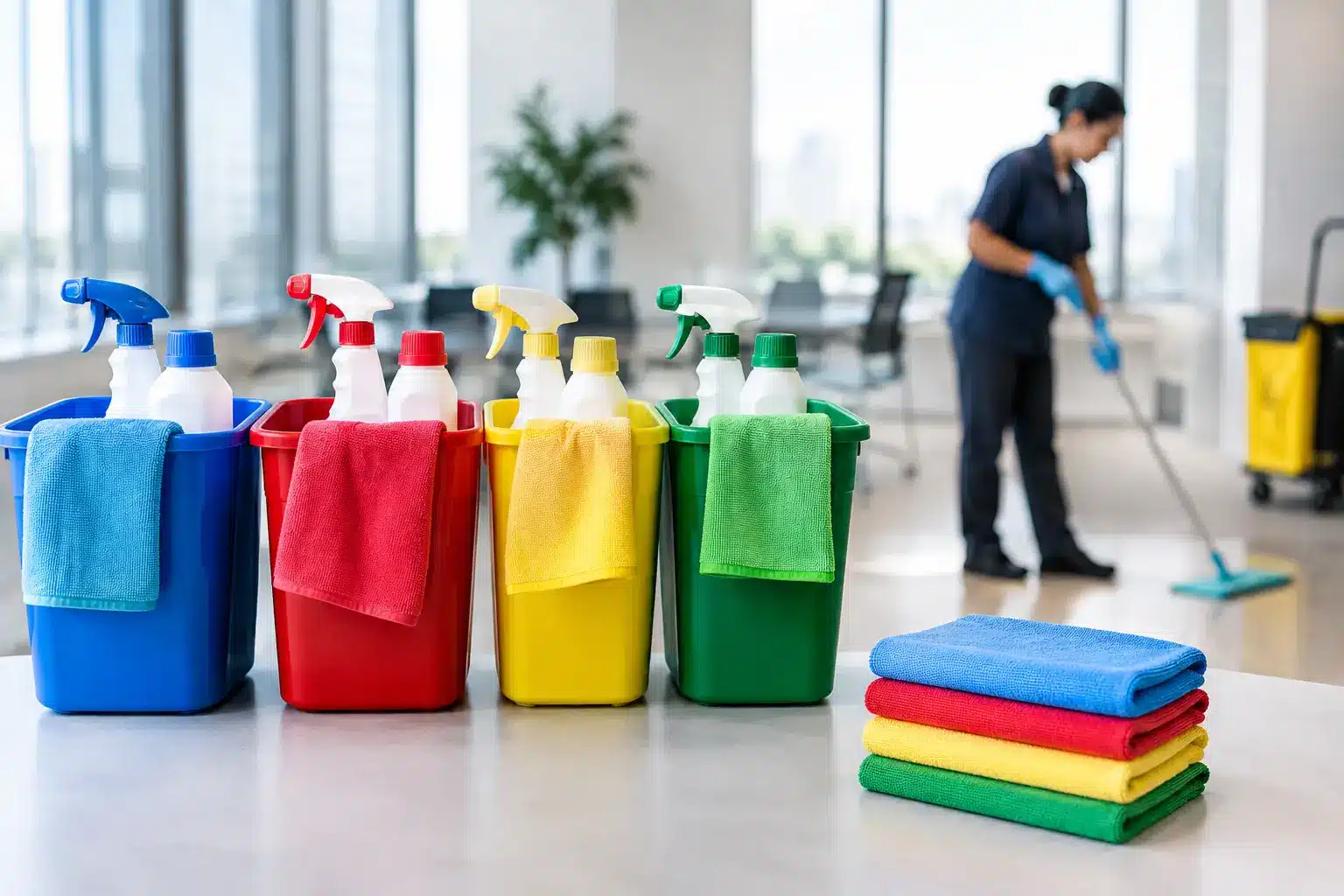
Cleaning colour codes help teams prevent cross contamination, protect food safety and clean faster. Set up a practical system for every working area daily.
A blue cloth used in a washroom can transfer far more than visible dirt to a desk, door handle or food service area. Cleaning colour codes give staff an immediate, reliable way to keep equipment in the right place, reduce cross contamination and maintain consistent standards across every shift.
For facilities managers, hospitality teams and professional cleaners, the benefit is practical. When cloths, mops, buckets and brushes are clearly assigned, staff spend less time second guessing equipment and supervisors can spot a process failure quickly. It is a simple system, but it supports hygiene, food safety, team efficiency and a more presentable site.
Colour coding separates cleaning tools by area of use. The purpose is to stop microorganisms, soil, cleaning residues and odours moving from one environment to another. This matters most where people are vulnerable, food is handled or washrooms receive heavy use, but it is good practice in almost every shared workplace.
The system works best when it covers the full cleaning set, not only cloths. A colour coded microfibre cloth is of limited value if it is placed in a neutral bucket, used with the wrong mop head or returned to mixed storage after use. Matching tools create a clear visual rule that can be followed during busy service, staff changes and contract handovers.
There is no single legal colour scheme that every UK workplace must use. Your risk assessment, client requirements and any sector guidance must always take priority. However, the four colour approach below is widely recognised and gives teams a strong starting point.
Red equipment is normally reserved for toilets, urinals, washroom floors and other sanitary fixtures. It should not leave the washroom area. A red cloth used on a toilet seat or flush handle must never be used on a hand dryer, reception desk or kitchen surface, even if it looks clean afterwards.
In a busy venue, keep red cloths, mop heads, brushes and buckets together in a labelled washroom cupboard or trolley section. This makes the correct choice easy for a new starter and prevents equipment being borrowed when supplies run low.
Blue is commonly used for general cleaning in offices, corridors, lounges, bedrooms, waiting rooms and public areas. It is suitable for desks, doors, skirting, furniture and other non food surfaces, provided the cleaning product is appropriate for the material.
Blue does not mean every surface is low risk. Frequently touched points such as lift buttons, door plates and shared equipment may require more regular disinfection under your cleaning plan. Colour coding controls where the tool goes. It does not replace correct contact times, dilution rates or hand hygiene.
Green equipment is typically assigned to commercial kitchens, food preparation rooms, servery areas and bar workstations. It helps protect food handling environments from contamination carried in from washrooms or public spaces.
A green cloth should be used with a food safe cleaner or sanitiser where required, following the product label exactly. Degreasing a cooker hood, wiping preparation benches and cleaning a refrigerator handle are different jobs, so staff also need to understand which product and method suit each surface. Colour alone cannot make an unsuitable chemical safe for food contact areas.
Yellow is widely used for isolation rooms, areas affected by illness, clinical cleaning zones or other designated higher risk tasks. In care settings, it may be part of a more detailed infection prevention procedure. In a hotel or workplace, it can be used for a room where sickness has occurred, subject to the site cleaning protocol.
Yellow equipment should be clearly controlled, cleaned or disposed of as required, and kept separate from routine stock. If your operation does not have isolation areas, do not introduce yellow merely to complete a set. Use colours that reflect genuine risks and train staff on their meaning.
The strongest cleaning colour code is the one people can follow at 6 am before breakfast service, during a lunchtime rush or at the end of a demanding shift. Keep the rules visible and uncomplicated. A laminated chart in each cleaning cupboard, on the trolley and in the staff room gives teams a point of reference without relying on memory.
Start by mapping every area on site. Identify sanitary spaces, food areas, general public areas and any isolation or specialist zones. Then assign colours to the equipment used in each location. If a building has several kitchens or washrooms, the same colours should mean the same thing throughout. Consistency matters more than creating an elaborate system.
Storage deserves the same attention as use. Clean equipment should be dried and stored off the floor, with each colour separated in clearly marked locations. Dirty cloths and mop heads need a defined route to the laundry or disposal point. Leaving used items in a shared sink or on a trolley invites mix ups and removes the protection the system is meant to provide.
Purchasing also affects compliance. Standardise the colours and formats your teams receive, particularly across multiple sites. A reliable supply of cloths, mop heads, buckets and warning signs reduces the temptation to use whatever happens to be available. KleanPro Supplies can support recurring requirements with professional cleaning essentials suited to day to day operational use.
A common mistake is treating a colour coded cloth as clean simply because it belongs in the right area. Reusable cloths still need washing at a suitable temperature and dried thoroughly between uses. Mop heads need scheduled laundering or replacement. Buckets, handles, brushes and caddies must also be cleaned, not just the items that touch surfaces.
Staff should be trained to work from cleaner areas towards dirtier ones and from higher surfaces down to floors. They should change cloths when heavily soiled, use fresh solutions at the required dilution and allow disinfectants or sanitisers to remain wet for their stated contact time. Rushing this step can leave a surface looking clean without delivering the hygiene performance expected.
Chemical compatibility is equally important. A powerful degreaser may be ideal for a commercial kitchen extraction area but unsuitable for a polished floor or delicate worktop. Glass cleaner, washroom cleaner, neutral cleaner and disinfectant each have a defined role. Clear colour coding makes tools easier to manage, while product instructions protect surfaces and ensure the intended result.
Introduce the system during induction, then reinforce it through short toolbox talks and supervisor checks. Rather than asking staff to repeat colour names, show real examples: which cloth cleans the staff toilet, which mop is used in the kitchen, and where each item is returned after use. Practical training is more likely to hold during a busy shift.
Supervisors can check compliance quickly by looking at trolleys, cupboards and laundry collection points. Mixed colours in one bucket, missing labels or worn equipment are early warnings that standards may slip. Address the cause, whether it is unclear storage, insufficient stock, rushed handovers or incomplete training, rather than only correcting the individual item.
Review the arrangement when layouts, services or risks change. A café adding food preparation, an office opening a customer washroom or a care provider managing an outbreak may need a revised approach. Good systems are controlled, but they are not fixed forever.
A clean colour coded trolley sends a quiet but clear message to staff, clients and visitors: this site takes hygiene seriously. Keep the rules visible, keep the right equipment available and give teams the time to use it properly. That is how a simple set of colours becomes dependable cleaning performance.