Newsletter Subscribe
Subscribe for news, offers and a welcome 5% discount on us.
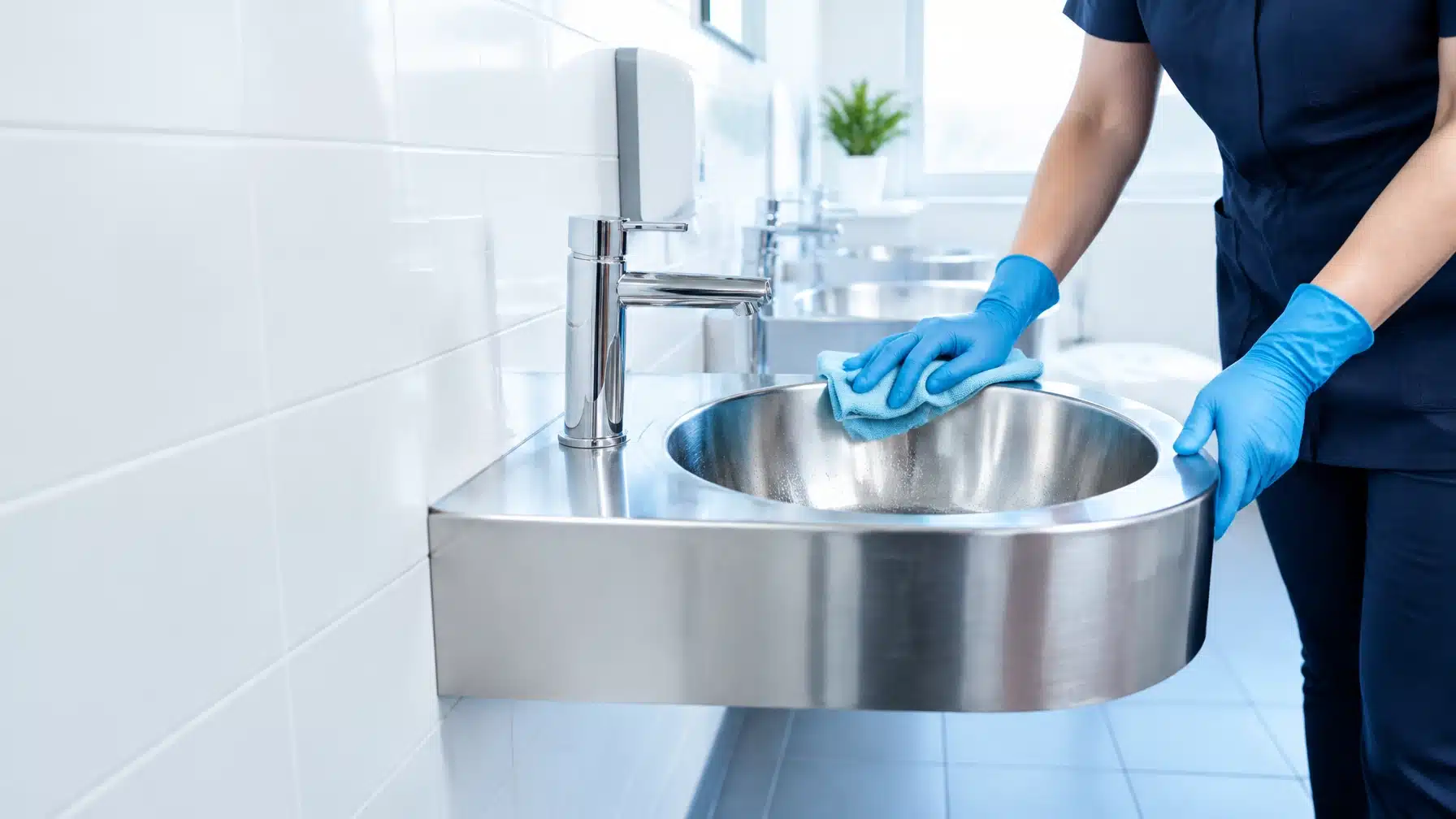
Some of the costs of cleaning work do not appear in an accident book. They are damaged skin and sensitised lungs: health problems that can build over months through ordinary daily tasks with ordinary products.
Both occupational contact dermatitis and occupational asthma are reportable diseases when diagnosed and linked to specified work exposures. Both are largely preventable. Yet neither usually begins with a single obvious incident, so they can be missed by safety systems that focus mainly on accidents.
For cleaning teams, contractors, facilities managers and people using commercial grade products at home, recognising these slow developing risks is an important first step. The next is to make exposure visible and reduce it before symptoms become established.
The Health and Safety Executive (HSE) describes work related contact dermatitis as a skin disease caused by work, often called eczema. It develops when the skin is damaged and may cause redness, itching, swelling, blistering, flaking and cracking. The hands are most susceptible, followed by the forearms and face. In severe cases, it can keep someone away from work or lead them to change jobs. See HSE guidance on work related contact dermatitis in cleaning.
HSE statistics distinguish two main forms. Irritant contact dermatitis is non immunological cell damage caused by irritants. Allergic contact dermatitis is an immunological reaction that occurs only in people who become sensitised to a particular allergen. There may be a delay between first contact and symptoms. Once sensitised, further contact with that allergen can bring on the condition.
The difference matters in practice. If several members of a team develop dry or sore hands, repeated irritation or wet work may be affecting them all, and reducing exposure may help. If one person reacts to a particular allergen, the problem may continue when that individual encounters it again, even if colleagues have no symptoms. Both patterns need action, but the response should be informed by a suitable assessment rather than assumption.
HSE defines wet work as prolonged or frequent contact with water, particularly when combined with soaps and detergents. Hands that stay wet for a long time or become wet repeatedly through the day can become irritated and develop dermatitis.
The exposure is not limited to cleaning chemicals. It may include repeated hand washing, wringing out a cloth, rinsing tools, handling a bucket or working with rinse water. Prolonged glove use is another recognised cause: warm, damp conditions trapped against the skin can cause damage too.
This type of contact is easy to overlook because it is rarely listed as a separate task. Yet it can accumulate across a shift. Wet work is often invisible in a task list, so it is seldom measured. Reducing it is one of the most important controls available. HSE’s skin prevention guidance explains why frequent contact with water, soaps and detergents needs to be considered in the risk assessment.

HSE’s skin disease statistics, published on 20 November 2025 with data to March 2025, estimate an average of 6,000 new cases of self reported skin problems caused or made worse by work each year across 2020/21 to 2024/25. The 95 per cent confidence interval is 3,000 to 9,000. HSE also estimates that 18,000 people who worked within the last year had skin problems they regarded as caused or made worse by work, based on 2022/23 to 2024/25 data.
Dermatologists in the THOR network recorded 262 new diagnoses of skin disease in 2024, of which 246 were contact dermatitis. The corresponding figures for 2023 were 366 and 324. These are estimates from a specialist reporting network, not a count of every case in the workforce.
In THOR data, soaps and cleaners and wet work have consistently been the most commonly recorded causes of work related contact dermatitis in every time period analysed. Other recorded causes include rubber chemicals and materials, personal protective equipment such as latex gloves, preservatives, bleaches and sterilisers, and nickel.
Across 1996 to 2024, 40 per cent of recorded contact dermatitis cases were allergic, 50 per cent irritant and 13 per cent had both components. For 2020 to 2024, allergic and irritant cases each accounted for 48 per cent. The average number of causative agents recorded per case rose from 1.6 in 2000 to 2009, to 1.8 in 2010 to 2019, and 2.2 in 2020 to 2024. That fits a familiar shift: a cleaner may use several products and carry out several wet tasks in one shift.
The pandemic disrupted reporting, so recent figures need caution. Statistical modelling suggests that incidence has continued to fall, with an estimated annual change of minus 4.9 per cent over 1996 to 2024 and minus 9.3 per cent over 2010 to 2024. These are HSE estimates, not KleanPro Supplies data. HSE also notes that work related ill health can cost more than twice as much as an accident causing injury. The full figures and limitations are in the HSE skin disease statistics for 2025.
HSE’s COSHH guidance for cleaners states that some ingredients in cleaning products can cause skin allergies and asthma. It also warns that some cleaning products are corrosive and can cause skin burns and eye damage. HSE’s health surveillance sheet G402 identifies cleaning products among the main causes of occupational asthma and cleaning services among the high risk occupational groups, alongside healthcare workers and detergent manufacturing.
Occupational asthma can develop through different mechanisms. HSE statistics explain that allergic occupational asthma typically has a latency period: symptoms emerge after a period of exposure to a respiratory sensitiser. Irritant induced asthma typically occurs within hours of exposure to high levels of an irritant gas, fume or vapour.
Sensitisation means the body becomes unusually responsive to a particular substance. Once sensitised, even low levels of further exposure may trigger an asthma attack. The aim, therefore, is to prevent sensitisation rather than wait to manage tight chests or wheezing later.
HSE estimated 52 new cases of occupational asthma reported by doctors in the THOR network in 2024, compared with 94 in 2023. Thirty five new cases were assessed for Industrial Injuries Disablement Benefit in 2024, compared with 30 in 2023. The Labour Force Survey estimate is 22,000 new cases of self reported breathing or lung problems caused or made worse by work per year over the last three years; a substantial minority may be work related asthma. Flour and isocyanates are the agents most frequently cited in the statistics. Cleaning is one exposure route among several, and these totals are not specific to cleaning. See the HSE asthma statistics for 2025.
A BMJ Open study reviewed 44 people who completed specific inhalation challenges with cleaning or disinfection products at a specialist centre between 1992 and 2011. Seventeen of the 44 participants, or 39 per cent, had a fall of at least 20 per cent in forced expiratory volume in one second.
Among products linked to a positive challenge, quaternary ammonium compounds were present in 10 cases, glutaraldehyde in three, both in one and ethanolamines in two. The authors concluded that quaternary ammonium compounds were the principal cause of sensitiser induced occupational asthma among cleaners in this group. They noted that these compounds are non volatile, so inhalation exposure is likely to occur during spray application.
The study has important limitations. It did not include quantitative exposure assessment during the challenges, and participants may represent a more severe subset of workers with cleaning related symptoms. It does not show that all products containing these compounds cause asthma. The practical lesson is broader: how a product is applied matters, not only what it contains. Read the full BMJ Open study.
HSE’s approach to skin exposure starts with elimination or substitution. Consider whether the task can be removed, or whether a less harmful option can do the same job. For example, HSE describes replacing an aggressive cleaning product with a milder one. If elimination or substitution is not practical, design the task to avoid contact.
Controls can include enclosed systems, automated dosing, mechanical handling, tools that maintain a safe working distance, clear clean and dirty areas, drip trays and good housekeeping. PPE comes later. It only protects the person wearing it, must be selected and used correctly, needs proper storage and maintenance, and can fail without warning. HSE sets out these priorities in its guidance on managing risks from skin exposure.
In cleaning operations, this could mean closed dosing and dilution control rather than decanting concentrate by hand or pouring from a large container into a trigger bottle. A measured dosing unit for a heavy duty degreaser or an all purpose cleaner can reduce handling. Where a site buys professional cleaning products in concentrate, a wall mounted dosing unit measures the product before it reaches a bottle, which removes a handling step and a common cause of overdosing at the same time. Where the surface allows, a squeegee, mop or brush may reduce repeated hand contact with a cloth. Use a dishwasher or machine where hand washing is not necessary. Never clean skin with an aggressive cleaner or solvent.
No glove material protects against every substance, and no glove protects against a particular substance indefinitely. For wet work, HSE advises choosing gloves that meet EN 374 part 2, which indicates that the glove is waterproof. For chemical contact, select gloves meeting EN 374 part 3 and confirm that the material is suitable for the substances handled.
Manufacturer charts use breakthrough time, permeation rate and degradation. Breakthrough time indicates how long a glove can be used before a chemical passes through the material. Choose a low permeation rate and good or excellent degradation ratings. Manufacturer data usually relates to pure chemicals, not mixtures. For a mixture, HSE advises basing selection on the component with the shortest breakthrough time. Testing is the only way to be certain about glove performance against a mixture.
Fit also matters. Tight gloves tire hands; loose gloves can fold and trap contamination. Hands sweat inside gloves, so plan breaks, consider cotton liners and train staff to remove gloves without contaminating their skin. Tell staff when to replace them, ask them to rinse reusable gloves before removal where practical, and explain how to store them correctly. HSE’s guide to choosing gloves recommends non latex gloves unless no suitable alternative provides the required protection. If latex is necessary, choose low protein, powder free gloves.
HSE’s APC approach means avoid contact, protect the skin and check the skin. Provide mild skin cleaning cream that can do the job, washing facilities with hot and cold water, and soft cotton or paper towels. Remind staff to dry their hands thoroughly. Residual water under a glove contributes to the damp conditions that can damage skin.
Encourage moisturising as often as possible, particularly at the end of the day, and provide suitable pre work and after work creams. Contamination should be washed off promptly, not left until the shift ends. Staff should wash before eating or drinking and before putting gloves on.
For a facility, this means choosing cleaning supplies suited to repeated use, such as hand soap refills, keeping dispensers working and ensuring paper towels are actually stocked. Provide emollient in a suitable dispenser rather than a shared tub. HSE guidance for healthcare settings recommends suitable dispensers to prevent cross contamination.
HSE advises keeping workplaces well ventilated. Where a coarse wet spray onto a surface is enough, avoid creating a fine mist or airborne aerosol. Keep the nozzle close to the work, never spray into the air or towards the face, and consider applying product to a cloth or aiming a trigger spray directly at the surface.
Do not use a trigger spray of a sensitiser containing product in a small, unventilated washroom. Ventilate before and during work, and allow air to settle before a confined space is reoccupied. Keep the label and safety data sheet available so staff can check the controls. Follow the product dwell time rather than adding extra product; using more can increase exposure without improving the result. These precautions also apply when using a professional bathroom cleaner.

HSE’s G403 guidance says health surveillance should be considered where workers are exposed to the main causes of dermatitis, substances labelled H315 or H317, where PPE is relied upon, or where a case has been confirmed. Symptoms include itching, scaling or flaking, dry or cracked skin, colour changes, blistering, weeping and soreness.
A suitable scheme involves an occupational health professional and a baseline assessment before exposure or, if that is not possible, within six weeks of exposure starting. Ongoing assessments should be at a suitable frequency, for example annually. They may include a questionnaire and inspection of the hands, forearms, face and lower legs where these could be contaminated. A trained responsible person can work with occupational health to support the scheme. Health records must be kept securely for at least 40 years from the last entry. See HSE G403 on health surveillance for occupational dermatitis.
For asthma, G402 sets out a scheme involving a questionnaire and spirometry, with a baseline within six weeks and ongoing checks usually annually. More frequent assessments may be appropriate for new workers. Records must also be kept for 40 years. HSE says all employees exposed or likely to be exposed to an asthmagen should receive suitable health surveillance. See HSE G402 on occupational asthma and its advice for employers on asthma.
Health surveillance is not a replacement for risk assessment or exposure controls, and it is not the same as health promotion or general screening. Results should feed back into the risk assessment and prompt review of controls where needed.
Under Regulation 8 of RIDDOR, employers and self employed people must report certain diagnosed diseases linked to specified hazards at work. A report is made only after a confirmed diagnosis. For employees, a doctor must diagnose the condition and the employee must provide that diagnosis in writing.
Occupational dermatitis is reportable where work involves significant or regular exposure to a chemical or biological skin irritant or sensitiser, including relevant warning statements. Soaps and cleaners, wet work and cleaning are named causes or high risk activities. It is not reportable where it has only been caused by non work exposure, such as general household cleaners.
Occupational asthma is reportable where work involves significant or regular exposure to a known respiratory sensitiser, including chemicals carrying a warning that they may cause sensitisation by inhalation. It is not reportable where there is evidence the person already had asthma and work did not make it worse or trigger it. Read HSE’s guidance on reportable occupational diseases. Keeping product names, exposure records and safety data sheets makes a report easier to assess and prepare.
A COSHH assessment should name the product and hazard, the route of exposure, the control measures and any health surveillance requirement. A generic line about cleaning chemicals does not show what staff do or how they are protected.
List the tasks that create wet work and the products carrying H334, H317 or H315 statements. At each review, ask whether a milder professional cleaning product could do the job, whether concentrate could be dosed automatically, and whether a machine could replace a task done by hand.
The written method should also say who a cleaner tells when their hands become itchy, dry or cracked, and what happens next. As HSE notes, the earlier a health effect is recognised, the better the prognosis. For a related practical approach to documenting tasks, see how to turn a building’s needs into a cleaning specification. For safer handling and dosing, see guidance on storing and handling cleaning chemicals.
A first review does not need to be complicated. A clear, modest plan can identify exposure that has become part of the routine.
If reusable cloths are part of the system, include laundry and replacement practice in that review. Our guide to laundering rules for microfibre cloths discusses routine handling and care.
Dermatitis and occupational asthma do not usually send someone home in an ambulance. They can, however, affect a person’s ability to keep doing their job and may end a career. That is why early symptoms deserve attention, even when they seem minor.
The controls are ordinary: reduce wet work, avoid unnecessary contact, dose carefully, use suitable gloves, ventilate, keep skin care practical and make reporting straightforward. With an accurate risk assessment and a consistent routine, cleaning teams can identify exposure earlier and take sensible steps to prevent it becoming lasting ill health.