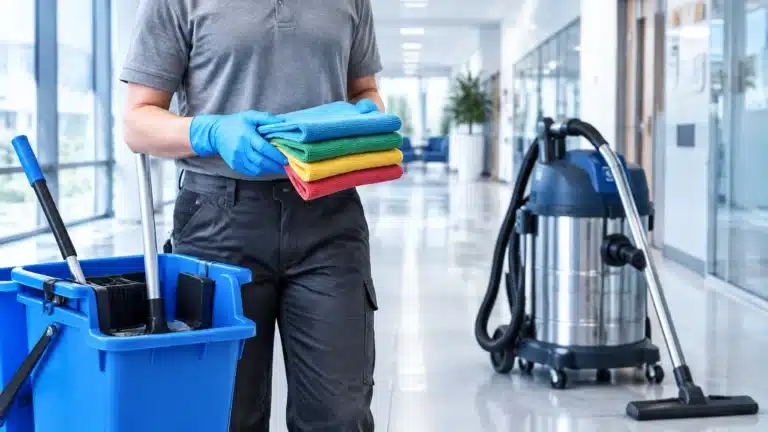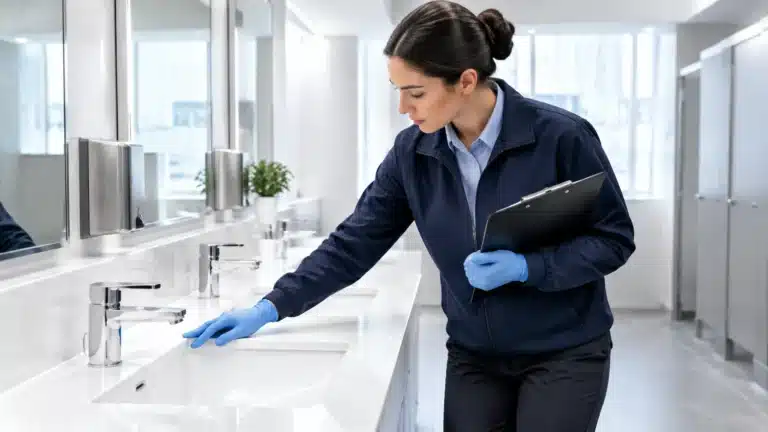


Cleaning risks are often ordinary, familiar and easy to underestimate. A damp corridor, a cable across a walkway, repeated bending to reach a low surface or a splash of concentrate on the skin can all seem like small problems in the moment. Across a full shift, however, small exposures and routine shortcuts can add up.
Good safety practice does not usually depend on dramatic measures. It is built through clear routines: checking the work area, using products as directed, controlling access to wet floors and paying attention to how the job affects the body. These habits matter in commercial settings, and they matter at home when you use professional cleaning products for demanding tasks.
What the injury figures tell us
The Health and Safety Executive reported 124 worker fatalities in Great Britain in 2024/25. In the same reporting year, slips, trips and falls on the same level accounted for 30% of employer reported non fatal workplace injuries. Falls from height remained the most common cause of fatal injury, accounting for over a quarter of worker deaths over the previous five years.
The figures are not specific to cleaners, so they should not be read as a count of injuries in the cleaning industry. They do, however, show why everyday hazards deserve attention. HSE recorded two cleaning sector fatalities in 2024/25: one caused by a fall from height and one by being struck by a moving vehicle.
The health picture extends beyond immediate injuries. HSE estimated that 511,000 workers had work related musculoskeletal disorders in 2024/25. Manual handling, awkward or tiring positions and repetitive work were among the main causes identified. A cleaning routine can involve all three, from carrying a full bucket to repeatedly wiping the same surface or working with a bent back.
Make risk assessment part of the routine
A risk assessment is useful when it reflects the work people actually do. It should not sit apart from the cleaning schedule or rely on assumptions about how a space is used. Walk the route, consider the timing and ask the people doing the work where problems occur.
HSE describes five steps:
Identify the hazards. Look for wet floors, loose mats, damaged surfaces, trailing cables, stored chemicals, awkward lifts and tasks involving repeated movements.
Decide who might be harmed and how. This could include cleaners, staff, visitors, customers, residents, household members or contractors. Consider who may enter the area while it is being cleaned.
Evaluate the risks and decide on precautions. Choose practical measures that reduce exposure. For example, clean a corridor in sections and block access to the section that is wet.
Record the findings. Note the hazards, the people affected and the precautions needed. A record makes it easier to brief staff and check that agreed controls are in place.
Review and update. Revisit the assessment when the layout, product, equipment, task or schedule changes, and after an incident or near miss.
Consider a routine in a small workplace kitchen. A cleaner needs to remove grease from a floor and wipe down counters while staff are still using nearby areas. The assessment should consider foot traffic, the floor surface, the product instructions, ventilation, access to the work area and how the cleaner will avoid carrying a heavy bucket around a busy space. The controls may include scheduling the floor task for a quieter period, keeping people out of the section being cleaned and using a suitable mop and squeegee.
This is a working plan, not paperwork for its own sake. If the controls are inconvenient or unclear, people may work around them. Involving cleaners in the assessment can reveal where the written routine does not match real conditions.
A warning sign is not a barrier
Wet floors are one of the most familiar hazards in cleaning. A smooth floor can remain slippery even after a well wrung mop has been used. The thin film of water may be difficult to see, especially in poor light or on a reflective surface.
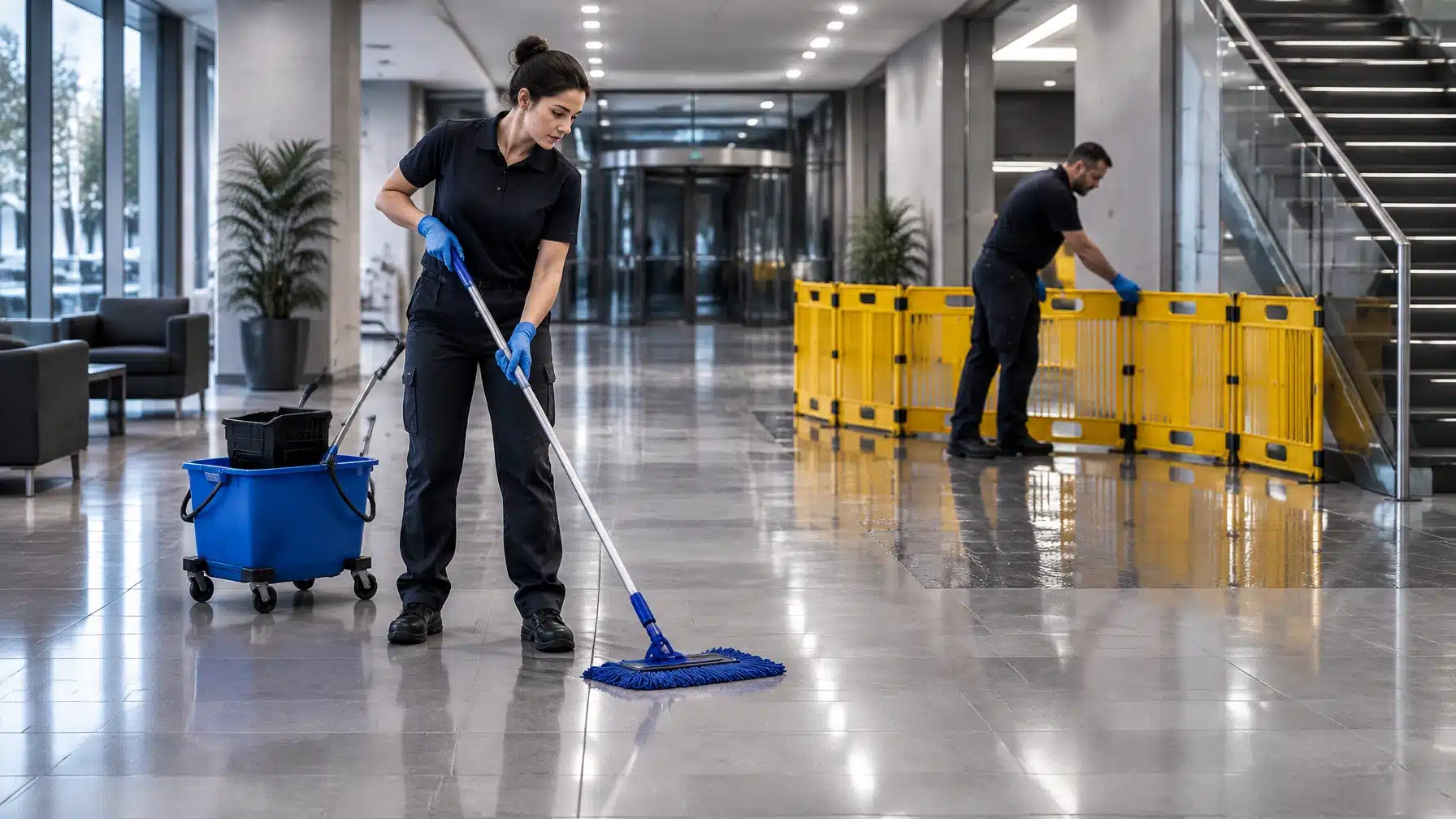
A wet floor sign has a role, but it only warns people. It does not stop them walking through the area. HSE notes that signs and cones are often ignored, particularly when the hazard is not obvious. Where possible, block pedestrian access with a physical barrier, lock the door or clean in sections so people can use a separate dry route.
Timing and technique also matter. Spot clean where possible rather than wetting a whole floor when only one area needs attention. Use a dry mop or squeegee to remove moisture and reduce drying time, while recognising that a damp floor can still present a slip risk. Keep vacuum and machine cables close to the work area, use nearby sockets where practical and move equipment out of walkways.
Spills should be dealt with promptly, and the floor should be left as dry as the task allows. If a floor is damaged or a mat is loose, report it and prevent access where necessary. A routine inspection can catch these problems before the next person encounters them.

Handle concentrates with care
Concentrated cleaning chemicals can make routine tasks more efficient, but they must be handled according to their label and safety information. A heavy duty degreaser, for example, may be intended for stubborn grease, but its correct use depends on the particular product, surface and task. Do not assume that products with similar names have the same dilution or safety requirements.
Read the label before use and follow the stated dilution, contact time, application method and protective equipment advice. If a safety data sheet is available, use it to understand relevant hazards and handling precautions. Do not guess a dilution, use more product in the belief that it will work better, or transfer chemicals into an unmarked container.
Never mix cleaning products unless the manufacturer specifically directs it. Mixing can create hazardous reactions. Use an appropriate measuring method, avoid splashing, keep containers closed when not in use and store them securely in their original containers. Keep chemicals away from food and from places where children or unauthorised people can reach them.
A cleaning trolley should carry only what is needed for the shift. Check bottles for leaks and make sure caps are secure before moving them. If a spill occurs, follow the product instructions and the site procedure rather than improvising. Ventilation is important where the task or product requires it.
These principles apply across product types. Whether the task involves an All Purpose Cleaner Spray, a professional bathroom cleaner, a glass cleaner, an all purpose floor cleaner or a drain cleaner unblocker, the label and safety information should guide how it is used. The name of a product alone is not a safe system of work.

Protect skin before irritation starts
Frequent contact with water, detergents and cleaning products can irritate the skin. HSE warns that cleaning chemicals can cause dermatitis, and that some ingredients can also cause skin allergies or asthma. Some products are corrosive and can cause burns to skin or eyes.
The first aim is to reduce contact. Use tools rather than hands to apply or remove products, avoid splashes and choose a method that keeps the product contained. Where the task assessment calls for gloves, choose suitable gloves for the product and task. Gloves are not a reason to ignore safe handling: damaged or contaminated gloves can still expose skin.
Good hand care is a practical part of the shift. Remove contamination promptly, wash hands properly and dry them thoroughly, including between the fingers. Use suitable skin creams as part of regular care. If skin becomes sore, itchy, cracked or persistently red, report it early and seek appropriate advice rather than carrying on and hoping it settles.
Wet work can be easy to overlook because it is part of the job. Repeatedly rinsing cloths, handling wet mop heads and washing hands throughout a shift can increase exposure. Rotating tasks and using equipment that limits direct contact can help reduce the time hands remain wet.
Reduce lifting, reaching and repetition
Cleaning work can place steady demands on the back, shoulders, arms and hands. Common tasks include carrying supplies, lifting rubbish bags, pushing a trolley, changing a mop head and reaching to clean higher or lower surfaces. Repeating the same movement for long periods can also contribute to discomfort.
Start by looking at the task rather than relying only on lifting advice. Can the load be made smaller? Can a trolley be used? Can supplies be stored closer to where they are needed? Is a long handled tool available so the worker does not need to bend or stretch repeatedly? For heavier or awkward items, consider whether the task can be avoided, made easier or completed with help.
A trolley can reduce carrying, but it should be suitable for the route and not overloaded. Keep frequently used items within easy reach. Adjust the work pattern so the same movement is not repeated continuously across the shift. Changing tasks, taking sensible pauses and using equipment that suits the person and the surface can all help.
If a task causes persistent pain, numbness or weakness, it should be reported and reviewed. These symptoms are not simply an unavoidable part of cleaning. An early adjustment to a tool, load or routine may prevent a minor problem from becoming harder to manage.

A practical check before, during and after work
A short, consistent check is often more useful than a lengthy checklist that no one uses. Before starting, check the route and the floor, confirm that equipment is in good condition, and make sure the right product and protective equipment are available. Confirm that the task can be done without exposing passers by to a wet floor or chemical splash.
During the task, keep products labelled and closed when not in use. Keep cables and equipment out of walkways. Follow the product instructions and do not leave a wet area open to traffic simply because a sign has been placed nearby. If conditions change, pause and adjust the plan.
At the end, remove barriers only when the floor is safe to use. Return chemicals to secure storage, clean and store equipment properly, and report defects, leaks, damaged flooring or near misses. A near miss is useful information. It can reveal that a control is missing or that a routine needs to change.
For a homeowner, the same habits are relevant on a smaller scale. Keep other people away from the area being cleaned, read instructions before using a concentrate, avoid mixing products, and store chemicals safely after use. Trade cleaning supplies and janitorial supplies are still chemicals and equipment that require sensible handling, whether they are used at a large site or in a domestic kitchen.
Cleaning safety is rarely about one perfect product or one warning sign. It depends on a sequence of dependable decisions: assess the task, control access, follow instructions, protect skin and body, and report what is not working. Those quiet habits help make each shift safer and more consistent.
References
- HSE, Health and safety statistics for 2024/25
- HSE, 2024 to 2025 names and details of fatalities
- HSE, Slips and trips in cleaning
- HSE, Risk assessment in cleaning
- HSE, COSHH and cleaners: key messages
- HSE, Working with substances hazardous to health: A brief guide to COSHH, INDG136
For a general view of cleaning supplies, visit the KleanPro Supplies shop.