

A slow draining sink during a busy service is rarely just a plumbing inconvenience. In a commercial kitchen, it can interrupt food preparation, create unpleasant odours and leave staff dealing with a preventable hygiene issue. Learning how to clean grease traps properly helps protect drainage, maintain a cleaner working environment and reduce the risk of costly callouts.
Grease traps are designed to capture fats, oils, grease and food solids before they reach the drainage system. They are a practical first line of defence, but only when they are emptied and cleaned on a schedule that reflects the volume of cooking taking place. A small café with limited frying may need a different routine from a hotel kitchen, takeaway or care home catering operation.
Why clean grease traps need a planned routine
When hot cooking oil, food debris and wash water enter the sink, the contents cool as they pass through the trap. Grease rises and solid particles settle, allowing relatively cleaner water to continue into the drain. Over time, that collected material fills the unit.
Once capacity is reduced, grease can pass into pipework and build up further down the line. The result may be slow drainage, foul smells, drain blockages and disruption at the worst possible time. In food service settings, poor grease management can also undermine the standards expected by staff, customers and inspectors.
A clean grease trap supports more predictable kitchen operations. It also makes daily cleaning easier because odours and backed up water are less likely to spread into pot wash, food preparation and service areas. The cost of routine maintenance is generally easier to control than an emergency drainage repair, particularly where kitchen closure or reduced trading is involved.
How often should a grease trap be cleaned?
There is no single interval that suits every premises. Frequency depends on the trap size, the number of covers served, the amount of frying and roasting, the type of food prepared and the volume of wash up. A kitchen producing greasy food throughout the day will fill a trap much faster than a low volume site serving cold food and drinks.
As a working rule, inspect the trap at least weekly and arrange cleaning before fats, oils, grease and solids occupy more than around a quarter of its usable capacity. Some high volume kitchens need attention several times a week or even daily. Smaller or quieter sites may operate safely with less frequent servicing, provided inspections show that the trap is not becoming overloaded.
Record each inspection and clean in a simple site log. Note the date, the level of grease observed, any odour or drainage issue and the action taken. This creates accountability across shifts and helps a facilities manager identify when the current schedule no longer matches the kitchen’s output.
Prepare the area before cleaning
Cleaning a grease trap is unpleasant work, but a controlled process keeps it manageable. Carry out the job when the sink is not needed and allow hot water to cool where possible. Restrict access around the unit, particularly in busy kitchens where staff may be carrying pans or moving stock.
Wear appropriate protective gloves, eye protection and protective clothing. Grease trap contents can contain sharp food fragments, contaminated water and strong odours. Keep a suitable scraper, scoop, container with a secure lid, absorbent material and cleaning cloths ready before opening the lid.
Check the trap manufacturer’s instructions first. Internal baffles, filters and seals vary between models, and forcing a component can damage the unit or affect how effectively it separates grease. If the trap is built into the floor or connected to a more complex interceptor system, specialist servicing may be the safer choice.
The correct way to clean grease traps
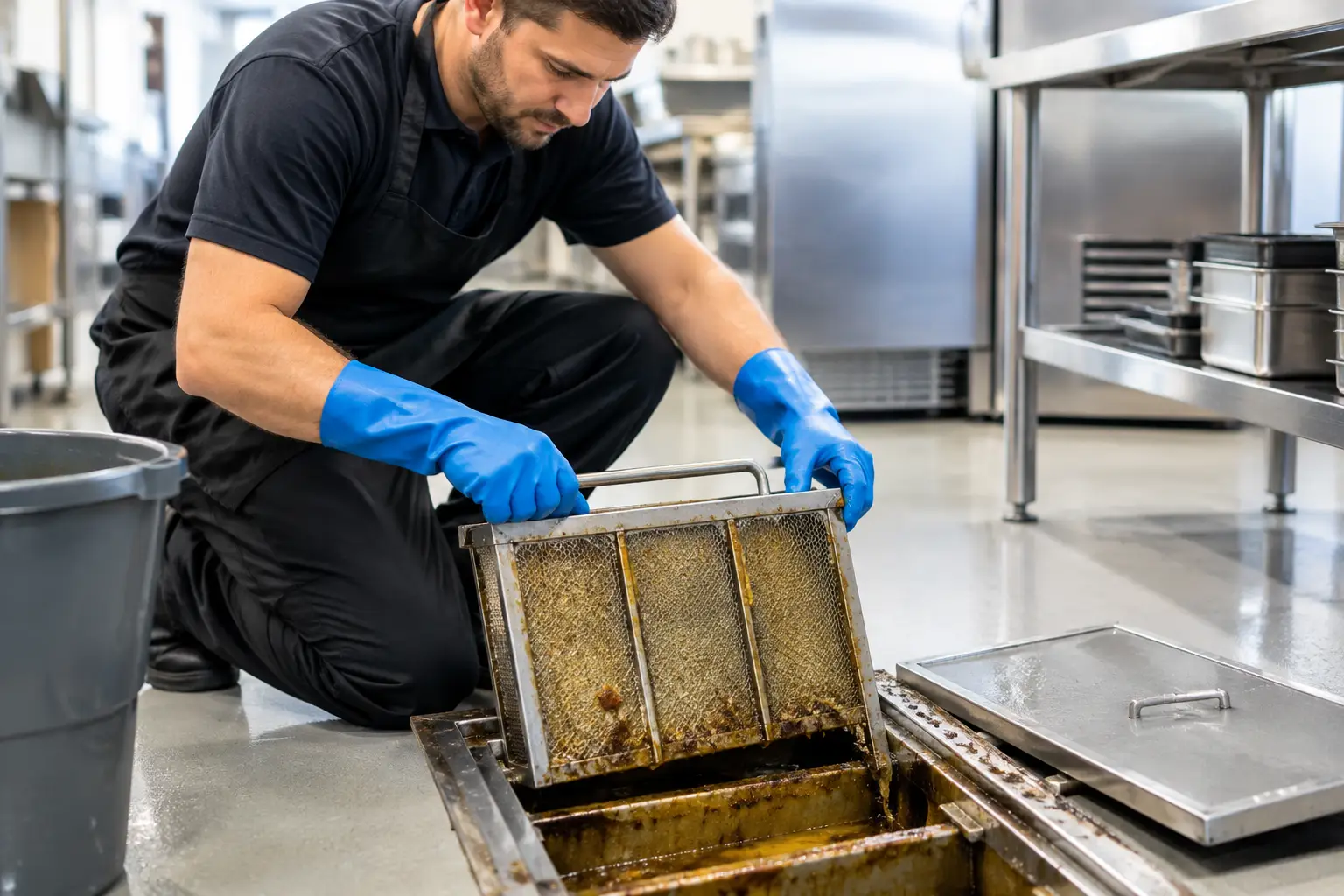
Begin by carefully removing the lid and setting it on a protected surface. Avoid splashing the contents onto nearby floors, walls or food contact areas. Check the level of floating grease, settled solids and standing water, then remove the visible layer of grease and debris with a scoop or scraper.
Place all collected waste into a secure container for disposal through the appropriate waste route. Do not wash grease into another sink, external drain or toilet. Moving the problem elsewhere simply transfers the blockage risk and can lead to a much larger drainage issue.
After the bulk waste has been removed, take out removable screens, baskets or baffles if the unit allows it. Scrape these components carefully and wash them using warm water and a suitable professional kitchen degreaser. A product designed for heavy kitchen soils is useful here, as it helps break down residue without relying on harsh methods that may damage surfaces or seals. Follow the dilution and contact time on the product label.
Wipe the interior of the trap, paying attention to corners, the underside of the lid and the inlet and outlet areas. Avoid pouring excessive water through the system as a shortcut. The aim is to remove residue while keeping fats and solids out of the drainage line. Rinse detachable parts where appropriate, refit them correctly and check that the lid closes securely.
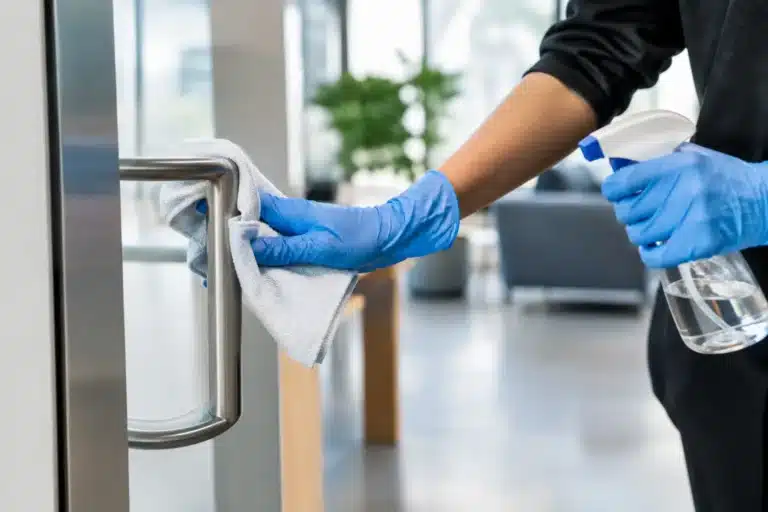
Finally, clean and disinfect the surrounding work area, including any tools used. Staff should wash hands thoroughly after removing gloves. This final stage matters because grease trap cleaning can transfer contamination to handles, taps, flooring and storage areas if equipment is put away without being cleaned.
Avoid shortcuts that create bigger problems
Very hot water may liquefy grease temporarily, but it does not remove it from the system. As the water cools, the grease can solidify further along the pipework. Likewise, relying on powerful drain chemicals can be counterproductive. Some products may damage components, upset biological treatment systems or create hazardous conditions for the person opening the trap later.
Biological or enzyme based maintenance products can have a place in an approved grease management routine, but they are not a substitute for physical removal of accumulated waste. Their effectiveness depends on the product, the system design, water temperature and how consistently the kitchen uses it. Use them only in line with the supplier’s instructions and alongside scheduled cleaning.
It is also worth addressing what enters the sink in the first place. Train kitchen teams to scrape plates and pans into food waste containers before washing. Cooking oil should be collected separately in a suitable container, rather than tipped into a sink. Small changes at the pot wash station can noticeably reduce the load on a grease trap.
When professional servicing is the right option
A trained contractor is often the sensible choice for large interceptors, high capacity kitchens and sites with restricted access. Professional servicing can include safe waste removal, a more thorough internal clean, inspection of seals and baffles, and documentation for site records. It is particularly useful where a trap repeatedly fills faster than expected or where drainage issues continue after routine cleaning.
Call for specialist support if water is backing up into sinks, strong odours return soon after cleaning, the trap has cracked components or grease is appearing downstream. These signs may point to a blocked outlet, an incorrectly sized unit or a wider drainage fault rather than a simple cleaning issue.
For multi site operators, consistency is the real advantage. A documented schedule, clear staff responsibilities and dependable supplies of gloves, degreaser and absorbent materials help every location follow the same standard. KleanPro Supplies supports this practical approach with professional grade cleaning essentials suited to demanding kitchen environments.
Keep the system working between cleans
Grease traps perform best when the cleaning routine is part of normal kitchen management, not a task left until drainage fails. Make weekly inspection part of the closing procedure, check that staff are using food waste and oil collection points correctly, and keep records where the responsible manager can review them.
A clean, well maintained grease trap will not be the most visible part of a kitchen operation, but it protects the areas that are. Give it the same planned attention as floors, food preparation surfaces and washroom hygiene, and it will help keep service moving when the kitchen is under pressure.