
Is Dishwasher Rinse Aid for Hard Water Enough?
Choose dishwasher rinse aid for hard water that delivers clearer glassware, faster drying and dependable results in busy kitchens and demanding homes.

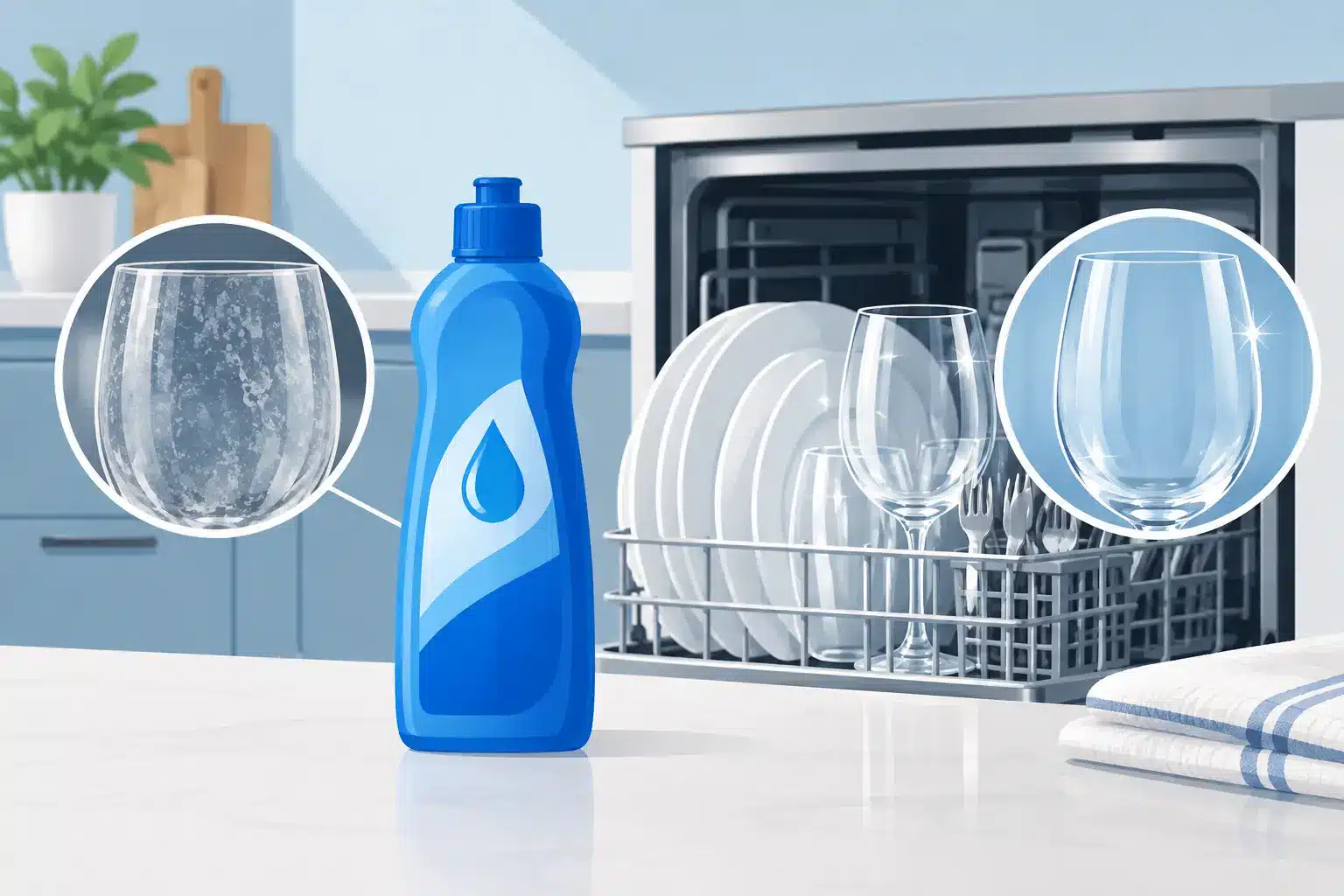
Cloudy tumblers, white marks on cutlery and water sitting in the base of a freshly washed mug are not always signs of a poor wash cycle. In hard-water areas, minerals in the final rinse can dry onto crockery and glassware before they leave the machine. The right dishwasher rinse aid for hard water helps water sheet away more evenly, reducing visible spotting and improving drying where presentation and turnaround matter.
For restaurants, care settings, offices and busy households, this is more than a cosmetic issue. Marked glassware can undermine a guest’s first impression, while hand-drying items adds time, lint and avoidable handling. Rinse aid is a simple part of a more reliable dishwashing routine, but it cannot compensate for incorrect machine settings, depleted salt or scale inside the appliance.
What hard water does in a dishwasher
Hard water contains dissolved minerals, principally calcium and magnesium. When hot water evaporates from a plate or glass, those minerals remain behind as a pale residue. The effect is especially obvious on clear glassware, dark utensils and stainless-steel surfaces.
Over time, the same minerals can build up in the dishwasher. Limescale may collect around heating components, spray arms and the inside of the machine, reducing efficiency and making it harder to achieve consistent results. In commercial kitchens, where dishwashers may run repeatedly through a service period, small performance losses quickly become extra labour, rewash cycles and higher chemical use.
Water hardness varies considerably across the UK. Areas supplied from chalk and limestone aquifers generally have harder water, but local supply conditions can differ even within the same county. A simple water-hardness check, or information from the local water supplier, gives a useful starting point when setting up a dishwasher.
How dishwasher rinse aid for hard water works
Rinse aid is dispensed during the final rinse. Its surfactants reduce the surface tension of water, helping it form a thin sheet rather than separate droplets. With fewer droplets left on the surface, there is less opportunity for mineral-rich water to dry into spots.
A good dishwasher rinse aid for hard water is therefore designed to support three practical outcomes: cleaner-looking glassware, quicker drying and fewer streaks on crockery and utensils. It does not soften the incoming water. That job is handled by the dishwasher’s built-in water softener and dishwasher salt, where fitted.
This distinction matters. If a machine has run out of salt, or its softener is set too low for the local water hardness, rinse aid may improve drying but will not stop scale deposits forming. Treat rinse aid as one part of the system, not a replacement for basic dishwasher maintenance.
Rinse aid, salt and detergent have different jobs
These products are often grouped together, but each has a separate role in the wash process. Detergent removes food residue, grease and staining during the main wash. Dishwasher salt regenerates the machine’s water-softening system, helping it remove hardness minerals before washing. Rinse aid supports the final rinse and drying stage.
All-in-one tablets can be convenient for light domestic use, particularly in soft-water areas. In a hard-water location or a high-use kitchen, separate detergent, salt and rinse aid often allow better control. You can adjust the rinse-aid dose without changing the wash detergent, and ensure the softener receives enough salt for the local water conditions.
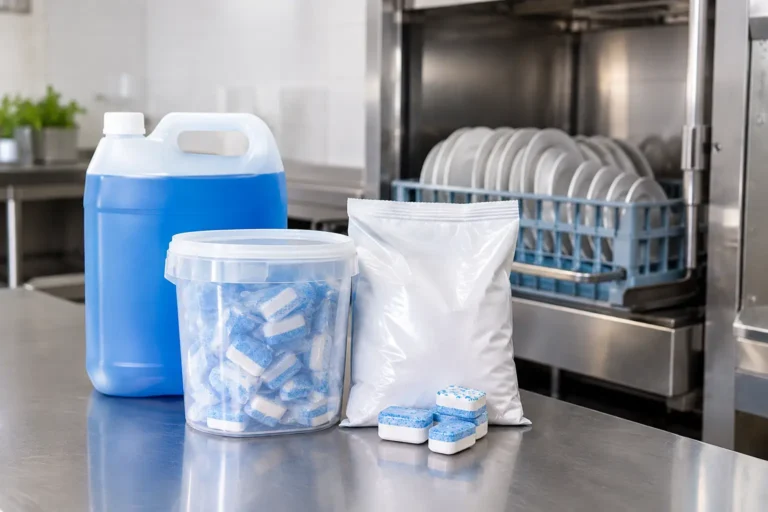
For commercial glasswashers and dishwashers, dosing systems may supply detergent and rinse aid automatically. These should be checked as part of routine machine care. An empty container, blocked pickup tube or incorrect dose can lead to a sudden fall in finish quality, even when the wash programme appears to run normally.
Setting the right dose
Most machines allow the rinse-aid dosage to be adjusted. Start with the manufacturer’s recommended setting, then assess results after several full wash cycles. One load can be misleading, particularly if it contains heavily soiled cookware, unusual glassware or items that have been hand-washed with washing-up liquid beforehand.
If glasses are wet at the end of the cycle or show water spots, increase the dosage gradually. If there is a bluish film, visible smearing or excessive foam, the setting may be too high. Make small adjustments, rather than moving immediately to the maximum level, and allow a few cycles between changes.
Temperature and load arrangement also affect drying. Cups should be angled so water can drain, and items should not nest together. Overloading prevents spray from reaching surfaces properly and can trap water between plates or inside glassware. Even the best rinse aid cannot correct poor loading.
When rinse aid will not solve the problem
Persistent cloudiness does not always come from removable mineral deposits. Glasses can become permanently etched by repeated exposure to very soft water, excessive detergent, high temperatures or unsuitable programmes. Etching often looks like a uniform, dull haze and will not wipe away with a descaler. Mineral spotting, by contrast, is usually patchy and may reduce after descaling.
Greasy smears may point to an underperforming wash stage rather than a rinse problem. Check that spray arms rotate freely, filters are clean and the wash temperature is appropriate. In professional kitchens, food debris in filters and clogged nozzles can quickly affect both cleaning standards and machine reliability.
Scale inside the appliance also needs direct attention. Use a suitable dishwasher cleaner or descaler at the recommended interval, following the machine manufacturer’s guidance. This helps protect internal components and keeps water flow and heating performance more consistent. Never use ordinary household salt in a dishwasher softener, as additives can damage the system.
Choosing a rinse aid for commercial and home use
The best choice depends on the machine, water hardness, workload and finish required. A hospitality venue serving wine, cocktails or bottled drinks needs glassware that looks clear under lighting and withstands frequent cycles. A staff kitchen may prioritise simple, dependable drying and fewer rewashes. At home, the main concern might be removing marks from everyday glasses without constantly polishing them by hand.
Look for a professional-grade rinse aid intended for automatic dishwashing, with clear dilution or dosing guidance and compatibility information. For trade buyers, concentrate format, container size and dependable supply are practical considerations. A product that performs well but is unavailable when stock runs low creates an avoidable operational problem.
Surface safety matters too. Do not assume every item is dishwasher safe. Decorated ware, aluminium, wood, cast iron, certain plastics and delicate crystal may need separate care. Where a manufacturer specifies a particular programme or chemical type, follow that direction rather than increasing chemical doses to force a result.
A practical hard-water routine
Consistency comes from a routine that staff can follow and managers can monitor. Keep rinse aid topped up, confirm the dishwasher salt level where applicable and set the water-softener level for the local supply. Clean filters daily in busy environments, inspect spray arms regularly and descale on a schedule that reflects machine use and water hardness.
For a commercial operation, record recurring finish issues rather than treating every marked glass as an isolated fault. If spotting appears at the end of a busy shift, check chemical levels, dosing equipment and rinse temperature before changing products. This approach protects stock, reduces guesswork and makes it easier to keep hygiene and presentation standards steady.
Clear glassware and dry crockery should be the normal result of a properly maintained machine, not something staff have to rescue with a tea towel. Set up rinse aid alongside the correct salt, detergent and maintenance plan, and hard water becomes a manageable operating condition rather than a daily source of rewash work.