Newsletter Subscribe
Subscribe for news, offers and a welcome 5% discount on us.
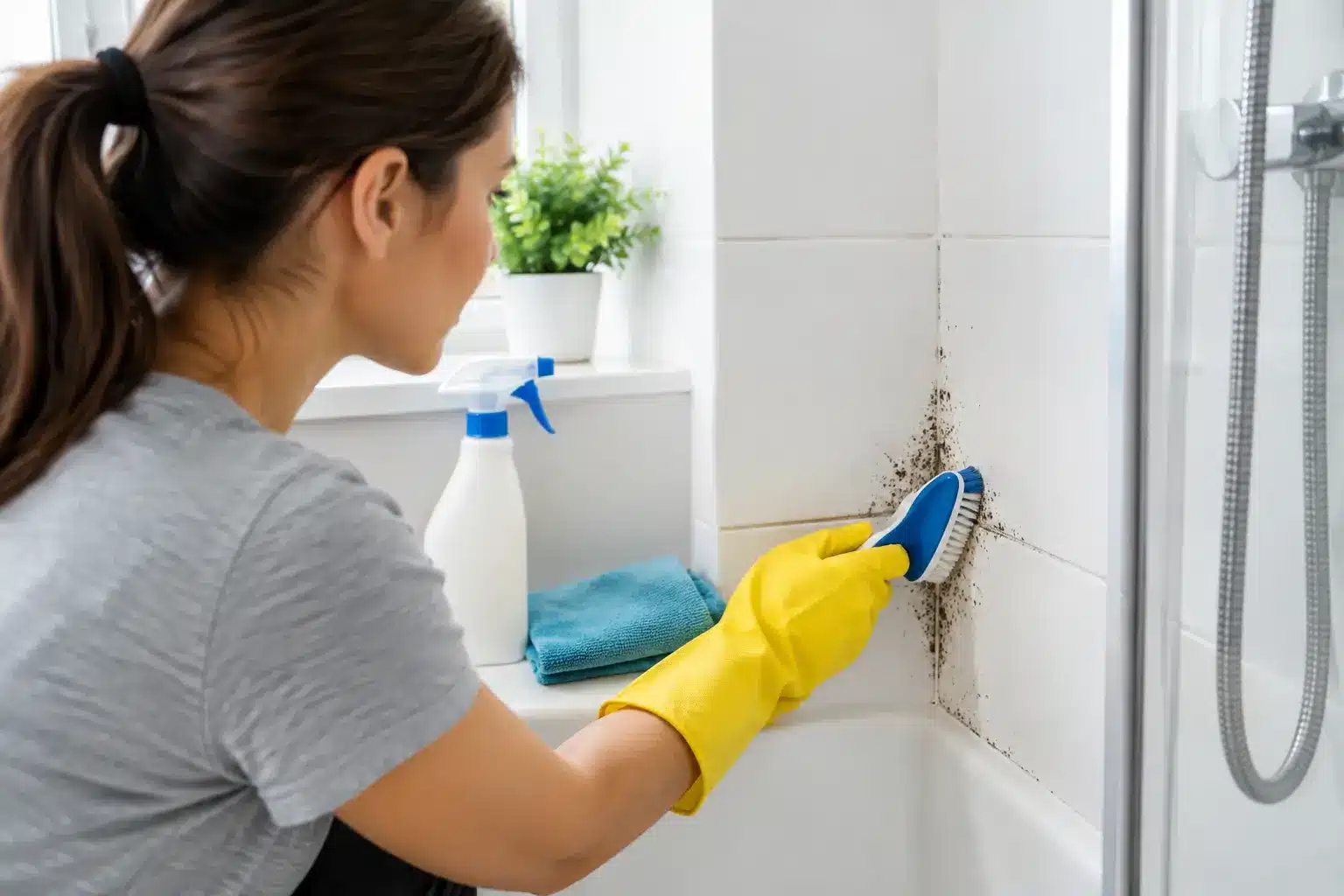
Learn how to remove bathroom mould safely, protect grout and sealant, and prevent it returning in busy commercial washrooms and homes across the UK today.
Black spotting around a shower seal, ceiling corners that look permanently grey, or a musty smell after cleaning are signs that moisture is winning. To remove bathroom mould properly, the visible marks need treatment, but the source of damp air must also be controlled. Otherwise, the same areas can look affected again within days.
For hospitality washrooms, rented properties, offices and busy family bathrooms, this is more than a cosmetic issue. Mould can undermine presentation standards, stain silicone and grout, create avoidable complaints and make routine cleaning take longer. A safe, repeatable process protects both the surface and the people using the space.
Bathrooms produce warm, humid air every day. When that air settles as condensation on cooler tiles, windows, ceilings and pipework, it gives mould the moisture it needs to grow. Poor extraction, a closed window, cold external walls and slow drying towels can all make the problem worse.
Mould also feeds on residues that are easy to miss. Soap scum, body oils, dust and limescale can form a film on tiles and sealant, particularly in shower areas. A surface may look clean after a quick wipe, yet still provide enough contamination for spores to establish.
In commercial settings, the pattern is often linked to operating hours. A washroom that is cleaned late, then locked with wet floors and no effective ventilation, may remain damp for hours. In homes, the cause may be a shower used before work with no window or extractor fan left running afterwards. The solution depends on the cause as much as the cleaner chosen.
Start by identifying whether the issue is condensation, a cleaning gap or a building defect. Condensation mould is commonly found on ceilings, window reveals, tile grout and silicone close to a shower or bath. It tends to be spotty or patchy and appears in areas where air is still or surfaces stay wet.
A localised stain that keeps returning in one precise area may point to a leak from a shower tray, pipe, toilet cistern or damaged seal. Peeling paint, soft plaster, swollen skirting and persistent dampness are not routine cleaning issues. Report or repair the source before attempting repeated mould treatments. No professional cleaner can compensate for water entering a wall or floor void.
Check the extractor fan as well. Hold a single sheet of toilet tissue near the grille while the fan is operating. If it is not held in place by the airflow, the fan may need cleaning, servicing or replacement. In managed premises, record the finding and arrange maintenance through the appropriate process.
Ventilate the room before starting. Open the window where possible and run the extractor fan. Wear suitable gloves, and use eye protection if there is a risk of splashing. Where mould is widespread or the room has poor ventilation, a suitable face covering is sensible, particularly for staff carrying out repeated cleaning tasks.
Do not dry brush mouldy surfaces. Brushing can disturb spores and spread them around the room. Remove loose dust with a damp disposable cloth instead, then dispose of it in a sealed bag. Keep children, guests and pets away until the area is dry and the room has been aired.
Read the product label and check surface compatibility. Natural stone, coloured grout, painted walls, wood finishes and some metals need more care than glazed ceramic tiles. Strong chlorine based products may lighten coloured sealant, damage certain finishes or create staining if used incorrectly. Test a small, discreet area first where there is any doubt.
Never mix cleaning chemicals. In particular, do not combine bleach or chlorine based products with acidic limescale removers, toilet cleaners or ammonia containing products. Dangerous fumes can be produced. Use one product at a time, rinse where required and allow the area to dry before applying a different treatment.
For hard, washable tile surfaces, begin by removing soap and grease deposits. This gives the mould treatment direct contact with the affected area. Apply an appropriate bathroom or mould cleaner according to its instructions, ensuring the surface remains wet for the stated contact time. Rushing this stage is a common reason for poor results.
Wipe with a clean cloth or use a non-abrasive pad on durable tiles. Rinse if the label requires it, then dry the surface thoroughly with a clean cloth. Drying matters because it removes the moisture that encourages the mould to return.
Grout needs a more controlled approach. Its textured surface can hold soil and spores, so work the cleaner into the lines with a grout brush or small stiff brush that will not scratch surrounding tiles. Avoid using excessive force on weakened grout. If it is cracked, missing or crumbling, cleaning may improve its appearance but will not restore its water resistance. Regrouting is the more reliable long term repair.
Silicone sealant is often the hardest area to restore. Surface mould can usually be treated successfully when caught early. If black marks have penetrated deeply into old or damaged silicone, they may remain after cleaning. Repeatedly applying stronger chemicals can degrade the sealant without resolving the staining. In that case, remove and replace the sealant once the shower enclosure or bath edge is fully dry and any leak has been fixed.
Ceilings and painted walls require less liquid and more patience. Apply the cleaner sparingly to a cloth rather than saturating the paintwork, then wipe carefully. If the coating is already blistering, stained through or soft, arrange repair after the moisture source has been addressed. Painting over active mould without cleaning and drying the area only conceals the problem temporarily.
The most effective prevention measure is rapid drying. After showers, remove standing water from screens, tiles and trays with a squeegee or microfibre cloth. This takes little time and reduces the condensation load substantially. In commercial washrooms, it can be built into the final inspection of each cleaning round.
Ventilation should continue after use, not just while someone is in the room. Run extraction during showering and for a suitable period afterwards. Keep internal doors closed if humid air would otherwise move into cooler corridors or bedrooms. Where privacy and security allow, open a window after the room has been used.
Laundry and towels also matter. Do not leave wet towels bunched on the floor or hanging against cold walls. Wash bath mats regularly and dry them completely before returning them to service. In hospitality or leisure settings, maintain enough towel stock to avoid storing damp linen in poorly ventilated cupboards.
A planned cleaning schedule should include shower screens, grout lines, seals, ventilation grilles and high level corners, not only toilets and basins. These are the areas most likely to be missed when teams are working quickly. Clear instructions, reliable product supply and colour coded cloths help staff complete the same standard of work across every washroom.
Small areas of surface mould can generally be managed through careful cleaning and improved ventilation. Large, recurring patches, visible water damage, strong persistent odours or mould linked to a suspected leak require a building maintenance response. This is especially relevant in healthcare, hospitality and rental accommodation, where unresolved damp can affect user comfort, compliance and the condition of the property.
Keep a record of repeat reports, cleaning actions and repairs. For facilities teams, this makes it easier to distinguish between a cleaning issue and a fault in extraction, insulation or plumbing. It also supports a more cost effective response than continually using additional chemicals on a problem that needs repair.
A bathroom that is cleaned well should look dry, smell fresh and remain easy to maintain between visits. Treat mould promptly, give products their required contact time and remove the moisture that caused it. That practical combination is what keeps bathrooms presentable, hygienic and ready for use.