Newsletter Subscribe
Subscribe for news, offers and a welcome 5% discount on us.
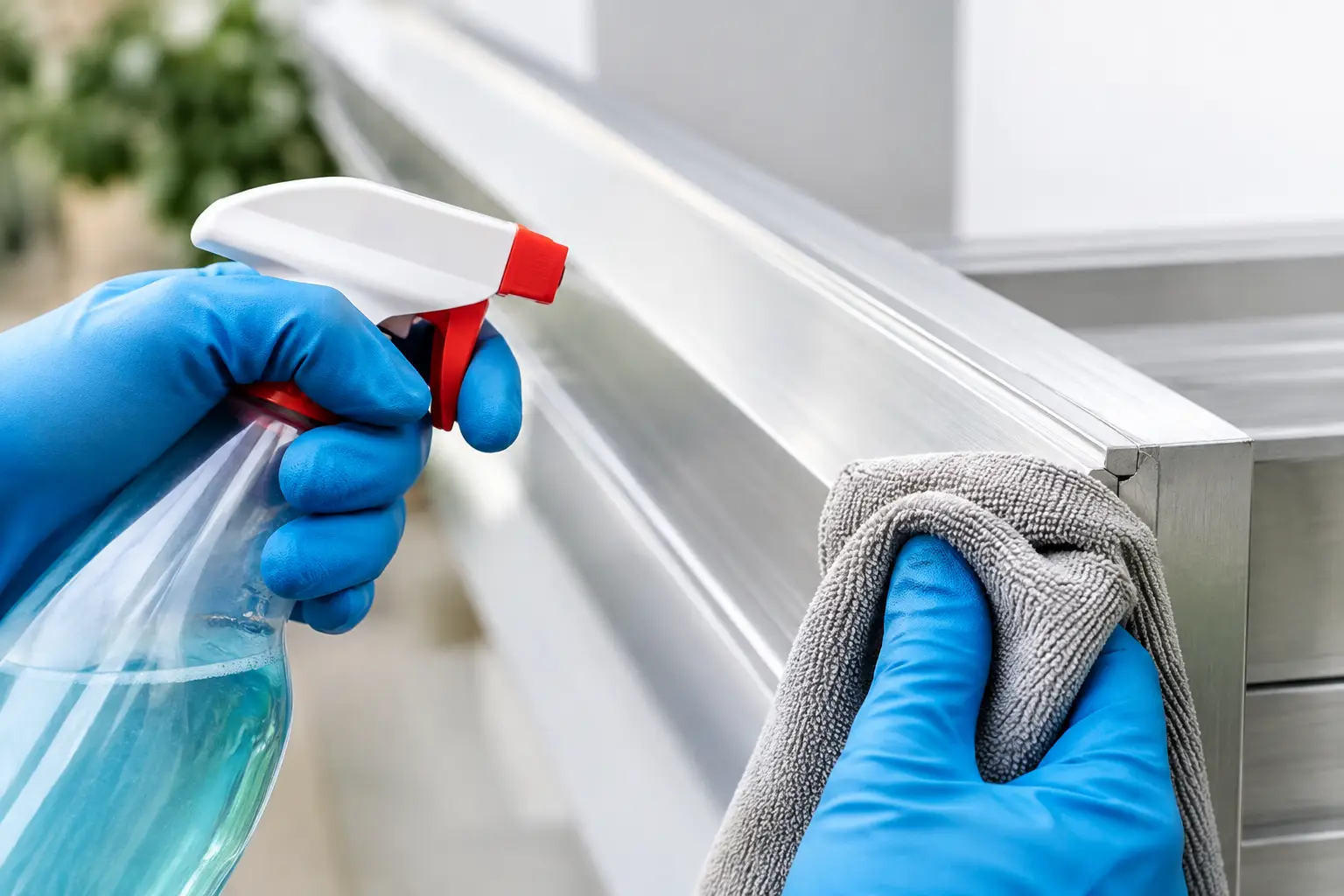
Can degreaser damage aluminium? Learn which formulations pose a risk, how contact time matters and how to clean aluminium safely at work or home daily.
Bare aluminium can lose its clean, even finish surprisingly quickly when the wrong chemical is left on the surface. So, can degreaser damage aluminium? Yes, it can, particularly where a strong alkaline or caustic product is used at the wrong dilution or allowed to dwell for too long. The risk is highest on uncoated aluminium, but anodised, painted and polished surfaces also need a considered cleaning method.
For commercial kitchens, housekeeping teams and facilities managers, this is not simply a cosmetic concern. Etching, staining and surface corrosion can make equipment harder to maintain, affect presentation and create avoidable replacement costs. The right degreaser should remove cooking oils and operational grime without compromising the material beneath.
Aluminium reacts more readily with certain cleaning chemicals than stainless steel or many plastics. Its naturally occurring oxide layer provides some protection, yet aggressive products can disrupt that layer. Once this happens, the metal may appear dull, patchy, grey or chalky. In more severe cases, it can develop pitting or a roughened finish.
Highly alkaline degreasers are the most common concern. Products containing strong caustic ingredients can break down baked on grease effectively, but they may also attack bare aluminium. The effect is often more pronounced where the chemical is used neat, mixed stronger than the label permits or left to dry on the surface.
Acidic cleaners can cause problems too, although their effects differ. They may mark or etch aluminium, particularly when the formulation is strong or the contact time is excessive. This is why a cleaner that performs well on ceramic tiles, stainless steel or oven interiors should never be assumed suitable for aluminium.
Heat makes the situation less forgiving. A degreaser applied to a warm extraction hood, catering tray, grill component or pan can react and dry faster than expected. Heavy soil may encourage staff to leave the product in place for longer, but extra dwell time does not always mean better results. On aluminium, it can mean permanent marking.
Not every aluminium surface has the same level of exposure. Bare or polished aluminium is generally the most vulnerable because the cleaner reaches the metal directly. Common examples include cookware, baking trays, catering equipment, window frames and some appliance panels.
Anodised aluminium has a protective finish created through an electrochemical process. It is more resistant than bare aluminium, but it is not immune to damage. Strong alkaline cleaners can dull the finish, alter its colour or leave blotchy marks. Coloured anodised items deserve particular care, as visible fading may be difficult to correct.
Painted, powder coated or lacquered aluminium introduces another variable. The metal itself may be protected, yet the coating can soften, discolour or lose adhesion when exposed to an unsuitable solvent or strong cleaner. In practical terms, the surface specification is more useful than a broad assumption that an item is simply aluminium.
Where an appliance, fixture or piece of kitchen equipment has a manufacturer care guide, follow it first. This is especially relevant for food preparation equipment, specialist oven parts, commercial refrigeration, lift interiors and architectural finishes. A replacement panel or component can cost far more than the few minutes needed to check chemical compatibility.
A surface safe degreaser is not necessarily weak. Professional formulations can deliver effective oil removal when they are selected for the task, diluted correctly and used with the right agitation. For routine grease on aluminium, a milder alkaline cleaner is usually a better starting point than a heavy-duty caustic product intended for deep cleaning ovens or drains.
Read both the product label and safety information before use. Look for specific guidance on aluminium, soft metals, anodised finishes and painted surfaces. If aluminium is listed as unsuitable, treat that as a clear instruction rather than a suggestion. If the label does not state compatibility, test first or seek advice from the supplier.
For regular maintenance of kitchen fronts, extraction surrounds or aluminium fittings, the cleaning process should be designed around controlled results. Using the correct product at the stated dilution often removes fresh grease efficiently, reducing the need for harsh chemicals later. This also supports more consistent standards across shifts and sites.
KleanPro Supplies supports cleaning teams with professional-grade products chosen for practical applications, but surface safety always depends on using any formulation as directed. A product suited to stubborn grease on one material may not be appropriate for another.
Start by removing loose food debris and dry soil with a soft cloth or suitable brush. This prevents grit from scratching the surface when cleaning begins. Apply the degreaser at the recommended dilution, preferably to the cloth or cleaning pad first where overspray could reach sensitive areas.
Use a non-abrasive cloth, soft brush or non-scratch pad. Hard scouring pads and wire wool can damage aluminium even without chemical exposure, leaving scratches that hold soil and make the finish appear uneven. Work a manageable area at a time so that the product remains under control.
Keep the contact time short unless the product directions state otherwise. Wipe the surface promptly, then rinse thoroughly with clean water where rinsing is appropriate. Rinsing is essential in commercial kitchens and on food contact surfaces, but it also helps remove chemical residue that could continue reacting with the metal.
Dry the surface with a clean lint-free cloth. This final step makes it easier to spot remaining grease, streaks or early signs of a reaction. It also reduces water marks, particularly on polished aluminium and visible hospitality fittings.
A small test patch is sensible whenever the surface is unfamiliar, expensive or highly visible. Choose an inconspicuous area, apply the diluted product for the intended contact time, rinse and dry it, then inspect the finish in good light. A test should be carried out before cleaning the full surface, not after a problem has appeared.
Commercial kitchens sometimes face carbonised grease that a mild cleaner will not shift. Oven surrounds, extraction systems and neglected equipment may need a higher strength degreaser. The answer is not to use that product across every nearby surface.
Protect aluminium components before applying a heavy-duty formulation. Remove detachable parts where possible, cover vulnerable surfaces and use targeted application rather than broad spraying. Staff should know which items are stainless steel, enamel, aluminium and coated metal, as these distinctions have a direct effect on chemical choice.
If an aluminium item has already turned grey or dull after cleaning, stop using the product immediately and rinse the area well. Do not attempt to correct the mark by applying more degreaser or an acidic cleaner. Mild discolouration may be reduced with an appropriate metal care process, but etched or pitted aluminium often cannot be fully restored.
Training matters here. Clear dilution instructions, labelled trigger bottles and a simple cleaning schedule reduce guesswork during busy service periods. They also help teams avoid using a powerful product merely because it is the closest one to hand.
The most reliable approach is to match the chemical to the surface and the level of soil. Routine cleaning with a suitable product prevents grease build up, while controlled use of stronger degreasers keeps deep cleaning effective without putting aluminium at risk. This is better for equipment condition, staff efficiency and the presentation expected in professional settings.
Before the next deep clean, take a moment to identify the aluminium surfaces in the area and check the chosen product against them. That small check can protect a finish that may be costly, inconvenient or impossible to replace.