Newsletter Subscribe
Subscribe for news, offers and a welcome 5% discount on us.
Bleach versus disinfectant explained for UK cleaning teams: choose the right product, protect surfaces and maintain dependable hygiene standards daily.
A washroom may look clean after a quick wipe, while touchpoints still carry contamination. Equally, a strong bleach smell can suggest hygiene even when the product has been used on the wrong surface or wiped away too soon. The bleach versus disinfectant question matters because product choice affects staff safety, surface life, food hygiene and the standard your customers or visitors experience.
For commercial teams, the answer is not simply that one product is better. Bleach has a valuable role in particular cleaning tasks, while disinfectants cover a wider range of hygiene requirements. The correct choice depends on the soil present, the surface, the microorganisms you need to control and the instructions on the label.
Bleach is usually a chlorine based product, commonly containing sodium hypochlorite. It is known for whitening, stain removal, odour control and powerful cleaning in suitable areas. At the correct dilution and contact time, some bleach products can also disinfect. That does not mean every bleach product is appropriate for every disinfection task.
Disinfectant is a broader term. A disinfectant is formulated to reduce microorganisms on hard surfaces when used as directed. Different products use different active ingredients, including quaternary ammonium compounds, alcohols, hydrogen peroxide and chlorine. Their performance claims may cover bacteria, yeasts, fungi or viruses, but those claims depend on the stated dilution, contact time and conditions of use.
In practical terms, bleach is one possible disinfecting chemistry, but disinfectant is the category you should look to when the job requires a specific hygiene claim. For example, a commercial kitchen, care environment or busy washroom may need a product tested for the type of microorganism relevant to that setting. A general bleach may not be the most suitable or surface safe option.
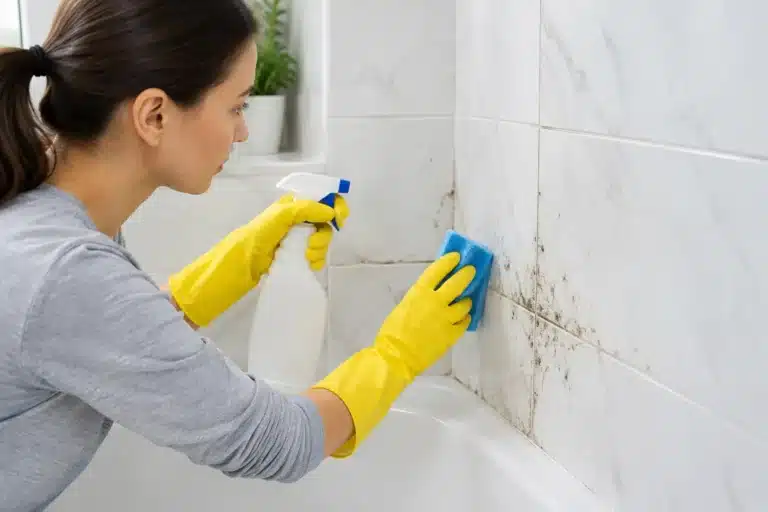
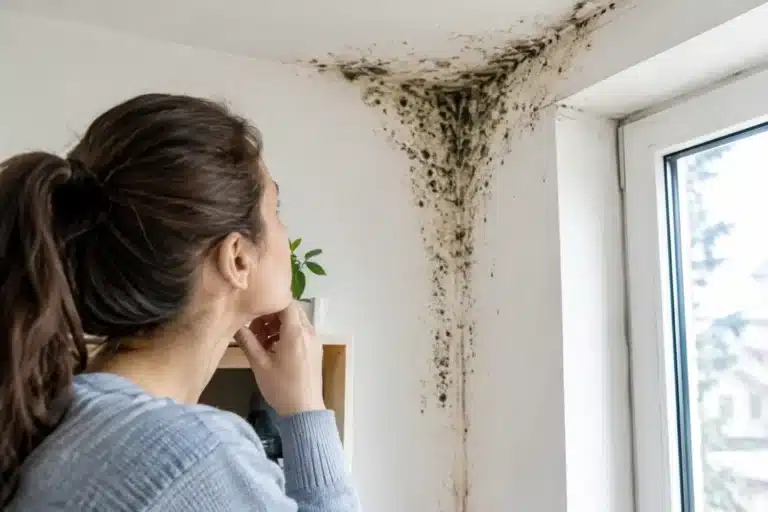
Bleach is particularly useful where whitening and stain removal are as important as hygiene. It can be effective on suitable toilet bowls, ceramic surfaces, drains and certain hard, non porous surfaces. It is often used to tackle visible staining, mould marks in appropriate locations and stubborn discolouration around washroom fittings.
It also has a place in laundry processes where a fabric care label and the product instructions permit its use. However, it can fade colours, weaken some fabrics and damage finishes. A product designed for professional laundry care is often a more reliable choice for frequent use or mixed loads.
The limitations matter. Chlorine bleach can discolour textiles, corrode metals, damage natural stone, dull some plastics and harm painted or coated surfaces. It is not a sensible default for everyday wiping of desks, glass, food preparation areas or delicate fixtures. Repeated use on the wrong materials can create replacement costs that far outweigh the initial saving on chemicals.
Bleach must never be mixed with other cleaning products. In particular, mixing it with acidic descalers, toilet cleaners or ammonia containing products can release dangerous gases. Use it only in a well ventilated area, follow the dilution guidance exactly and store it securely in its original labelled container.
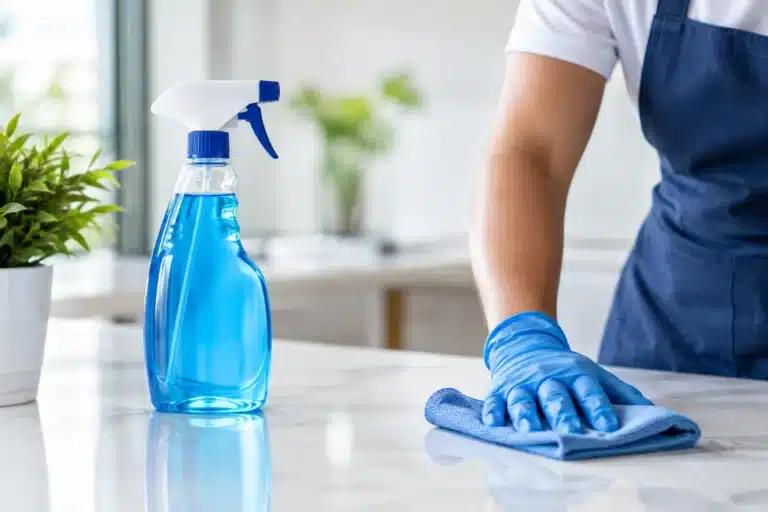
A purpose formulated disinfectant is usually the more controlled choice for regular hygiene programmes. It can be selected for the material being cleaned, the environment and the required efficacy claim. This helps teams work consistently across high touch areas such as door handles, handrails, switches, reception counters and shared equipment.
In food service settings, choose a product suitable for food preparation areas and follow any rinsing instructions. A food safe surface does not mean a surface can be sprayed with any chemical and returned to use immediately. Labels set out whether a rinse is needed, how long the product must remain wet and whether food should be removed before application.
For washrooms, disinfectants can support routine hygiene on taps, flush plates, door furniture and dispensers without the unnecessary bleaching effect that may damage fittings. In offices, retail spaces and hospitality venues, they can provide dependable disinfection of frequently handled surfaces while protecting finishes when the correct formulation is selected.
Do not confuse a fragranced cleaner or all purpose cleaner with a disinfectant. A cleaner removes dirt and grease. A disinfectant controls microorganisms. Some products do both, but only where the label clearly makes that claim and provides instructions for disinfection use.
No disinfectant performs at its best over heavy grease, food debris, limescale or visible dirt. Soil can shield microorganisms from the active ingredient and reduce the product’s effectiveness. This is why commercial cleaning procedures commonly begin with cleaning, followed by disinfection where required.
In a kitchen, degrease a worktop or equipment exterior before applying the appropriate disinfectant. In a washroom, remove soap residue and soiling before disinfecting touchpoints. In healthcare adjacent or high risk environments, follow the site’s own infection control procedures alongside the product directions.
Contact time is equally important. Spraying a surface and immediately wiping it dry may leave too little time for the disinfectant to work. The label will state how long the surface needs to remain visibly wet. Build this into staff training and cleaning schedules, especially during busy service periods when speed can undermine results.
The most effective cleaning cupboard is not necessarily the one with the strongest smelling products. It is the one where every product has a defined purpose and staff know how to use it correctly. Procurement decisions should start with the task rather than a single chemical for every area.
For general cleaning, use a suitable cleaner to remove daily dirt. For greasy kitchen surfaces, use a professional degreaser. For routine touchpoint hygiene, select a surface disinfectant with claims appropriate to your setting. For toilet bowls, stain removal or specific bleaching jobs, use bleach only where the surface and instructions allow it.
When comparing disinfectants, check the label for recognised test standards and the conditions behind the claim. Standards such as EN 1276, EN 13697 and EN 14476 can indicate testing for particular antimicrobial performance, but they do not replace correct use. A product may require a certain concentration, contact time or clean surface to meet that standard.
Surface compatibility deserves the same attention. Stainless steel, aluminium, marble, wood, acrylic, screens and coated fixtures may all require different care. Test an inconspicuous area if you are uncertain, particularly when introducing a product across a large site. Clear product selection prevents complaints, damage and avoidable downtime.
Reliable results come from repeatable routines. Keep products in original containers with readable labels, use the stated dilution equipment where applicable and provide suitable gloves or other personal protective equipment identified by the product safety information. Never decant chemicals into unlabelled spray bottles.
Colour coded cloths and equipment help prevent cross contamination between washrooms, kitchens and general areas. Use clean cloths and mop heads, because applying disinfectant with contaminated equipment undermines the process. Staff should also know when to replace solutions, particularly where buckets or reusable cloths are involved.
For sites with recurring demand, standardising the core range makes training and stock control easier. It reduces the risk of staff reaching for bleach when a neutral cleaner or surface disinfectant is required. A dependable supplier can help match professional grade products to the actual workload, whether that is a small café, a multi room hospitality operation or a busy office.
Use bleach when you need a suitable product for bleaching, stain removal or specific chlorine based applications, and when the surface can tolerate it. Use a disinfectant when you need a defined antimicrobial claim, reliable surface compatibility and a repeatable hygiene process. In many premises, both products have a place, but neither should be treated as a substitute for correct cleaning practice.
The best result is a cleaning routine that gives each product a clear job: remove soil first, disinfect where hygiene risk requires it, respect contact times and protect the surfaces your operation depends on.