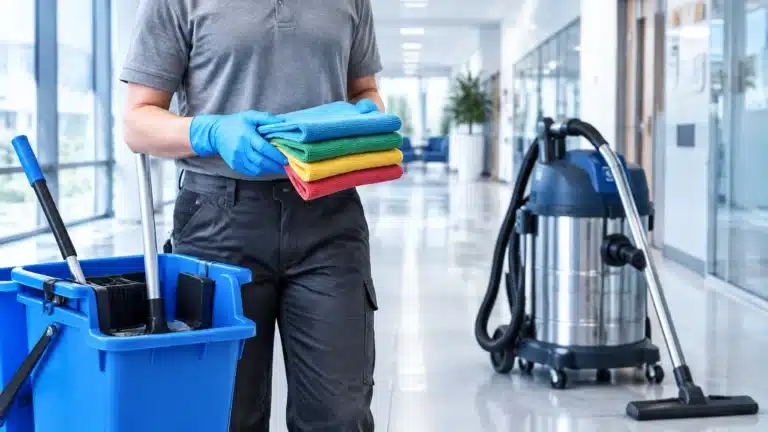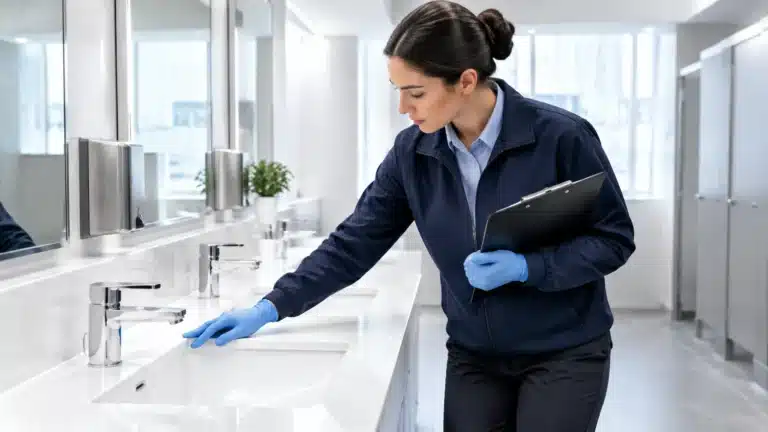

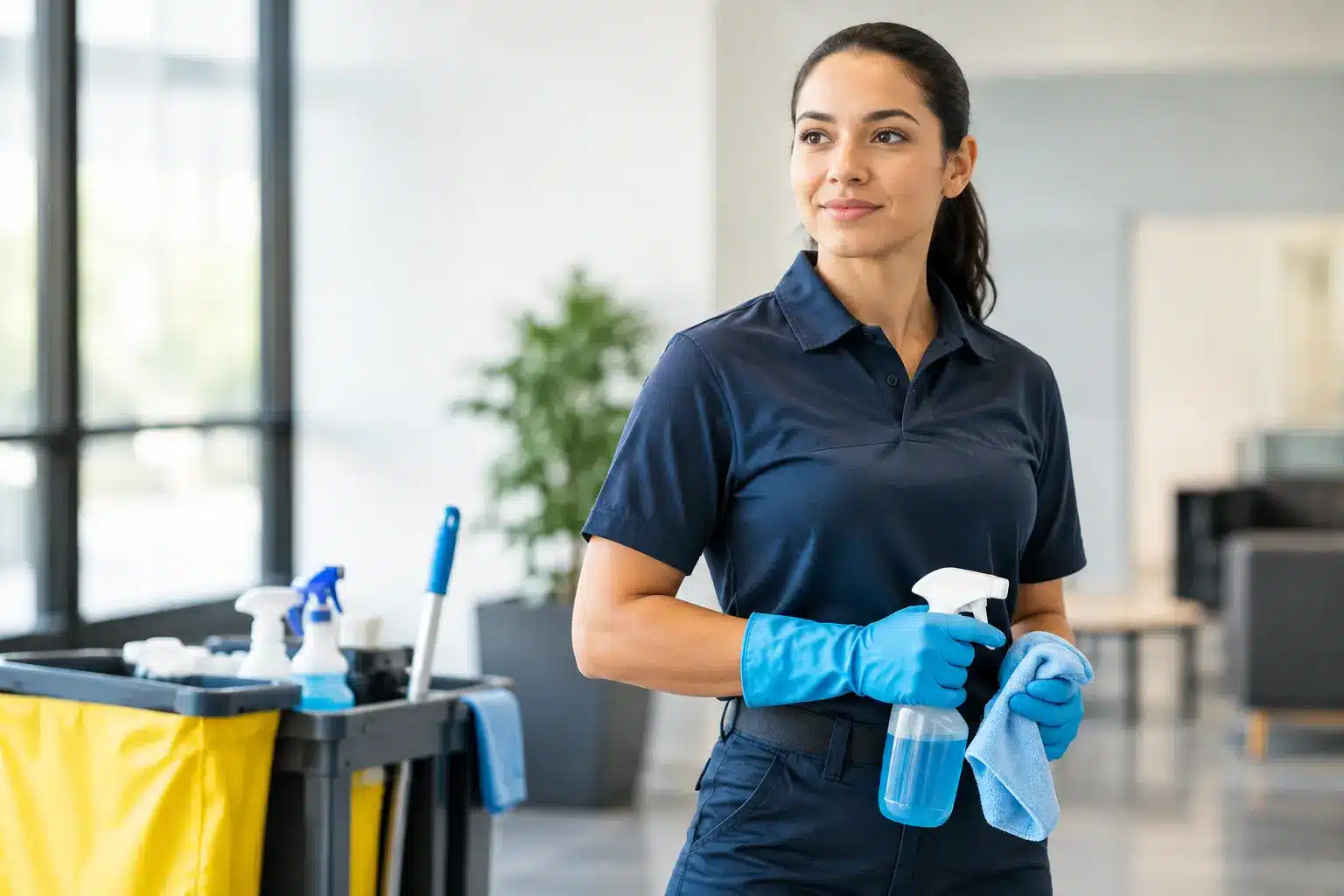

A cleaner’s uniform is not simply a matter of appearance. Commercial cleaning workwear has to cope with chemical splashes, repeated washing, busy shifts and close contact with customers, residents or guests. When it is poorly chosen, teams can feel restricted, overheated or under prepared. When it is right, it supports safer working, a more professional presentation and better day to day efficiency.
For facilities managers and contract cleaning providers, workwear should be treated as part of the cleaning system. The same attention given to reliable chemicals, colour coded equipment and paper stock should be given to the garments staff wear throughout the shift.
Why Commercial Cleaning Workwear Matters
Cleaning teams often move between very different areas in one day. A housekeeper may prepare guest rooms, restock washrooms and work in public corridors. A contract cleaner may move from office desks to communal kitchens, while a commercial kitchen team may handle grease, heat and frequent washdowns. One generic uniform rarely performs equally well in every setting.
Suitable workwear gives staff practical freedom of movement for bending, reaching, lifting and pushing equipment. It also helps managers set a clear standard. A clean, consistent uniform reassures clients and visitors that the people looking after their premises are trained, identifiable and working with care.
There is also a hygiene consideration. Clothing can carry soil from one task to another if it is not changed and laundered properly. This does not mean every role needs specialist garments, but it does mean supervisors should assess where contamination risks are highest. Washroom cleaning, healthcare support, food preparation areas and waste handling all require a more considered approach than light office cleaning.
Workwear is not a replacement for personal protective equipment. Gloves, eye protection, suitable footwear and protective aprons may still be needed after a task based risk assessment. The uniform provides a dependable base layer, while PPE is selected for the particular chemical, surface and cleaning activity.
Choosing Workwear for the Job
The starting point is the task, not the catalogue. A front of house housekeeper needs clothing that looks smart, allows easy movement and remains comfortable through a long shift. A cleaner working in washrooms needs garments that can be washed thoroughly and stand up to regular contact with splash prone tasks. A maintenance or kitchen cleaning team may need added protection from heavy soil and stronger products.
Fabric choice makes a noticeable difference. Polycotton is widely used because it balances comfort with durability and tends to hold its shape through repeated laundering. Cotton rich garments can feel breathable, which may suit warm internal settings, but they can take longer to dry and may show stains more readily. Polyester rich options dry quickly and are hard wearing, although some staff may find them less comfortable in hot environments.
Colour should be practical as well as consistent with your company image. Darker trousers can be useful where staff handle soil, bins or heavy duty cleaning. Lighter tops can help create a clean, approachable appearance in hospitality and care settings, but need a clear laundering routine. Many organisations use branded polos, tunics or tabards with neutral trousers to achieve a professional look without making replacement stock difficult to manage.
Fit deserves more attention than it often receives. Clothing that is too loose can catch on trolleys, door handles or machinery. Clothing that is too tight restricts movement and can wear out quickly at seams. Offer a sensible range of sizes and cuts, and ask staff to try garments during the selection process. This is particularly valuable for teams expected to wear uniforms for full shifts across several sites.
Build a Practical Cleaning Uniform
A useful cleaning uniform is usually made up of a small number of dependable garments rather than an overcomplicated issue list. A polo shirt or tunic provides a recognisable top layer. Trousers or workwear leggings should allow comfortable movement without creating snagging risks. A tabard can add convenient pocket space and protect the main uniform during lighter duties. For wetter or messier work, an apron gives an extra barrier that can be changed quickly between tasks.
Footwear should be considered separately from the uniform, but it is central to safety. Cleaners can encounter wet floors, stairs, uneven service areas and spillages during every shift. Shoes with suitable slip resistant soles, closed toes and enough support for long periods on foot are generally a better investment than basic casual footwear. In settings with higher risks, such as kitchens, stock areas or external waste zones, additional protective features may be required.
Pockets are useful, but they should serve a purpose. A securely placed pocket can hold a mobile phone, keys or a small checklist. Too many loose items, however, can become unhygienic or get in the way. Staff should not carry chemical bottles in clothing pockets, even for short periods. Products belong in labelled containers, on a trolley or in an appropriate caddy.
Seasonal conditions also affect the right choice. Outdoor caretaking, loading work and cold corridor cleaning may require warm layers that can be removed easily indoors. In warm laundry rooms, kitchens or poorly ventilated areas, lightweight and breathable garments can reduce discomfort. The best approach is often a core uniform with appropriate layers for individual working conditions.
Keep Hygiene Standards Clear
Uniform policy should be simple enough to follow at the end of a tiring shift. Staff need to know when garments should be changed, where used workwear is stored and who is responsible for laundering. If employees wash uniforms at home, provide clear instructions on wash temperatures, stain treatment and separation from household laundry where required by the nature of the work.
For higher risk environments, an employer managed laundry arrangement may be more suitable. It gives better control over cleaning standards, replacement cycles and stock availability. The added cost needs to be weighed against the hygiene risk, the volume of garments in use and the time staff would otherwise spend managing laundry themselves.
Keep clean uniforms away from chemical stores, waste areas and damp cleaning equipment. A clean locker or designated cupboard is a straightforward improvement that prevents fresh garments picking up odours, moisture or contamination before the shift even begins.
It is equally useful to set expectations around visible cleanliness. Stained, torn or heavily worn clothing can undermine confidence in the service, even when the cleaning itself is carried out properly. Managers should make it easy for staff to report damaged garments and request replacements without feeling they are creating unnecessary cost.
Control Costs Without Cutting Corners
The cheapest garment is not always the lowest cost over time. Thin fabric, poor stitching and inconsistent sizing can lead to frequent replacements, complaints from staff and an uneven team appearance. A better quality garment that lasts through repeated washing may offer stronger value, particularly for larger teams or ongoing contracts.
Standardising a small range of approved workwear helps procurement. It simplifies ordering, makes spare stock easier to hold and ensures new starters can be equipped quickly. Keep an agreed quantity of common sizes on hand, then review usage every few months. This is especially helpful for businesses with seasonal hospitality demand, multiple locations or a mobile cleaning workforce.
Branding can be worthwhile where staff work in customer facing settings, but it should be proportionate. A clear logo on a polo or tunic supports identification and presents a more organised service. For roles where garments are exposed to heavy soil or frequent chemical splashes, unbranded protective layers may be more economical to replace.
KleanPro Supplies understands that commercial teams need dependable essentials, not complicated purchasing. Pairing suitable workwear with consistent cleaning products, PPE and equipment helps managers maintain a practical standard across every site.
Review Workwear With Your Team
The people wearing the uniform will quickly identify what works and what does not. Ask whether garments remain comfortable after laundering, whether pockets are useful, whether the fabric is suitable for the work area and whether replacement sizes are readily available. Small changes can reduce frustration and help teams stay focused on the job.
A professional cleaning operation is built from reliable details. Give your team workwear that lets them move confidently, stay presentable and carry out every task with the care your customers expect.