

A streak free glass cleaner earns its place in a cleaning cupboard when it does more than make a surface look briefly wet. Reception doors, washroom mirrors, display cabinets and kitchen glass need to dry clear, without smears, lint or residue that shows again as soon as daylight hits. For cleaning teams, that means a better finish first time and fewer return visits to the same surface.
Glass cleaning is often treated as a quick final task, yet it has an outsized effect on how a workplace is judged. Fingerprints on a retail window, water marks on a hotel mirror or grease haze on a kitchen partition can make an otherwise well maintained space look neglected. Selecting the right formulation and method helps protect presentation standards while keeping routines efficient.
What Makes a Streak Free Glass Cleaner Work
A clear finish depends on both the cleaner and the contamination on the glass. Light dust and everyday fingerprints need a product that lifts soil and evaporates cleanly. Heavier marks, including hand cream, hairspray, cooking grease and nicotine film, need more cleaning power before the glass can be polished to a clear finish.
The best glass cleaners balance wetting, soil removal and drying. The formulation needs enough moisture to loosen marks, but not so much residue that it leaves a visible film. Professional grade products are designed to spread evenly across the surface, helping operatives cover larger panes without repeatedly over applying product.
Not every streak is caused by the cleaner. A dirty cloth can simply move grease from one area to another. Hard water deposits, cleaning chemical residue and worn seals around windows can also affect the result. Where a surface remains cloudy after careful cleaning, the issue may be mineral build up or damage to the glass rather than a poor glass cleaning routine.
Start With the Right Cloth and Equipment
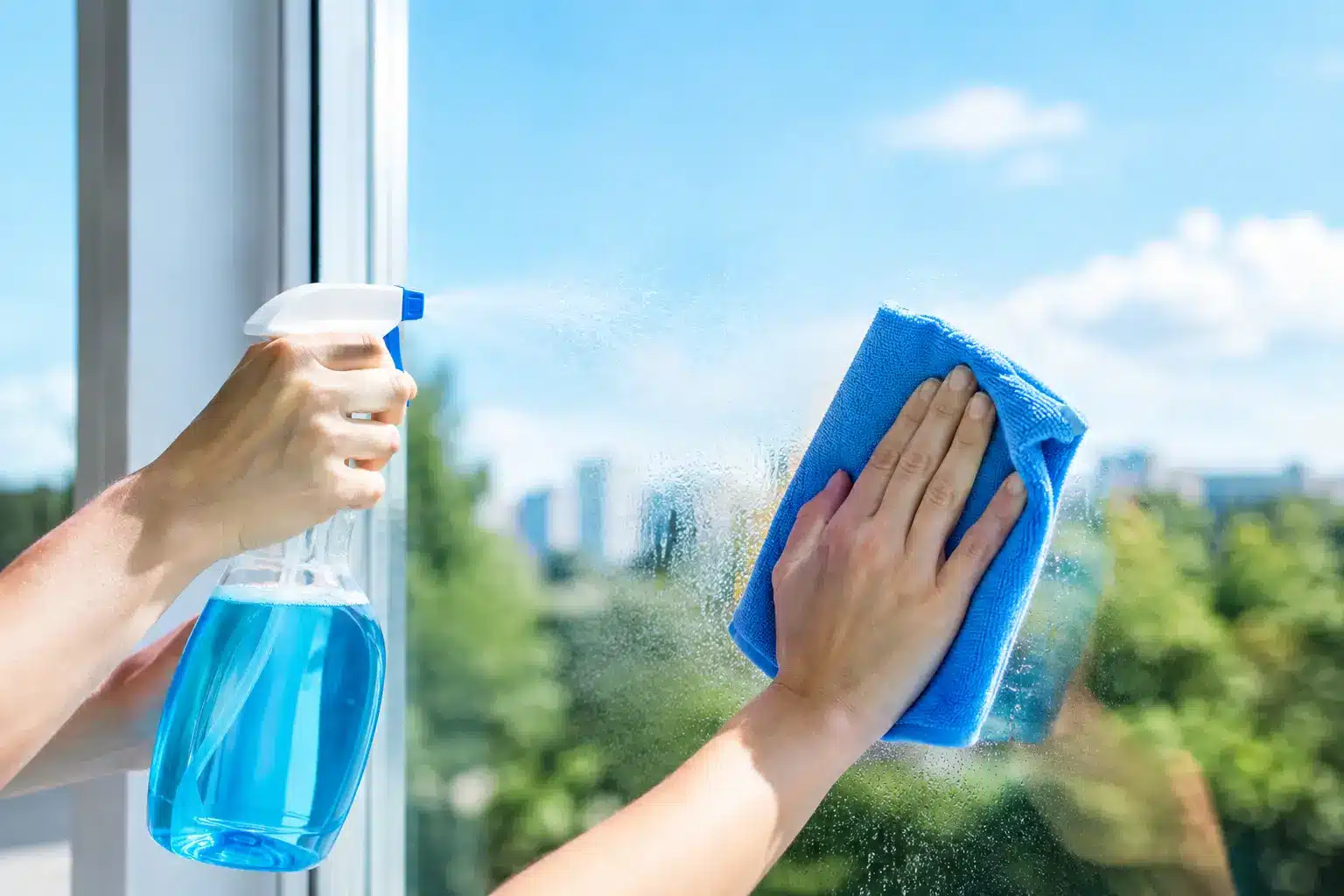
A clean, good quality microfibre cloth is often as important as the bottle in hand. It picks up loosened dirt effectively and leaves less lint than kitchen roll or reused wiping cloths. For day to day cleaning of mirrors, internal glass and display cases, one cloth for applying cleaner and a second dry cloth for the final polish can provide a consistently sharper result.
For larger windows and glazed entrances, a squeegee can reduce product use and speed up work. The rubber blade must be clean and free from nicks. A worn blade leaves lines that can be mistaken for streaking, particularly on dark tinted glass or in strong sunlight. Wipe the blade between passes and replace it when the edge no longer sits flat against the glass.
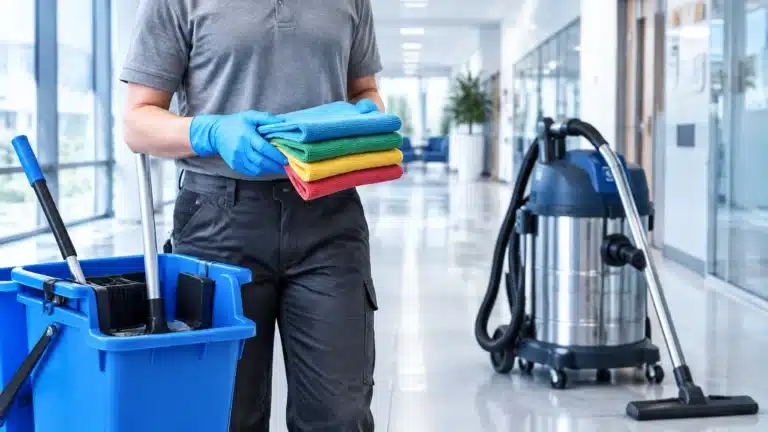
Cloths used for glass should be kept separate from those used in kitchens, washrooms or general surface cleaning. Even a small amount of sanitiser, degreaser or fabric conditioner residue can smear across glass. Colour coded cleaning systems make this easier to manage in busy sites, particularly where several staff share equipment.
A Reliable Method for Clear Glass
Begin by removing loose dust, grit and debris. On external windows, this step prevents particles from being dragged across the surface. Then apply the cleaner sparingly. Soaking the glass rarely improves results. It creates excess liquid to manage and increases the likelihood of drips around frames, handles and ledges.
Work from the top of the pane downwards, cleaning in overlapping sections. On a small mirror, a controlled circular motion can lift fingerprints effectively, followed by straight finishing strokes with a dry cloth. On larger areas, use horizontal or vertical passes so missed sections are easy to spot. Consistency matters more than choosing one direction over another.
Finish by checking the glass from more than one angle. Marks that are invisible head on often show under side lighting, particularly near entrances and in washrooms. This final check takes seconds and avoids the familiar problem of a clean looking surface that still appears smeared to visitors or customers.
If a streak remains, do not immediately add more product. First inspect the cloth. Change to a fresh, dry microfibre cloth and buff the area lightly. If the mark persists, clean the section again with less liquid. Over application is one of the most common reasons a perfectly capable product appears not to perform.
Match the Cleaner to the Environment
In hospitality, glass is constantly touched. Entrance doors, buffet screens, mirrors, table dividers and internal partitions benefit from frequent light cleaning rather than occasional heavy cleaning. A quick response to visible fingerprints maintains standards without interrupting service or requiring excessive product.
Commercial kitchens present a different challenge. Glass around pass through areas, oven doors and viewing panels may collect airborne grease as well as fingerprints. A standard glass cleaner can be suitable for routine finishing, but heavy grease should be removed first with an appropriate kitchen safe degreasing process. Applying glass cleaner directly onto a thick greasy film often spreads it and wastes time.
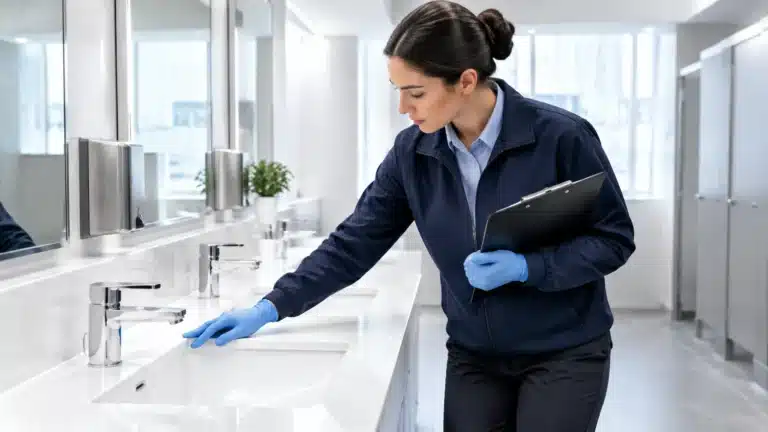
Washrooms need care for another reason. Mirrors can collect soap splash, toothpaste and limescale marks. For normal daily cleaning, a streak free glass cleaner provides a clear finish. Where mineral deposits have built up, use a product suitable for limescale and check surface compatibility before treating the area. Do not assume all mirror backings or framed units will tolerate acidic cleaners.
In offices and retail settings, glass partitions and display cases can look marked very quickly under bright lighting. A planned schedule helps, but high contact points should be cleaned as required throughout the day. Keeping approved cleaner and fresh cloths accessible to trained staff supports a rapid response without taking equipment away from other essential tasks.
At home, the same principles apply to shower screens, mirrors, patio doors and appliances with glass panels. Domestic users often reach for paper towels, but a clean microfibre cloth is usually more economical and produces less waste. For shower glass, regular drying after use can reduce water spotting and lessen the need for intensive cleaning later.
Avoid Common Causes of Smearing
The most effective routine is often about what teams stop doing. Using too much product leaves surplus liquid behind. Cleaning glass in direct, hot sunlight can make the solution dry before it is properly wiped away. Reusing a cloth that has already cleaned greasy surfaces introduces residue back onto the glass.
Spraying directly onto electronic displays, window frames or edges can also create avoidable problems. Apply the product to the cloth first when working near sensitive equipment, painted surfaces or poorly sealed frames. This gives better control and reduces the risk of liquid reaching places it should not.
It is also worth checking dilution instructions where a concentrate is used. A stronger mix is not automatically better. Incorrect dilution can leave a film, raise costs and create inconsistent results across shifts. Clear instructions, measured dosing and staff training support predictable performance, especially for contract cleaning and multi site operations.
Surface Safety and Routine Control
Glass may seem straightforward, but surrounding materials vary. Painted frames, decorative films, mirrored furniture, coated glass and display units can each have different care requirements. Test an inconspicuous area when introducing a new product or when working on a specialist surface. Follow the manufacturer guidance and ensure staff understand which products are approved for each area.
For organisations buying in volume, consistency of supply matters as much as the individual bottle. Standardising a proven glass cleaning product, cloth type and method reduces guesswork between shifts. It also makes stock control simpler, helps teams maintain the same visual standard and prevents unsuitable substitute products being used when supplies run low.
KleanPro Supplies supports businesses and households with professional cleaning products selected for practical, dependable results. For sites with regular cleaning demands, choosing suitable products in sensible quantities can improve cost control without compromising presentation or surface care.
Clear glass should not require repeated wiping, excess product or a last minute rescue before customers arrive. With the right cleaner, clean equipment and a controlled method, glass remains a simple part of a well run cleaning routine.