Newsletter Subscribe
Subscribe for news, offers and a welcome 5% discount on us.
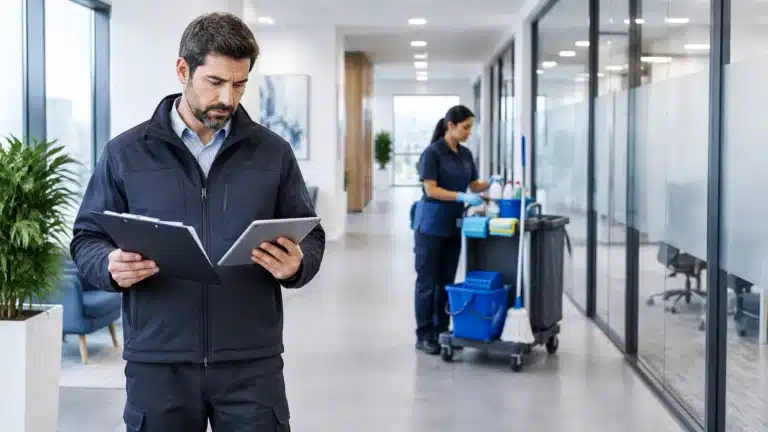
A clean surface can show that work has been done, but it cannot explain which method was used, whether the right tools were chosen or if the same result can be achieved on the next shift. A documented cleaning method makes those decisions clear. It turns an individual’s effort into an agreed practice that can be understood, followed and checked.
This matters in every setting, from a commercial kitchen or care home to a small office or busy household. It is especially timely as the current norovirus reporting season continues. In its week 43 report, covering data to 18 October 2026, the UK Health Security Agency recorded 16 hospital outbreaks so far in the 2026 to 2027 season. Fourteen, or 87.5 per cent, resulted in a ward or bay closure. The figures are not a measure of cleaning performance, but they underline why organisations need clear, repeatable procedures when infection prevention is important. Read the UKHSA report.
Cleaning is often treated as a visible task: someone wipes a surface, mops a floor or applies a product. But the result depends on the decisions behind that task. Which area is being cleaned? What equipment is assigned to it? What product is suitable for the surface? What order should the work follow? When is the task complete?
Without agreed answers, practice can vary between people and shifts. A new starter may copy a colleague’s habits without knowing why a particular cloth is used in one room and not another. A homeowner may use the same sponge across unrelated surfaces because no simple separation system has been established. Even experienced cleaners can develop inconsistent routines when instructions are unclear.
A written method provides a shared reference. It does not replace professional judgement or the need to respond to changing conditions. Instead, it sets the expected approach for routine work and explains when staff should stop and ask for advice.
A method statement is a practical description of how a specific cleaning task should be carried out. It is different from a cleaning schedule. A schedule records what should be cleaned and when; a method explains how to do the task safely and consistently.
The level of detail should suit the task and setting. A straightforward office desk clean may need a short instruction. A food preparation surface or a procedure in a care setting may require more precise controls. A useful method statement can cover:
The aim is not to create a document so long that no one consults it. Keep language direct, use familiar terms and make instructions accessible at the point of work. A diagram or photograph can help explain where equipment belongs. If the method changes, make sure the current version is easy to identify and that affected staff understand the update.
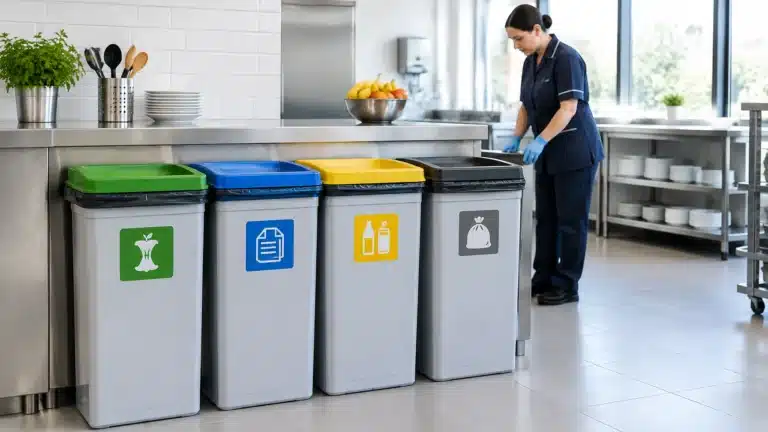
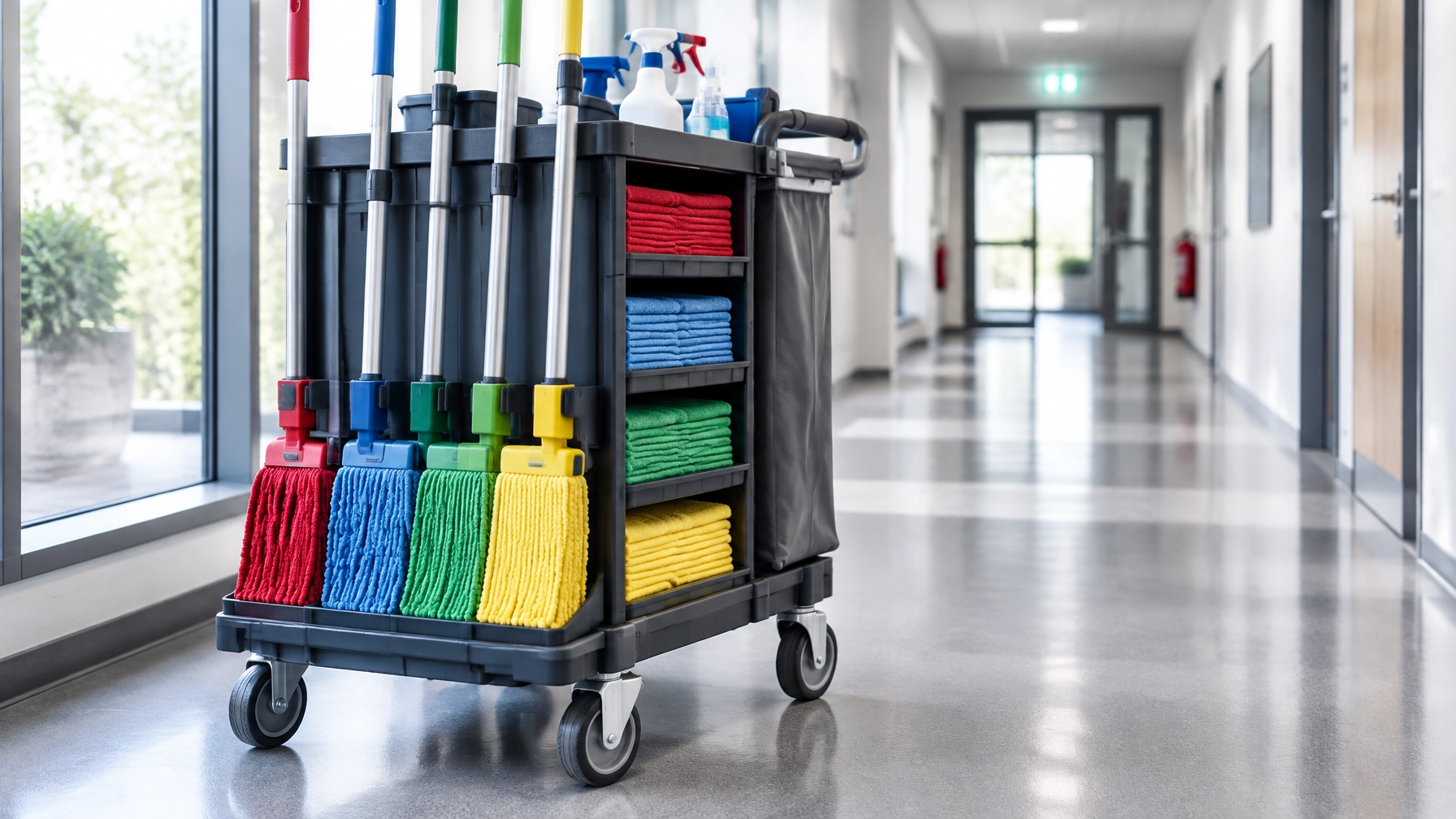
Colour coding gives cleaning teams a quick visual way to keep equipment assigned to different areas. The British Institute of Cleaning Science, or BICSc, publishes a widely used UK guideline. It is guidance rather than a compulsory national standard for every cleaning operation. BICSc also notes that some organisations use site specific schemes, and that white may be added as a local option.
In the BICSc scheme:
The purpose is to reduce the chance of equipment moving contamination from one area to another. The colours work only when people know what they mean and have the correct items available. BICSc advises including the scheme in induction and ongoing training. It also points out that colour alone may not be enough for everyone. Numbers, words or symbols can help people who have difficulty distinguishing colours.
Colour coding is not a substitute for good handling. A cloth still needs to be changed or cleaned at the right point, and used equipment should not be mixed with clean stock. The BICSc guidance also recommends working from the cleanest area towards the dirtiest. See BICSc colour coding guidance.
There is an important sector distinction for adult social care. The GOV.UK standard infection control precautions for adult social care, updated in October 2026, describes colour coded equipment as the standard for preventing cross contamination in those settings. Its mapping uses red for bathrooms, blue for general areas, green for kitchens and food areas, and yellow for areas that have had contact with someone with an infection. This is not identical to the BICSc allocation for yellow.
That difference is precisely why a written standard matters. Do not combine two charts from memory. Follow the applicable site policy and sector guidance, display the local allocation clearly, and ensure staff understand it. If an organisation adopts an alternative scheme, it should be documented and understood by everyone who uses it.

In food businesses, colour coding supports a wider principle: keeping raw food and ready to eat food separate. The Food Standards Agency advises that complete separation of staff, storage, preparation areas, utensils and equipment is the most effective control against E. coli O157 cross contamination.
Where physical separation is not possible, the FSA says businesses should use time separation and a strict two stage cleaning and disinfection process between uses. In practical terms, this means removing food residues and soil first, then applying an appropriate disinfectant or sanitiser as instructed. A single quick wipe should not be assumed to achieve both stages.
The FSA strongly recommends dedicated colour coded equipment, including chopping boards and utensils. Complex equipment such as vacuum packers and slicers should generally not be used for both raw and ready to eat food. If equipment is changed between uses, its surfaces must be thoroughly cleaned and effectively disinfected. The exact approach should follow the relevant food safety procedure and product instructions. See the FSA guidance on E. coli O157 cross contamination.
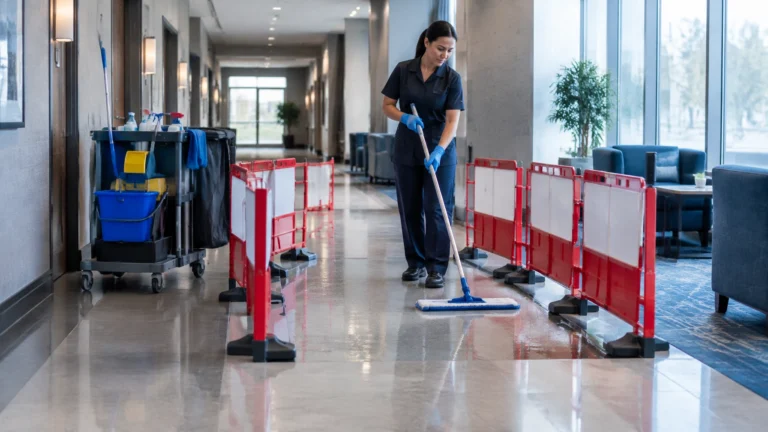
For cleaning teams, the same principle applies to tools: state where cloths, mops and buckets are used, how they are changed, and where clean and used items are kept. A colour on a handle is only useful if it corresponds to a clear rule.

In regulated care settings, the Care Quality Commission considers whether premises and equipment are clean, suitable and properly maintained so people can receive safe care. Its guidance on infection prevention and control describes the importance of documented policies and processes, staff training, cleaning schedules and audit arrangements. Inspectors may review records and evidence that identified problems have been addressed, not only the appearance of a room on the day.
The CQC’s Regulation 15 guidance on premises and equipment and its infection prevention and control guidance for GP practices are useful reference points for healthcare providers. Food businesses have their own obligations and may need to demonstrate how cleaning controls support food safety. In either setting, a well written method helps explain what staff are expected to do and gives managers a sound basis for checking that the procedure is understood.
A method statement is not proof that each task was completed correctly. It is the reference against which work and training can be considered. If a method is unclear, records and observations may show differences in practice. If staff are trained but do not have access to the correct equipment, the procedure may not be achievable. Documentation is most useful when it reflects the real conditions of work.
ATP testing can add a rapid check to a cleaning validation process. ATP, or adenosine triphosphate, is present in organic matter. A swab and meter detect a signal and report it in Relative Light Units, or RLU. Facilities may use the result to check whether a defined surface appears to have residual organic matter after cleaning.
ATP is not a direct count of bacteria and does not identify specific bacteria, allergens or pathogens. It cannot show that a surface is free from norovirus or prove that disinfection has worked. It should not replace microbiological testing where that is needed.
There is no universal regulatory RLU limit for UK facilities. Readings differ between instruments and methods, so a site needs to establish its own suitable limits and use the same approach consistently. One practical way to set an initial local reference is to take five to ten repeat readings from surfaces that have been properly cleaned. A facility may use the average as a pass limit and set a fail limit at roughly three times that value, then review the limits in light of its site conditions and experience. This is an example of a local method, not a national rule.
Results can also be affected by the surface, temperature, pH, sampling technique and chemical residues that may quench the signal. A low result should not create false confidence. ATP is best treated as one piece of evidence alongside visual inspection, observation of the method and, where appropriate, microbiological testing. Hygiena provides information on ATP cleaning verification. A peer reviewed study on ATP bioluminescence and surface hygiene is available through the Journal of Applied Microbiology.

A written method is only as dependable as the person expected to follow it. Training should explain not just which tool to use, but why the separation matters, how to prepare a product safely and what to do when the normal procedure cannot be followed.
BICSc’s Cleaning Professional’s Skills Suite, or CPSS, begins with a Licence to Practice. The LTP is a mandatory prerequisite for candidates progressing to other CPSS units. It covers essential safe working knowledge, including health and safety, COSHH, risk assessment, electrical safety, chemical dilution and equipment care. The CPSS also includes Base Units for daily tasks, Additional Units for frequently used skills, and Specialist or Sector Specific Units. Achieved competencies are listed on a skills card. The LTP is a training requirement within this BICSc pathway, not a statutory licence required of every cleaner in the UK. Details are available from BICSc Skills Training.
Whether you manage a facilities team or clean at home, the principle is the same: make sure the method is practical, provide suitable professional cleaning products and tools, and explain the reasons for the procedure. Buyers assessing professional cleaning supplies UK teams will use across multiple areas should consider whether the equipment supports the site’s documented colour scheme. A clearer specification can also help with ordering janitorial supplies and trade cleaning supplies, because teams can identify the types and quantities needed for each zone.
For households or smaller teams, a cleaning supplies shop can be one way to source colour coded mops, cloths and buckets together. The important step is to match those items to written area rules rather than assume that colour coded equipment alone creates a complete method. A practical cleaner supply plan includes the equipment, product instructions and clear separation rules needed to use them properly.
Use these questions to create or review a method statement:
Review the method when the room use, product, equipment or site requirements change. Keep the instructions accessible and ask the people who carry out the work whether the procedure can be followed during a normal shift.
A documented method cannot remove every risk, and no single test can prove that every surface is hygienically safe. It can, however, make expectations explicit. Combined with a clearly explained colour code, appropriate training and proportionate validation, it helps a team show what should happen, how work is carried out and where improvements are needed.
That is the move from effort to evidence: not more paperwork for its own sake, but a clear, repeatable method that staff can understand and managers can assess.
For related guidance, read KleanPro Supplies’ articles on cleaning verification and testing and how cleaning tools can transfer contamination.