Newsletter Subscribe
Subscribe for news, offers and a welcome 5% discount on us.
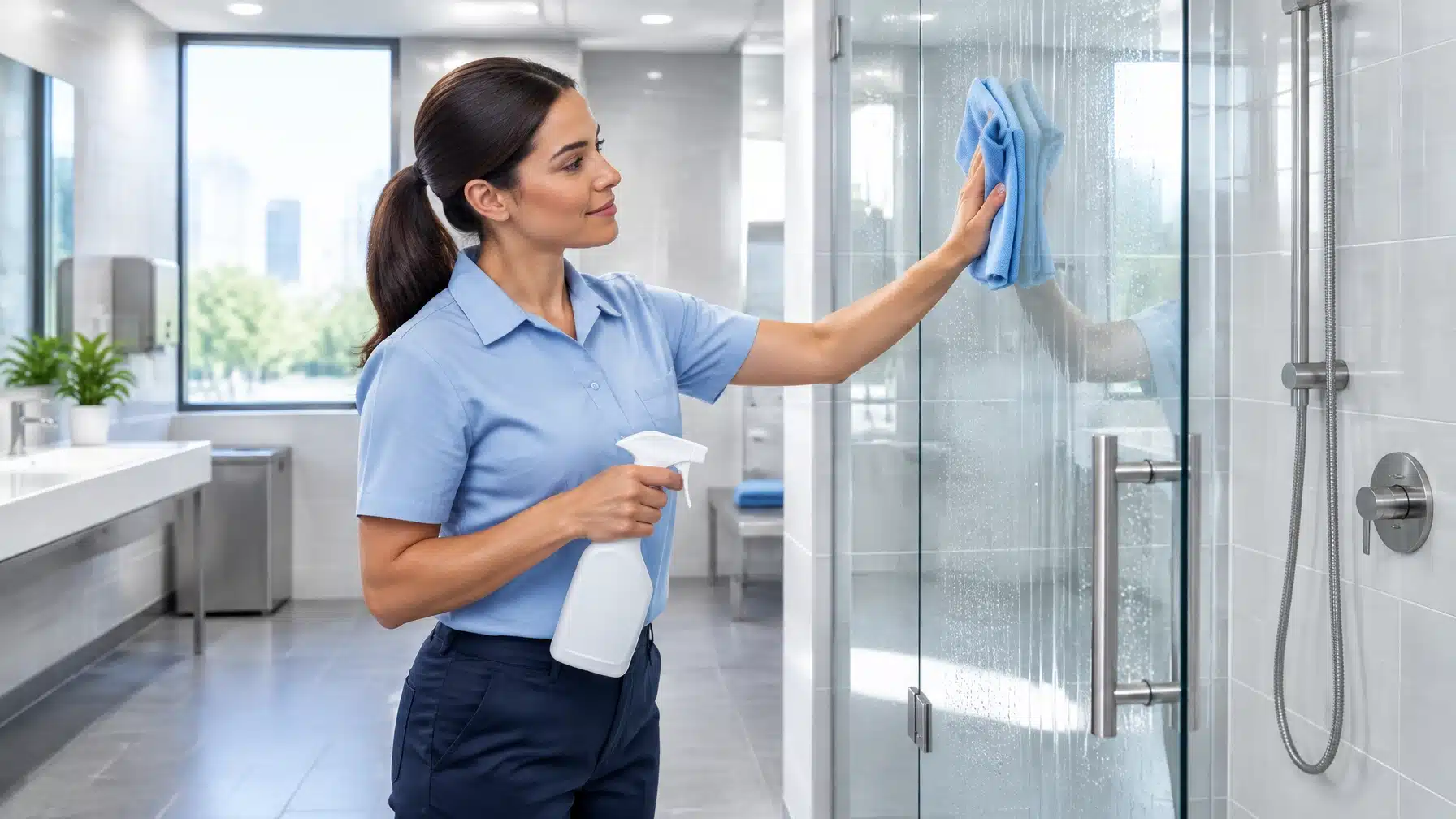
Two white deposits can sit under the same tap, yet require different cleaning approaches. One is a mineral deposit from hard water. The other forms when soap meets minerals in that water and traps oily residue. Treating both with the same bathroom cleaner can leave a film behind, while repeated scrubbing adds labour without solving the cause.
The starting point is to identify what you are looking at, then match the product and dwell time to the soil and the surface. This is a practical distinction, not a matter of appearance alone. NHS England defines cleaning as using fluid, usually detergent and water, with friction to remove organic matter and visible dirt or debris. Microorganisms are removed rather than killed. Disinfection is a separate process, and the terms are not interchangeable. The National Standards of Healthcare Cleanliness 2025 also list limescale as debris and scum as dirt.
Water hardness comes from dissolved calcium and magnesium. The level varies according to local geology. The Drinking Water Inspectorate classifies water, measured in milligrams per litre as calcium carbonate, as soft up to 100, slightly hard from 100 to 150, moderately hard from 150 to 200, hard from 200 to 300, and very hard above 300. The Drinking Water Inspectorate guidance on water hardness also points to World Health Organization guidelines identifying that water at 200 milligrams per litre or higher will produce scale, while water at 100 milligrams per litre or less is more corrosive to pipework.
Hardness varies around the UK. Discover Water, a source supported by Water UK and water regulators, explains that water is generally harder in the south of England and becomes softer moving north. Local conditions still vary, so a broad regional pattern is not a substitute for checking with your water supplier.
Limescale is made from mineral salts carried by hard water. It becomes visible where water is heated or repeatedly evaporates, leaving mineral material behind. That is why deposits often appear around tap bases, shower fittings, screen edges and toilet waterlines. The same underlying chemistry can look different in each place: a thin, pale mark on glass is not physically the same as a compact crust inside a tap, even though both may be limescale.
A deposit that feels dry, hard or chalky is a useful clue. It may be raised, rough or resistant to a cloth. Persistent scale can also build up in hot water systems and appliances. The DWI notes that deposits on heating elements can reduce efficiency and shorten appliance life. Regular cleaning helps limit visible build up on sanitary surfaces; Discover Water’s advice on hard water recommends regular cleaning with a liquid cleaner and an acid type sanitiser for persistent limescale in toilet pans.

Soap scum is not simply limescale with a different name. It forms when soap reacts with calcium and magnesium in hard water, creating an insoluble residue. In a washroom, that residue can hold body oils, skin cells and traces of bathing products, producing a dull, greasy or waxy film.
The Royal Society of Chemistry explains how detergent chemistry helps tackle oily soil. Surfactant molecules have water loving heads and water avoiding tails. The tails attach to oil and grease, and groups of surfactant molecules surround the oily material in structures called micelles. These lift the soil from a surface so it can be rinsed away. Detergents may also contain chelating agents, which bind minerals such as calcium and magnesium so they do not interfere with the surfactant and form scum. The Royal Society of Chemistry explanation of detergent also explains why hard water can produce less lather from soap and make cleaning less effective.
Soap scum is often found at splash height on shower screens, around bath edges, on shower trays and near soap holders. It can look white or grey, but the key clue is its texture. A greasy film may smear when wiped rather than lift as a dry, brittle flake. If it returns quickly in a frequently used shower, routine water and product residue may be accumulating between cleans.
An acid product can loosen mineral material, but acid on its own is not designed to emulsify oils. If the greasy part remains, it can leave a smear that looks like the cleaning has not worked. A detergent with suitable surfactants and mineral control is better suited to that soil. Product formulas differ, so check the label for the specific deposits and surfaces it covers.

A simple rule is to use acid chemistry for mineral scale and detergent chemistry for oily soil and soap residue. Acid dissolves carbonate scale. Surfactants loosen and carry oily material away, while chelating agents help manage calcium and magnesium ions that can interfere with cleaning.
Using the wrong chemistry can turn a short task into repeated wiping and scrubbing. If a mineral crust remains after using a general washroom detergent, more friction may shift the surface dirt without dissolving the scale. If soap scum remains after using an acid cleaner, the mineral part may have softened while the greasy film still needs detergent action. In either case, staff spend time repeating a step that is not matched to the deposit.
Some bathroom formulas are designed to address both mineral deposits and soap residue. That does not remove the need to check their product instructions, dwell time and surface compatibility. The Mistolin Pro Bathroom Cleaner 5L product information describes an acid based formula for mineral deposits, limescale, calcium build up, soap residue and embedded grime. Its stated instructions are to spray directly onto the surface, leave for up to 15 minutes, gently scrub and rinse thoroughly. The page lists ceramic, tiles, toilet bowls, sinks, baths and shower trays as suitable surfaces. It also says not to use the product on windows, not to mix it with chlorinated products, and to test a small hidden area first.
Do not infer that a cleaner disinfects simply because it is intended for a washroom. The NHS distinguishes cleaning from disinfection. Likewise, BSI’s description of BS EN 1276:2019 identifies it as a test for bactericidal activity of disinfectants and antiseptics. It is not a measure of how well a product removes limescale or soap scum. Follow local infection control requirements where disinfection is needed, and use a product with the appropriate claim and instructions.
Dwell time is often skipped when a washroom is busy. Applying the right product and wiping it away immediately can limit how much work it does. The NHS standards state that a disinfectant must remain in contact with the surface for its specified time, and the surface must stay wet for that time. Staff should know the contact times for products used locally and select products with realistic contact times for their environment.
For a cleaning product, follow its own label directions. The Mistolin Pro Bathroom Cleaner instructions specify a wait of up to 15 minutes before gentle scrubbing and thorough rinsing. This is a cleaning direction, not a disinfectant contact time or a claim that the product disinfects. Do not assume that longer is better, or leave a product on beyond its instructions.
The waiting period need not be idle. Apply the product only to appropriate surfaces, then clean another part of the washroom while it works. For example, after treating a suitable shower surface, use the time to clean a basin or check touchpoints, returning to the treated area within the stated period. Make sure the product does not dry out if the label requires a wet surface for the task. This can reduce the temptation to compensate for insufficient dwell time with forceful scrubbing.
Before reaching for a product, take a moment to assess the location and feel of the mark. Limescale is more likely where water repeatedly evaporates, such as a tap base or shower screen edge. Soap scum is more likely where water, soap and body products meet, such as a bath edge or lower shower screen.
Look at the texture. A hard, crusted or chalky mark points towards scale. A dull, waxy or greasy film that smears points towards soap scum or a mixture of residues. Colour is less reliable: both deposits can appear white or grey, especially when they overlap.
A small patch can be cleaned and dried to check the pattern. If a pale ring or hard edge remains after the surface is dry, mineral deposits may be present. If the patch still feels slick or shows a cloudy smear, oily residue may remain. An acid product may produce gentle fizzing on carbonate scale, but this is only an indicative clue, not a definitive test. Do not improvise a test on an unknown surface. Follow the product label and test a small, inconspicuous area first.
A cleaner that suits ceramic may not suit every bathroom material. Natural stone includes limestone, marble, granite, sandstone, slate, travertine and quartzite, each with different properties. The Stone Federation’s guidance on natural stone in the home recommends appropriate pH neutral cleaning to help maintain stone appearance and notes that some stones may benefit from a suitable impregnator or sealant. Repeated wetting and drying also makes the choice of stone and its care important in bathrooms.
Do not use an acid cleaner on natural stone unless the surface manufacturer confirms it is suitable. Calcium based stones, including limestone, marble and travertine, can be etched by acid. An etched surface may look dull or marked, and further cleaning will not restore the original finish. A pH neutral product intended for the stone is the safer routine choice.
Glazed ceramic is commonly used in washrooms, but compatibility should still be checked against the product label. Chrome and other plated fittings can also be marked if a product is left on too long or not rinsed as directed. Grout and sealant deserve attention: avoid allowing a strong product to sit on them outside the stated instructions, and check the surface maker’s care guidance where it is available. A hidden area test is a sensible safeguard, but it does not override a clear warning against use.
Windows are a separate case. The Mistolin Pro product instructions specifically say not to use that bathroom cleaner on windows. Do not treat a shower screen as automatically equivalent to every glass surface. Check the label and use a product intended for the surface.
Mixing products is the point at which a shortcut can become genuinely dangerous. The London Fire Brigade’s guidance on cleaning products warns that mixtures can produce harmful gases, liquids or fumes that build up quickly indoors and can cause serious illness or death. It specifically warns against mixing bleach with vinegar, bathroom or toilet cleaners, glass cleaners, oven cleaners, ammonia, lemon juice or other acidic products. Other dangerous combinations include bleach with rubbing alcohol, hydrogen peroxide with vinegar, and different types of drain cleaner.
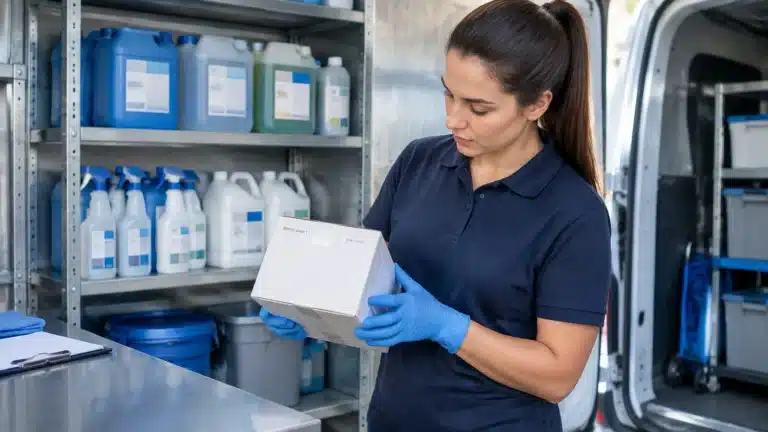
Use one product at a time. Read and follow the label, ventilate the area, keep products in their original containers and rinse a surface thoroughly before using a different product. Allow time between products. Never add a second drain cleaner if the first does not work; contact a plumber instead. The Fire Brigade also lists symptoms of exposure including coughing, chest pain, breathing difficulties, throat irritation, burning eyes and chemical burns. Further practical advice is available in KleanPro Supplies’ guide to storing and handling professional cleaning chemicals.
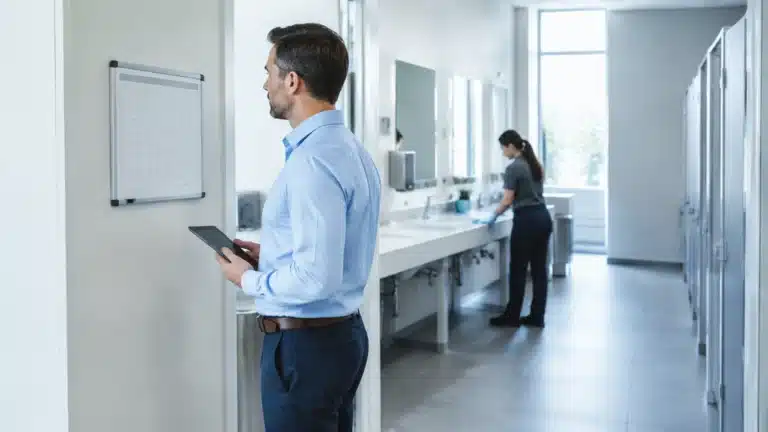
Good chemistry is only part of a reliable washroom method. NHS England recommends cleaning from top to bottom and from clean to dirty, so soil is not transferred back onto areas already cleaned. Give frequently touched points appropriate attention, following the local cleaning schedule and infection control policy.
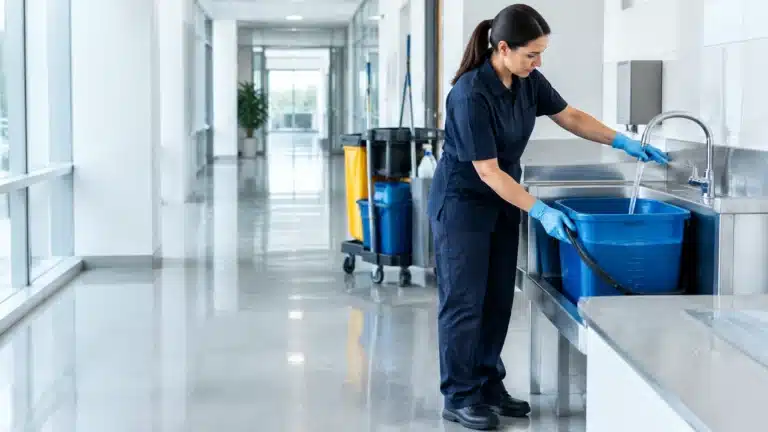
Use colour coded equipment according to the relevant scheme. The NHS national scheme assigns red to bathrooms, washrooms, showers, toilets, basins and bathroom floors; blue to general areas; green to catering areas; and yellow to isolation areas. Keep cloths and other equipment within their designated use. The standards note that solutions can become contaminated during use and need regular replacement, while cloths and wipes can transfer microorganisms between surfaces. Change solutions when required by the method, not only when they look visibly dirty.
Clean floors last. Place appropriate signage while floors are wet and remove it once the floor is dry, as the signage itself can become a trip hazard. Teams looking to strengthen cloth care can refer to this guide on laundering microfibre cloths and reducing cross contamination.
A practical cupboard does not need a large collection of overlapping products. It needs suitable products for the deposits and surfaces staff are expected to clean. In general, that means an acid descaler for mineral scale and a neutral or alkaline washroom detergent with appropriate surfactants and mineral control for daily soil and soap scum. When buying a professional bathroom cleaner on that basis, check that the label names the deposits it is intended to remove rather than relying on the word washroom alone. Select products according to the surfaces, the cleaning specification and the manufacturer’s instructions.
Choosing professional cleaning products by what the label says, rather than by the price per litre, also settles which bottle belongs in which washroom. The intended soil, the surfaces and the dwell time are written where staff can check them. Where products are supplied as concentrates, use the specified dilution and a suitable labelled container. Keep pack instructions where staff can read them, and ensure that people using the products know the correct method and any restrictions. A concise written method helps different staff achieve consistent results. KleanPro’s guide to writing a cleaning specification for a team offers further context. When reviewing janitorial supplies, a cleaning supplies shop can be one source of product information, but the label and surface maker’s guidance should determine the final choice.
This distinction can also support audit decisions. NHS England’s audit examples say that a small amount of limescale inside a tap spout is judged against the agreed cleaning frequency and may prompt a review of the water policy. Limescale inside a dishwasher should not fail the audit by itself, but should be noted for remedial treatment. A written standard helps staff distinguish a cleaning task from an issue requiring planned maintenance.
Tomorrow, choose one washroom and inspect the deposits before taking out a product. Note where each mark sits, whether it feels chalky or greasy, and which surfaces are involved. Select a suitable bathroom cleaner or detergent for the soil, and use an acid descaler only where mineral scale is identified and the surface instructions allow it. Test an inconspicuous area, apply the product as directed and give it the stated dwell time while completing another appropriate task. Scrub gently if needed, rinse thoroughly, then dry or check the finish. Work top to bottom, clean to dirty, use the correct colour coded cloths and clean the floor last.
If the mark remains, reassess the deposit and the surface rather than automatically repeating the same step with more force. Reading the deposit first is a small change in method, but it can prevent unnecessary effort and protect the finish.