

Cleaning results depend on more than the product in the bottle. The mop, cloth, bucket, brush or machine determines how effectively soil is lifted, how much water is used and how much effort the task places on the person doing it. For trade buyers, facilities managers, cleaning supervisors and homeowners, a well matched set of cleaning equipment makes routine work more consistent and helps avoid unnecessary wear to surfaces.
The best kit is not necessarily the most elaborate. It is equipment suited to the work, compatible with the surfaces and easy to clean, store and repair. This guide focuses on selecting and caring for the tools themselves. For the broader question of who cleans which area and when, see our cleaning standards and guides.
Start with the task and the surface
Before buying, list the jobs the equipment must do and the surfaces it will touch. A mop for a small domestic bathroom has different demands from a system used across a hotel corridor or a restaurant kitchen. Consider floor type, room layout, soil, access to water and power, and where clean equipment will dry.
Equipment should also fit the person using it. A tool that is difficult to grip, too heavy to move or awkward to store may slow the work and increase physical strain. HSE guidance on manual handling highlights the value of assessing the task, load, working environment and individual rather than relying on a single lifting technique.[1]

Mops, buckets and cloth systems
Choose the mop for the floor
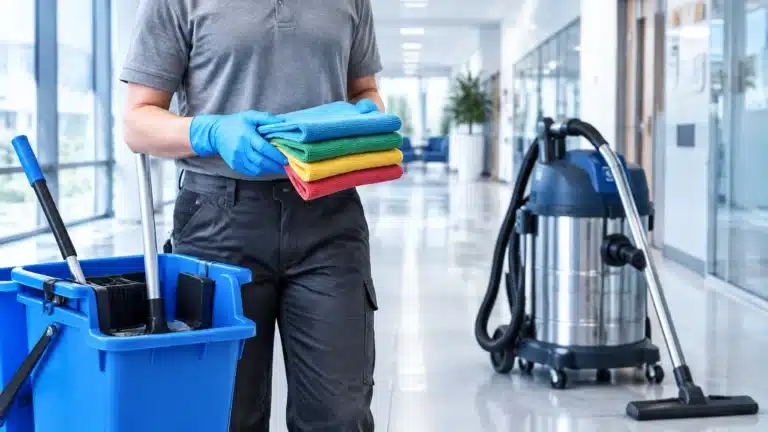
A socket mop and bucket can be useful for general floor washing and absorbing spills, but the wet mop can become heavy and may leave more water on the floor than a flat system. A flat mop with a removable head is often easier to control in narrow spaces and around furniture. Its pad can be changed without handling a saturated mop head, and a well organised system can keep clean and used pads apart.
Match the mop material and head shape to the floor. Textured or uneven flooring may need a more substantial head or a deck scrubber to reach into the surface. Smooth floors may be cleaned effectively with a flat pad and a suitable solution. Follow floor and equipment instructions: a tool or cleaning method suitable for sealed vinyl may not be suitable for untreated wood, delicate finishes or natural stone.
Consider the bucket and wringer as part of the system
Buckets vary in capacity, stability, weight and pouring design. A wringer should suit the mop head and allow the user to remove excess water without excessive effort. If a bucket is moved between rooms, wheels may help, but the filled bucket still needs safe handling. Check that wheels roll freely, the handle is comfortable to hold and the bucket can be moved without blocking the user’s view.
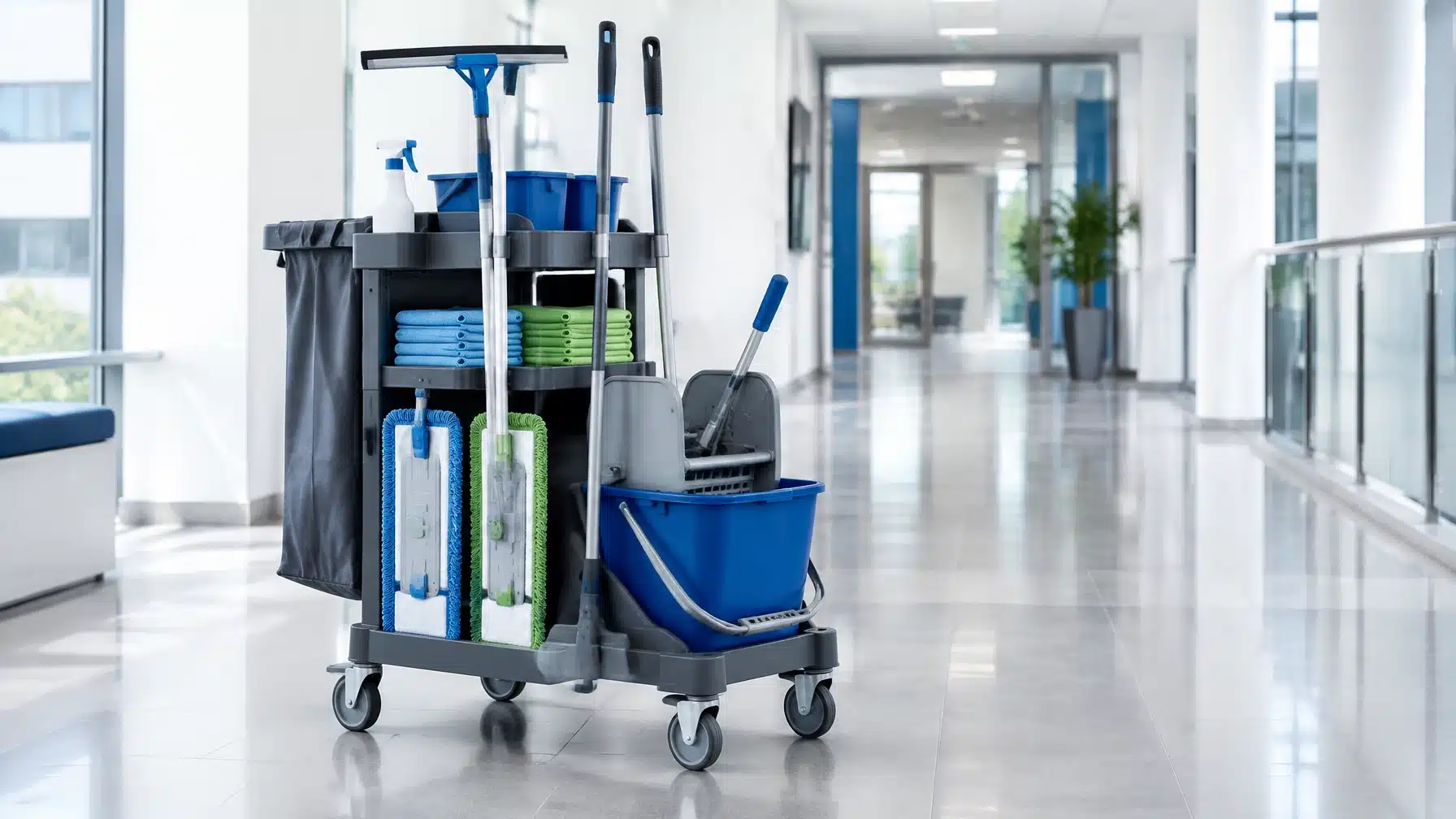
For larger premises, a trolley system can separate clean solution, used water, mop heads and cloths. This reduces repeated trips and helps organise tools by area. Choose a trolley that fits through doorways and lifts, can be cleaned, and has secure storage for supplies. A trolley that is too wide or heavily loaded can create a handling problem rather than solve one.
Microfibre cloths and flat mops
Microfibre is a fine synthetic textile designed to collect soil through its fibre structure. It differs from traditional cotton cloths, which generally work through absorbency and physical wiping. Microfibre products are available in different constructions and uses, so performance should not be assumed to be identical across every cloth or mop.
Microfibre systems are often designed to work with a small amount of water. That can reduce the amount of solution carried to the surface, but the method matters: use the cloth or pad as instructed, change it when soiled, and do not continue wiping with a saturated or dirty textile. In healthcare settings, the National Services Scotland review notes that microfibre can retain contaminants and that used materials need controlled handling, laundering and replacement. It also cautions that compatibility with disinfectants, including chlorine based products, should be checked with the manufacturer.[2] The evidence does not mean microfibre is automatically the right choice for every task.
Reusable cloths and pads need a laundering process that matches their care instructions. Keep clean and used textiles separate, avoid fabric softener if the manufacturer advises against it, and do not return damp cloths to a clean storage area. Single use cloths may be appropriate for some tasks, but the disposal route and local procedure should be considered too.
Brushes, squeegees, scrapers and dusters
A squeegee is useful for moving water from glass, tiled surfaces and suitable smooth floors. Choose a blade width that fits the working area and replace a worn or nicked blade, as damage can leave streaks or uneven residue. For windows and high glass, select a handle or extension pole that allows controlled contact without overreaching.
Scrapers and blades require particular care. Use them only on surfaces confirmed as suitable by the surface or equipment manufacturer. A blade can scratch glass coatings, plastics, painted finishes and other vulnerable materials. Keep blades protected when not in use, and use a tool designed to manage the blade safely. Never assume that a surface can tolerate scraping because the soil is difficult to remove.
For floors with built up soil or textured finishes, a hand brush or deck scrubber may provide useful mechanical action. Choose bristles that can remove the soil without damaging the floor. Very stiff bristles can mark some finishes, while soft bristles may not reach into deep texture. Dusting tools and extension poles can reduce the need to climb or stretch to reach ledges, vents and other high level surfaces. Select a tool head that can be cleaned and stored without trapping dust.

Vacuums and powered floor equipment
A dry vacuum should suit the debris and floor type. Consider the floor head, filtration system, cable length, noise, weight and availability of replacement filters and bags. Check the manufacturer’s instructions for the types of material the machine can collect. Do not use a dry vacuum for liquid unless it is designed and configured for that purpose.
Wet and dry vacuums are intended for different work from a domestic dry vacuum. Check that the machine, filters and attachments are suitable for the liquid or debris involved, and follow instructions for changing configuration. Clean the tank and fittings after use, then allow parts to dry before storage. A damp, dirty machine can retain odours and soil.
A scrubber dryer can be efficient on larger hard floor areas, but its size, turning radius, battery life, noise and access requirements all matter. Select a brush or pad appropriate to the floor, and ensure operators are trained to use the controls and manage cables or batteries safely. Inspect squeegee blades, pads, brushes and tanks routinely. A machine that leaves water behind may need maintenance or adjustment, not simply a stronger cleaning product.
Steam cleaners and pressure washers are specialised tools, not universal shortcuts. Steam can damage heat sensitive materials, seals, finishes and some electrical components. It also creates a burn risk, so assess the surface, operating method and protective equipment before use. Steam cleaning should not automatically be treated as disinfection; follow a validated method and product or equipment instructions where disinfection is required.
Pressure washers are generally intended for suitable external areas and robust surfaces. Consider splash, noise, water use, drainage, electrical safety and the risk of forcing water into joints or equipment. Use the pressure and nozzle recommended for the surface. Check local requirements for wastewater and runoff, especially where water may carry oils, detergents or other contaminants.
Dispensers, waste handling and storage
Dispensers can support consistent use of hand soap refill liquid and warewashing chemicals. For soap, choose a dispenser compatible with the refill format and easy to clean. For warewashing chemicals, use dosing equipment intended for the product and machine. Installation, calibration and maintenance should follow the dispenser and chemical supplier instructions. Clear identification helps staff distinguish products and avoid incorrect connections or handling.
Product choice and dispenser choice should be considered together. For information about the types of products used in dishwashing areas, see the dishwashing and dishwasher range. The equipment itself must still be appropriate to the task and correctly maintained.
Waste handling tools include bins, liners, collection carts and any equipment used to move waste through the building. Choose bins that are stable, easy to open and clean, with capacity suited to the location. Ensure waste can be moved without overfilling bags or obstructing sightlines. Healthcare and food businesses should follow their local waste segregation and handling procedures.
A cleaning cupboard needs room for safe separation as well as storage. Keep clean cloths, mop heads and tools away from used equipment and waste. Store chemicals in their original labelled containers, in line with the label and local risk assessment. A well organised store makes it easier to inspect stock and equipment, and to let reusable tools dry fully. HSE guidance on cleaning accommodation and facilities discusses ventilation, storage, spill control, equipment and protective measures when working with cleaning chemicals.[3]
Colour coding: know which rules apply
Colour coding is a practical way to distinguish equipment assigned to different areas. BICSc describes its colour coding as guidance for the cleaning industry and notes that there is no compulsory national or international scheme outside healthcare. Businesses can adopt the BICSc convention or a clear site specific system, provided staff understand and apply it.[4]
Healthcare in England is different. The NHS England National Standards of Healthcare Cleanliness 2021 sets out a national colour coding scheme for cleaning materials and equipment. Its scheme uses red for bathrooms and washrooms, blue for general areas, green for catering and food service areas, and yellow for isolation areas. Healthcare organisations should follow the applicable standard and local policy, rather than treating the voluntary industry convention as a substitute.[5]
Whatever system applies, it should be easy to identify on the equipment itself and supported by staff instruction. Colour alone may not be enough for every worker, so labels, symbols or numbers can help make the system clearer.
Manual handling and PPE
Mops, buckets, trolleys and machines can involve pushing, pulling, lifting, twisting and repeated movement. The HSE’s INDG143 guidance advises employers to assess manual handling risks and consider how the task can be changed or equipment used to reduce them.[1] HSE material on push and pull tasks also highlights factors such as force, posture, distance, floor condition and the design and maintenance of wheels and handles.[6]
For a trolley or wheeled bucket, check that the load is stable and not so high that it blocks the user’s view. Keep routes clear, maintain wheels and brakes, and choose a handle height that allows a comfortable posture. Adjustable handles and lighter components may make a noticeable difference over a shift. Do not assume that a wheeled tool is automatically low risk: a heavy load, damaged castors or an uneven route may require considerable effort.
PPE should be selected through the task risk assessment and product instructions. Depending on the work, this may include suitable gloves, eye protection, aprons or footwear. PPE does not replace good equipment design, safe chemical handling or training. HSE guidance advises against mixing cleaning products and recommends following label instructions and using appropriate protective measures.[3]

Match the kit to the working environment
Commercial kitchens need tools that can cope with grease, food debris, wet floors and tight spaces. Separate equipment for kitchen floors, food preparation areas and washrooms according to the site system. Scrapers, deck brushes and suitable mop heads may be needed for robust floor surfaces, while cloths and squeegees can serve other surfaces. Do not use a floor tool on work surfaces, and do not use equipment on food contact areas unless the method is suitable for that purpose.
Washrooms benefit from clearly separated cloths, mops and buckets, along with tools that reach around fixtures and into corners. Offices and retail spaces may need low noise vacuums, flat mop systems and dusting tools that can be used around desks and displays. Hotels and hospitality teams often need compact trolleys that fit through corridors and provide organised access to clean textiles and supplies. At home, commercial grade equipment may be worthwhile for larger floors or demanding tasks, but it should still fit the storage space and be straightforward to maintain.
The tools that carry the product
Equipment and product work as one system. A dispenser, sprayer, cloth or mop head decides how evenly a product reaches the surface, how much of it is used and how much is wasted.
Trigger sprayers and pump sprayers are commonly used with an all purpose cleaner spray on washable surfaces, while a flat mop and bucket suit an all purpose floor cleaner on compatible flooring. A heavy duty degreaser is usually applied to grease with a cloth, brush or sprayer chosen for that surface, then rinsed as the label directs. A professional bathroom cleaner is normally used with a dedicated cloth, brush or squeegee so that sanitary areas are not cleaned with the same textile as food areas. A glass cleaner works best with a clean, lint free cloth or a sharp squeegee blade, and a worn blade is a common cause of streaky results.
Larger sites add dispensing equipment to keep dosing consistent. That includes dispensers for hand soap refill liquid, dosing units for dishwasher detergent and rinse aid, and measuring equipment used with laundry detergent, whether the site runs its own laundry or a household machine. Where a heavier formula is needed for burnt on soil, the applicator matters as much as the product, because a heavy duty cleaner used with the wrong cloth or brush may spread grease rather than lift it.
Chemical tasks need their own tools and controls. A drain cleaner unblocker is a product for drains, used only as directed and only with the protective equipment, ventilation and segregation stated on the label. It should not be applied to general surfaces and should never be decanted into an unlabelled container. The same discipline applies across professional cleaning products: keep the container, the label and the dosing tool together.
For buyers comparing professional cleaning supplies uk, the useful question is whether the tool and the product are specified for the same task and surface. Whether stock is ordered through janitorial supplies, trade cleaning supplies or a general cleaning supplies shop, the working pair should be assessed together, and the cleaner supply held on site should match the actual cleaning methods in use. Matching the pair correctly reduces waste, protects surfaces and gives staff a routine they can repeat.
Buy for the working life of the equipment
Purchase price is only one part of cost. Compare the likely service life, time required to complete the task, ease of cleaning, staff comfort and the price and availability of replacement parts. For mop systems, check that replacement heads or pads will remain available. For powered equipment, ask about repair options, service requirements, battery replacement and warranty terms.
A tool that is easy to repair may stay useful for longer than a cheaper item that must be replaced when one part fails. Ask whether parts are standard or proprietary, whether the equipment can be disassembled for cleaning, and whether staff can replace consumable components safely. Consider staff time as a cost too: a poorly designed tool may take longer to use, empty, clean or store.
Sustainable procurement can also include the equipment’s working life, repairability, packaging and water or chemical use. The Government Buying Standard for Cleaning Products and Services is primarily aimed at public sector procurement, but other organisations can use its criteria when developing purchasing requirements.[7]
Clean, dry, inspect and replace
After use, remove soil from reusable tools, rinse where appropriate and allow them to dry fully. Empty and clean buckets, machine tanks and trolley compartments. Wash cloths and mop heads according to their care instructions, and keep used textiles in a designated container until laundering. Store brooms, mops and brushes so that heads are not crushed or left standing in dirty water.
Inspect equipment for worn mop fibres, split seams, damaged handles, loose fittings, cracked buckets, faulty wringers, worn squeegee blades, damaged cables and leaking tanks. Remove damaged equipment from use when it could cause injury or poor cleaning results. Follow the manufacturer’s instructions for servicing machinery, and record checks where the organisation’s procedures require it.
There is no single replacement cycle that suits every tool. Replace based on visible wear, loss of performance, damage, hygiene requirements and the manufacturer’s guidance. For reusable microfibre, follow the stated washing limits and care requirements rather than guessing at its remaining life.
The right cleaning kit is a system: tools matched to surfaces, correct handling, safe storage and regular maintenance. When purchasing equipment, consider the full working process, from use to laundering, repair and replacement. That approach helps teams work with more confidence and gives homeowners dependable tools that are suited to everyday demands.
References
- Health and Safety Executive, Manual handling at work.
- National Services Scotland, Literature review and practice recommendations on microfibre.
- Health and Safety Executive, Cleaning accommodation and facilities.
- British Institute of Cleaning Science, Colour coding guidance.
- NHS England, National standards of healthcare cleanliness 2021.
- Health and Safety Executive, Risk factors associated with pushing and pulling loads.
- Department for Environment, Food and Rural Affairs, Government Buying Standard for cleaning products and services.