

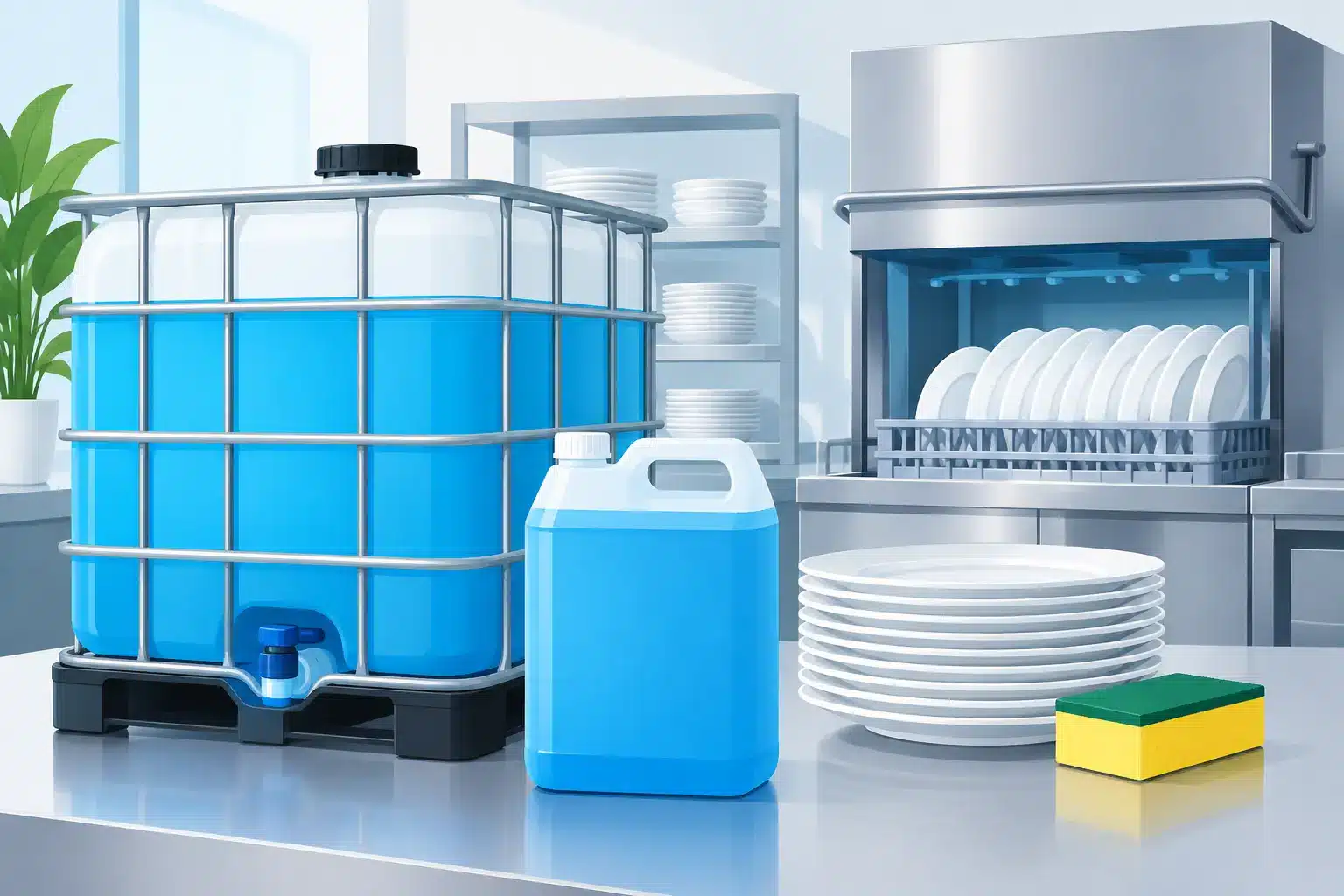

The washing-up area is one of the quickest places for a busy kitchen to lose time. When staff are working around service, a weak liquid, empty bottle or poorly planned refill routine creates delays that spread across the operation. Buying commercial dishwashing liquid bulk helps kitchens maintain dependable cleaning performance while reducing avoidable purchasing pressure.
For restaurants, cafés, catering teams, care settings and workplace kitchens, bulk buying is not simply about ordering a larger quantity. The right product and supply plan can support cleaner crockery, better grease removal, more controlled costs and a safer, more efficient wash-up routine.
Why buy commercial dishwashing liquid in bulk?
Commercial kitchens use washing up liquid at a very different rate from a household. Plates, cookware, utensils and food preparation equipment may need washing continuously throughout the day. Smaller bottles are convenient for occasional use, but frequent replacement can add unnecessary cost, create storage clutter and leave teams exposed to stock shortages at the worst possible moment.
Bulk formats are particularly useful where cleaning demand is predictable. A hospitality venue with daily covers, a contract cleaning team servicing multiple sites or a facilities department managing staff kitchens can estimate usage and order with more confidence. This makes it easier to maintain a sensible reserve without filling every cupboard with mixed, inefficient pack sizes.
There is also a waste consideration. Refilling labelled, fit-for-purpose dispensing bottles from larger containers can reduce the number of single-use packs entering the waste stream. The process must be controlled carefully: never decant into unlabelled containers, and make sure staff know exactly which product is being used and how it should be diluted.
What commercial dishwashing liquid needs to do
A professional hand-dishwashing liquid should remove food residue and grease efficiently while producing a stable lather that gives staff confidence during a busy shift. It should also rinse away cleanly when used correctly, rather than leaving a film on glasses, plates or cutlery.
Performance is not only about how much foam appears in the sink. Heavy foam can be useful as a visible cue, but the stronger measure is whether the liquid cuts through oils, sauces and baked-on residue with a sensible amount of product and effort. For demanding cookware, washing-up liquid may be one part of the process, alongside soaking, suitable scourers and a separate professional degreaser where appropriate.
Surface compatibility matters too. Most everyday items such as stainless steel, ceramic, glass and food-safe plastic are well suited to manual washing when the chosen product is used according to its instructions. Delicate finishes, aluminium, non-stick coatings and specialised equipment may need a more cautious approach. Check the manufacturer guidance for both the item being washed and the cleaning chemical before introducing a new product across a site.
Hand washing and dishwashers require different chemistry
This distinction prevents a common and costly mistake. Commercial dishwashing liquid is designed for manual washing in sinks and bowls. It should not be used in an automatic dishwasher, where excessive foam can interfere with the machine’s operation and cleaning results.
Commercial dishwashers require machine detergent, often paired with rinse aid and, in hard-water areas, appropriate water treatment. A kitchen may need both systems stocked side by side, but they should be clearly separated in storage and staff instructions. Choosing the correct chemical for each task protects equipment, supports consistent hygiene standards and avoids wasted product.
How to choose the right bulk pack
Start with usage rather than price per container. Count the sinks, service periods and staff teams using the product, then consider the type of soil being removed. A small office kitchen washing mugs and lunch containers has very different needs from a restaurant kitchen processing greasy pans throughout lunch and dinner service.
A concentrated professional formula can be economical because a measured dose goes further. However, concentration only delivers value if staff use it accurately. If a product is routinely over-poured, the apparent saving disappears quickly. Clear dilution guidance, compatible pump dispensers or dosing bottles and simple staff training usually produce better results than asking people to judge quantities by eye.
When comparing bulk options, assess the overall operational picture:
- Cleaning performance on your typical soils, particularly grease and dried food residue.
- Recommended dilution rate and the realistic number of wash-ups each container supports.
- Pack size, weight and whether staff can handle and pour from it safely.
- Storage space, including secure shelving and separation from food and food-contact packaging.
- Supplier availability, so your regular product is not repeatedly replaced with an unfamiliar alternative.
The lowest unit price is not always the lowest operating cost. A cheaper liquid that requires repeated dosing, struggles on grease or leaves staff rewashing items can cost more in labour, water and customer experience. For high-volume environments, dependable results are usually worth more than a small saving on the invoice.
Safe, efficient washing-up procedures
Good chemicals cannot compensate for poor wash-up practice. Before washing, scrape food waste into the correct bin and separate heavily soiled cookware for soaking. This keeps sink water cleaner for longer and reduces the amount of detergent required.
Use water at a suitable temperature for the task and follow the product label for dilution. Staff should wear appropriate gloves where required, especially during prolonged wet work or when handling concentrated products. Gloves protect hands, but they also need to be kept clean and replaced when damaged.
For food-service environments, establish a clear routine for washing, rinsing and sanitising where your procedure requires it. Washing-up liquid removes grease and visible soiling; it is not automatically a replacement for a food-safe sanitiser. Using each product for its intended role is central to reliable kitchen hygiene.
At the end of service, clean the sink, taps, draining boards, brushes and cloths as well as the items washed in them. A tidy wash-up station makes the next shift quicker to start and helps prevent unpleasant odours, residue build-up and cross-contamination risks.
Stock control that prevents last-minute shortages
Bulk purchasing works best with a simple stock routine. Keep a minimum stock level based on average weekly consumption and delivery lead times. When stock reaches that point, reorder before the final container is opened rather than waiting for an emergency purchase.
For multi-site operators, standardising the dishwashing liquid used across locations can make training and ordering easier. Staff know the dilution method, managers can compare usage more accurately, and procurement teams avoid managing an unnecessary range of near-identical products. There are exceptions: a central kitchen with heavy grease may need a different formulation from a low-use office kitchenette.
Store containers upright in a cool, dry area away from direct heat. Keep caps closed, retain product labels and make safety information accessible to the people using the chemical. Larger containers should be placed where they can be lifted safely, rather than on high shelves or in cramped spaces where spills are more likely.
A practical approach for kitchens of every size
Independent cafés and small caterers may benefit from ordering enough stock to cover regular demand without tying up too much space or cash. Larger hospitality groups, contract cleaners and facilities teams often gain more from planned volume ordering, consistent pack formats and a supplier that can support recurring requirements.
KleanPro Supplies supports customers who need professional-grade cleaning products that perform consistently under everyday commercial pressure. The most suitable bulk option depends on your wash-up volume, storage capacity, dispensing method and the items your team cleans most often.
A well-run wash-up station rarely attracts attention, and that is exactly the point. With the right commercial liquid, sensible dosing and stock that arrives before it is needed, staff can keep moving and every clean plate is ready for the next customer.