

Choosing Commercial Dishwasher Detergent
Choose commercial dishwasher detergent for clean, hygienic crockery, controlled costs and reliable results in busy professional kitchens every busy day.

A breakfast service can leave a kitchen with racks of tea stained cups, dried cereal bowls and greasy plates before the first table is cleared. In that setting, commercial dishwasher detergent is not a minor purchasing decision. It affects turnaround times, presentation, food hygiene routines and the amount of labour spent rewashing items that should have come out clean first time.
The right product works with the machine, the water supply and the type of ware being washed. The wrong one can leave cloudy glasses, dull cutlery, residue on crockery or a machine that needs more frequent attention. A dependable dishwashing routine begins with choosing detergent for the conditions in your kitchen, not simply the lowest bottle price.
How commercial dishwasher detergent affects results
Professional dishwashers use controlled water temperatures, mechanical action and chemical dosing to remove food soil. Detergent is responsible for breaking down grease, lifting proteins and starches, and preventing loosened soil from settling back onto plates and glasses. It must do that consistently during short wash cycles, often with a heavy load arriving at once.
A professional formula is usually more concentrated than a domestic product. This matters in busy restaurants, care settings, cafés, schools and workplace kitchens, where a household detergent may struggle with volume and leave staff compensating with repeat washes. More product is not automatically the answer. Correct dosing is what gives predictable results while controlling chemical use.
Detergent and rinse aid have different jobs. The detergent cleans during the wash stage; rinse aid helps water sheet away during the final rinse, supporting faster drying and a clearer finish. If glassware is clean but covered in water spots, the issue may be rinse aid, water hardness or machine temperature rather than the detergent itself. Treating every poor result with extra detergent often increases waste without resolving the cause.
Match the detergent to your machine and water
Start with the dishwasher manufacturer guidance. A glasswasher, undercounter dishwasher, pass-through machine and conveyor system can have different dosing arrangements and water demands. Some machines draw detergent directly from a container through an automatic dosing pump, while others use a manual dosing method. The product format must be suitable for that system.
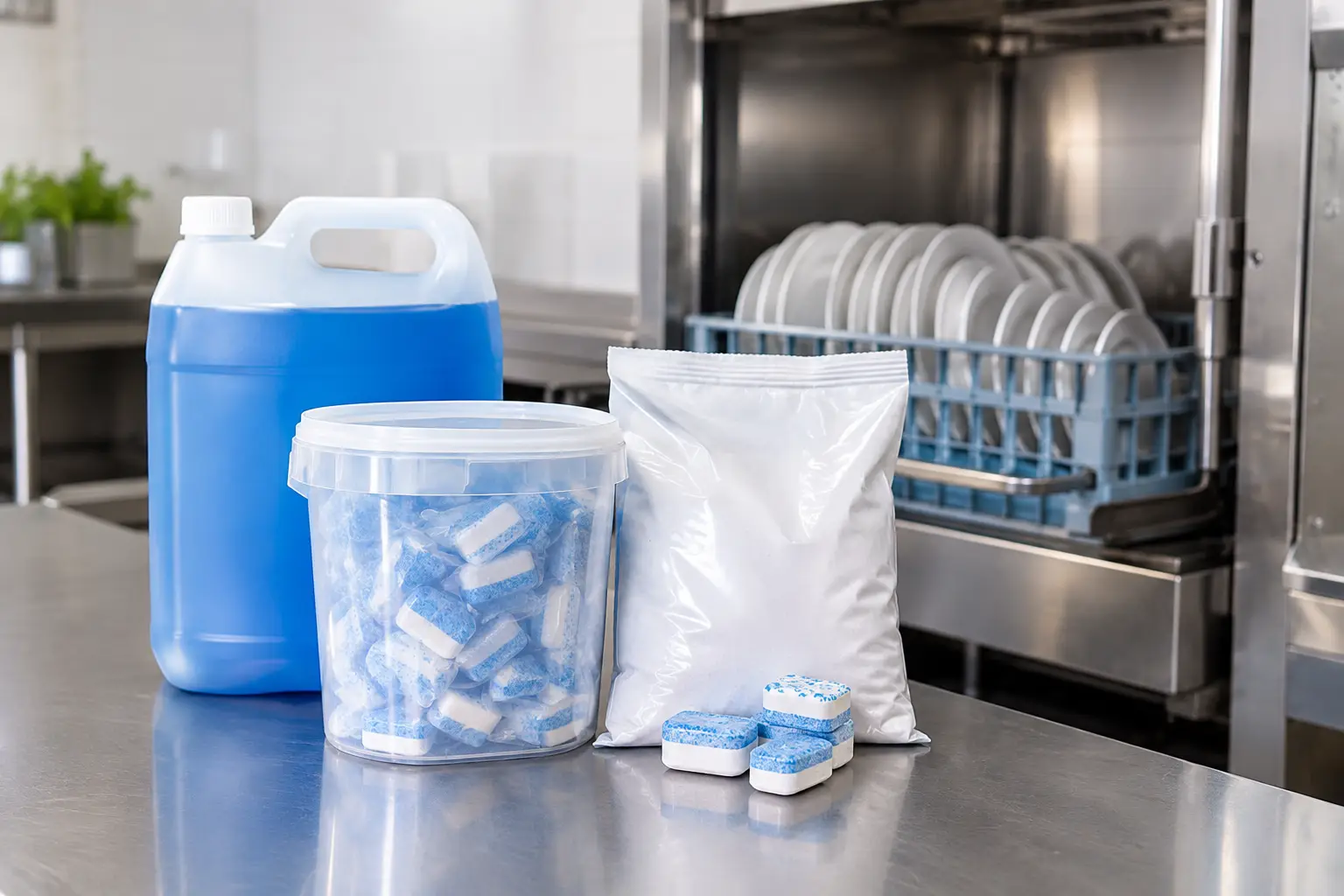
Liquid detergent is widely used in commercial kitchens because it can be dosed automatically and is practical for frequent, high volume operation. Powder may suit some applications, but requires careful measuring and dry storage. Tablet formats can be convenient in smaller settings, although they are less flexible where wash loads and water conditions vary through the day.
Water hardness is one of the biggest influences on results across the UK. Hard water contains minerals that can cause scale inside the machine and leave a film on glassware, crockery and cutlery. A detergent designed to cope with harder water can help reduce this effect, but it cannot replace sensible machine care or a functioning water softener where one is required.
Ask three practical questions before changing product: Is the machine correctly set up? Is the water supply hard, moderate or soft? Are the results poor across every item, or only on glasses, cutlery or heavily soiled plates? These answers narrow down whether the issue is chemical choice, dosing, rinse performance or maintenance.
Consider the items going through the machine
Most daily loads include durable ceramic plates and stainless steel cutlery, but kitchens often wash more sensitive items too. Decorated ware, aluminium, certain plastics, copper items and delicate glassware may need particular care. A strongly alkaline detergent can be excellent on greasy cookware yet unsuitable for materials that are prone to dulling, corrosion or surface damage.
For glass washing, clarity is the visible test. Lipstick marks, haze and a stale odour can undermine the impression of an otherwise well-run bar or dining area. Use a detergent intended for glassware and make sure staff remove debris, fruit pulp and cocktail garnishes before loading. The machine is designed to wash glasses, not act as a waste disposal unit.
Pots, pans and utensils with baked on food need realistic expectations. Even a professional grade detergent performs best when excess food is scraped away promptly and items are loaded so wash water can reach every surface. A short pre-soak may be more efficient than running the same item through multiple cycles.
Look beyond the price on the container
The useful cost is the cost per wash, not the upfront cost of a container. A cheaper detergent that needs overdosing, produces rewashes or leaves staff hand polishing glasses is rarely a saving. Concentration, recommended dose, wash volume and the consistency of the finish are more meaningful measures.
For operators managing several sites, standardising a suitable detergent can also simplify staff training, ordering and stock control. It gives teams a clear routine and makes it easier to identify when a machine fault or water issue is responsible for a change in performance. Reliable supply matters here. Running out of the specified product during a busy service encourages substitutions that can disrupt results.
Bulk purchasing can improve cost control where usage is regular, provided there is secure, appropriate storage. Chemicals should remain in their original labelled containers, protected from extreme temperatures and kept away from food. Do not decant detergent into unlabelled bottles. Clear identification is essential for safe handling and for meeting your site procedures.
Safe use is part of efficient use
Commercial dishwasher detergent is concentrated cleaning chemistry. Staff should follow the label instructions, use the correct dispensing equipment and wear the stated personal protective equipment when connecting containers or dealing with spills. Splashes to skin or eyes need prompt action in line with the safety information for that product.
A dosing line or pump that leaks, draws air or delivers inconsistent quantities can create both safety and performance problems. Include it in routine checks. Your team should also know where the product safety data and operating instructions are kept, particularly in kitchens with seasonal staff or regular shift changes.
Cleaning chemicals support hygiene, but they do not remove the need for good kitchen practice. Wash temperatures, final rinse performance, clean racks, correct loading and regular machine cleaning all contribute to hygienic outcomes. Follow your machine guidance and the procedures relevant to your operation, especially where food safety controls require recorded checks.
Keep the dishwasher working with the detergent
A machine can only deliver consistent results when its filters, spray arms and internal surfaces are clean. At the end of service, remove and empty filters, clear food debris, inspect the spray arms and wipe down accessible surfaces according to the manufacturer instructions. Leaving soil inside the machine overnight can lead to odours, blocked jets and poor wash coverage the following day.
Limescale deserves separate attention. Detergent is formulated for washing items, not for removing established scale from heating elements and internal pipework. Use an appropriate dishwasher descaler at the recommended intervals, particularly in hard water areas. This helps the machine heat and rinse effectively, protecting both performance and operating costs.
When results change suddenly, do not assume the detergent has failed. Check that the container is not empty, the dosing tube is properly seated, the water softener has been maintained and the machine is reaching its normal operating temperature. This simple sequence can prevent unnecessary product changes and reduce downtime during service.
For kitchens that need reliable stock and clear product guidance, KleanPro Supplies provides professional cleaning products suited to demanding day-to-day routines. Selecting the right detergent, maintaining the machine and setting a repeatable process gives staff one less issue to solve when the next rack arrives.