Newsletter Subscribe
Subscribe for news, offers and a welcome 5% discount on us.
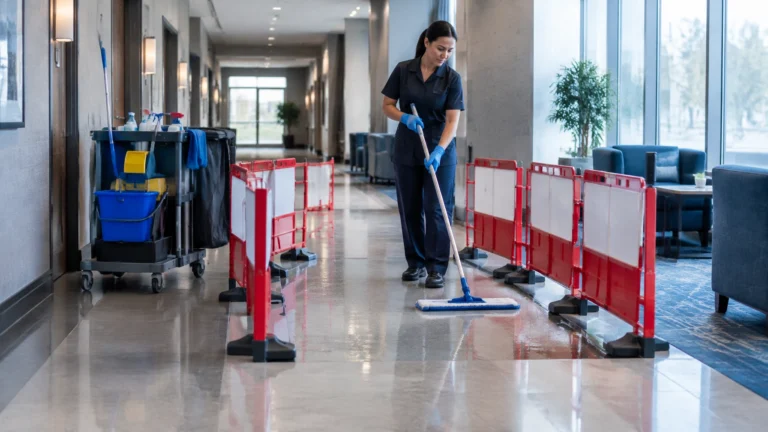
For facilities managers, housekeeping teams and trade buyers, choosing between glass cleaner and multi surface cleaner is less about finding one product that does everything and more about matching the product to the task. Glass needs to dry clear, without distracting smears. Desks, counters and other washable surfaces need a practical cleaner for everyday dirt and fingerprints.
A suitable multi surface cleaner may be approved for glass, but that does not make every general cleaner the best choice for windows and mirrors. Equally, a glass cleaner is not a substitute for the broader cleaning jobs carried out across a building.
For many workplaces, the dependable choice is to keep both to hand: a dedicated glass cleaner for clear finishes and a versatile surface cleaner for routine maintenance. Here is how to decide what your premises actually need.
A glass cleaner is formulated and presented for cleaning glass and similar surfaces such as mirrors, glazed panels and display units. Its main practical purpose is to remove marks and dry to a clear finish. This matters in reception areas, meeting rooms, hotel bedrooms and retail spaces, where streaks can be more noticeable than on an opaque surface.
A multi surface cleaner is intended for a wider range of everyday cleaning tasks. Depending on the product, this can include desks, counters, hard washable surfaces and some floors. A particular multi surface cleaner may also be approved for glass. The product label and instructions, rather than the name alone, determine which surfaces it is suitable for.
Formulations vary between products. In general, cleaning products use ingredients that help loosen or remove soil, but different tasks call for different performance priorities. On glass, a visible film can undermine the finish. On a desk or counter, the key need may be to remove fingerprints and everyday dirt efficiently. Check the product information for the actual surface claims and application directions.

Choose a glass cleaner when the finish is especially visible or when the cleaning task centres on windows, mirrors or glazed surfaces. Examples include:
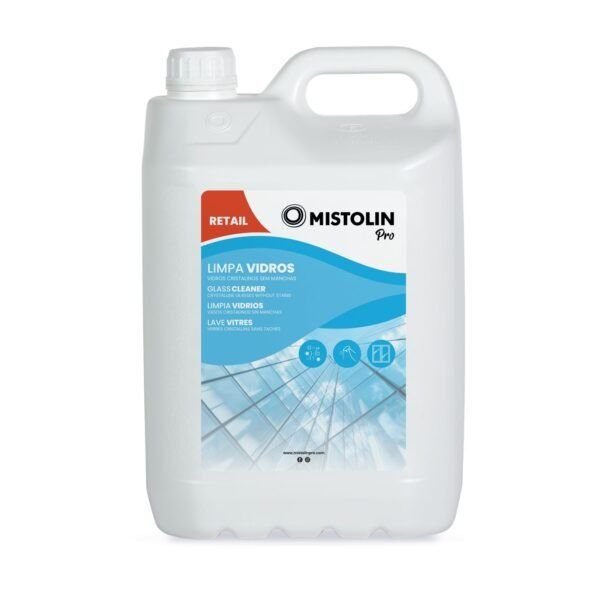
A dedicated product gives staff a clear, repeatable choice for these tasks. The Mistolin Pro Glass Cleaner 5L is described as a fast drying cleaner for windows, mirrors and glazed surfaces, with a streak free finish. Its five litre container is suited to sites that use glass cleaner regularly and want a larger format for routine replenishment.
A clean, soft cloth is an important part of the result. So is using the product as directed. Applying too much, wiping with a cloth that is already dirty, or allowing excess product to dry before it is buffed can contribute to streaks. A good procedure and the right product work together.
Multi surface cleaner is useful for the many washable surfaces that need regular attention throughout a building. Depending on the product instructions, that may include desks, counters, touch points, some hard floors and other suitable surfaces. It can help housekeeping and facilities teams maintain everyday cleanliness without reaching for a separate specialist product for each routine task.
The Mistolin Pro Multi Surface Cleaner 5L is described as suitable for hard washable surfaces and for tasks such as removing fingerprints and light grease. Its product information also lists glass and mirrors among its suitable uses. That makes it a possible option for some glass cleaning tasks, provided the label instructions and the needs of the surface are followed.
This distinction matters: one product may be approved for several surfaces, while another product with a similar name may not be. Do not assume that all multi surface cleaners can be used on glass, screens, coated panels or specialist finishes. Check the stated uses before adding a product to a cleaning schedule.
The terms can overlap in everyday conversation, but product use and instructions still matter. KleanPro Supplies offers both a Mistolin Pro Multi Surface Cleaner 5L and a Mistolin Pro All Purpose Cleaner 5L. They are not interchangeable simply because both can serve broad cleaning needs.
The multi surface cleaner is described as a spray and wipe product for hard washable surfaces, with glass included in its listed applications. The all purpose cleaner is a concentrated product with instructions to dilute it at one to three per cent and apply it with a mop or floor cleaning equipment. It is positioned for hard surfaces and routine cleaning, including floor care.
That difference has practical consequences. A product requiring dilution needs a consistent measuring method and clear staff instructions. A ready to use spray and wipe product has a different role in a cleaning trolley or workstation. Always follow the current label for the exact product. Do not transfer dilution or surface advice from one product to another.

“Glass” covers more than standard, untreated window panes. Buildings may include coated or tinted windows, privacy film, laminated panels, mirrors with sensitive backing and glass beside metal fittings or seals. A cleaner that is suitable for one surface may not be suitable for another.
Before use, check both the cleaning product instructions and any care guidance supplied by the glass or window manufacturer. For a surface with a coating or film, use only a method confirmed as suitable for that finish. Where the product guidance recommends it, test an inconspicuous area first. Avoid abrasive pads and powders, and do not let cleaning solution remain on adjacent materials longer than directed.
The Pilkington OptiShower care guidance recommends careful cleaning and notes that aggressive products can damage some coatings. It is a useful reminder that product selection needs to take account of the installed surface, not just the visible glass. You can read the guidance on the Pilkington website.
A product labelled for glass should still be checked against the particular surface and task. “Multi surface” does not mean universal compatibility, and “glass cleaner” does not automatically mean safe for every coating or fitting.
Using a dedicated glass cleaner and a broader surface cleaner can make cleaning routines easier to organise. Each product has a defined job, so staff can select an appropriate option without relying on a single cleaner for every task.
A simple arrangement might look like this:
| Cleaning task | Product type to consider |
|---|---|
| Windows, mirrors and prominent glazed panels | Glass cleaner, subject to surface guidance |
| Desks, counters and washable surfaces | Multi surface cleaner, if listed for that material |
| Hard floor maintenance | All purpose cleaner, diluted as instructed, if suitable for the floor |
| Specialist coated or filmed glass | The method approved for that specific surface |
For a hotel, that could mean glass cleaner for mirrors and entrance glazing, and a multi surface cleaner for suitable desks, counters and touch points. In an office, the same separation can help teams keep meeting room glass clear while maintaining desks and other washable surfaces. A retail team may use a specialist glass product for display areas and a general cleaner for approved counters and back of house surfaces.
Keeping the products separate can also reduce rework. Staff are less likely to use a general cleaner on a prominent glass surface where a dedicated streak free finish is important. A clear task and product match can support consistency across shifts and sites.
When selecting products for a building, consider how often each task occurs, which surfaces are present, and how staff will apply the cleaner. A larger container may suit high volume use, while a smaller format may be more convenient at a workstation. For concentrates, include the correct dilution in written instructions and provide a suitable measuring method.
For teams purchasing across multiple sites, standardising a small number of products can make stock control and staff training simpler. It is still important to retain products for distinct jobs where the finish or surface requires them. Review your cleaning schedule alongside product labels, so each task clearly identifies the approved product and method.
KleanPro Supplies stocks Mistolin Pro glass cleaner, multi surface cleaner and all purpose cleaner in five litre formats. The range is available through the KleanPro cleaning products shop. Trade pricing and bulk discounts can help buyers plan regular replenishment across larger requirements. KleanPro also offers a 30 day money back guarantee, providing reassurance when assessing a product for your needs. Check the relevant product and returns information for current terms.

In a workplace, product choice is only one part of safe cleaning. Read the label and current safety information, and make sure employees know the application method, any dilution requirement and the relevant precautions. Spraying can create mist, so consider how the product is applied and the ventilation available.
The UK Health and Safety Executive advises employers to identify hazards by reading product labels and safety data sheets, assess who may be exposed and how, and put suitable controls in place. Its guidance on carrying out a COSHH risk assessment is relevant to cleaning products used at work. The safety data sheet supports that process; it does not replace the workplace assessment.
Never mix cleaning products. Use suitable cloths and equipment, store products as directed and keep them in clearly labelled containers. Where there is uncertainty about compatibility, consult the manufacturer or supplier before applying the product to a sensitive or valuable surface.
If your building has windows, mirrors or customer facing glass where a clear finish matters, a dedicated glass cleaner is a sound choice. If staff also clean desks, counters, floors or other washable surfaces, a multi surface or all purpose product can cover those tasks when the product is approved for the relevant material.
For some everyday glass cleaning, a multi surface cleaner may be suitable where its instructions explicitly include glass. For polished, prominent or specialist glazing, a purpose made glass cleaner is often the more straightforward option. In practice, many facilities and housekeeping teams benefit from having both: one for a dependable glass finish and another for broader routine cleaning.
For product details, compare Mistolin Pro Glass Cleaner, Mistolin Pro Multi Surface Cleaner and Mistolin Pro All Purpose Cleaner. Check each product’s instructions against your surfaces and cleaning schedule, and contact KleanPro Supplies if you would like help identifying a suitable option for your site.