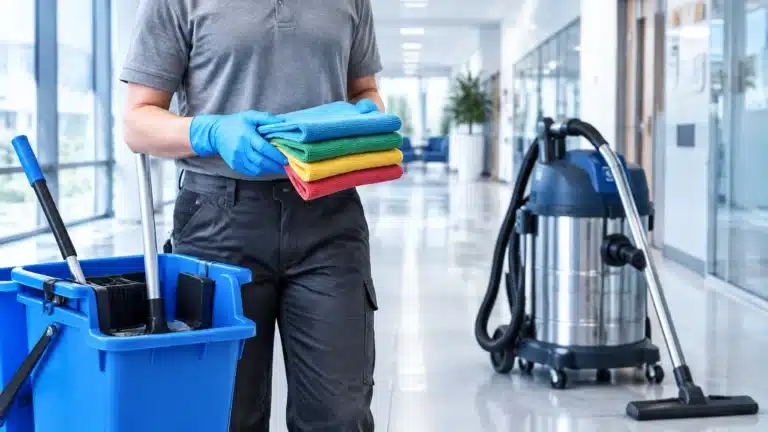


A bottle of washing up liquid, a container of machine detergent and a refill for a hand soap dispenser may all be cleaning supplies, but they are designed for different jobs. Using the right one helps remove soil effectively, supports good hygiene and avoids problems such as excessive foam, residue or damaged surfaces.
The distinctions matter in a busy commercial kitchen, where dishwashing happens continuously, and at home, where several products may be kept together under the sink. This guide explains what each product does, how manual and machine dishwashing differ, and where related products such as glass cleaner and heavy duty degreaser fit into a cleaning routine.
Detergent removes soil, but products are not interchangeable
Detergents are formulated to help loosen and lift soil so it can be removed with water and physical action. Many contain surfactants, which help water spread across a surface and help oily or greasy soil mix with rinse water. The exact formulation and strength depend on the intended task.
The Health and Safety Executive describes detergents as substances or mixtures containing soaps or other surfactants intended for washing and cleaning. That broad definition covers many products, but it does not mean they are interchangeable. A detergent made for a sink, dishwasher, floor or skin has a different purpose and may behave very differently when used elsewhere.

Manual dishwashing liquid is for the sink
Manual dishwashing liquid, often called washing up liquid, is used in a sink or bowl to wash crockery, cutlery, cookware and utensils by hand. Its surfactants help loosen grease and food residue. The action of a cloth, brush or sponge helps remove that soil, and clean water is used to rinse it away.
The amount of product, water temperature and soaking time should follow the label. Using more than needed does not automatically make washing more effective. It can create extra foam and leave more residue to rinse away.
Washing up liquid is not the same as a disinfectant. Detergent helps remove grease and visible soil, but it should not be assumed to kill bacteria or viruses. In food preparation areas, follow the cleaning schedule and product instructions. The Food Standards Agency advises that cleaning and disinfection are distinct tasks, and that labels should be checked for relevant disinfectant standards where disinfection is required.
Dishwasher detergent is made for a machine
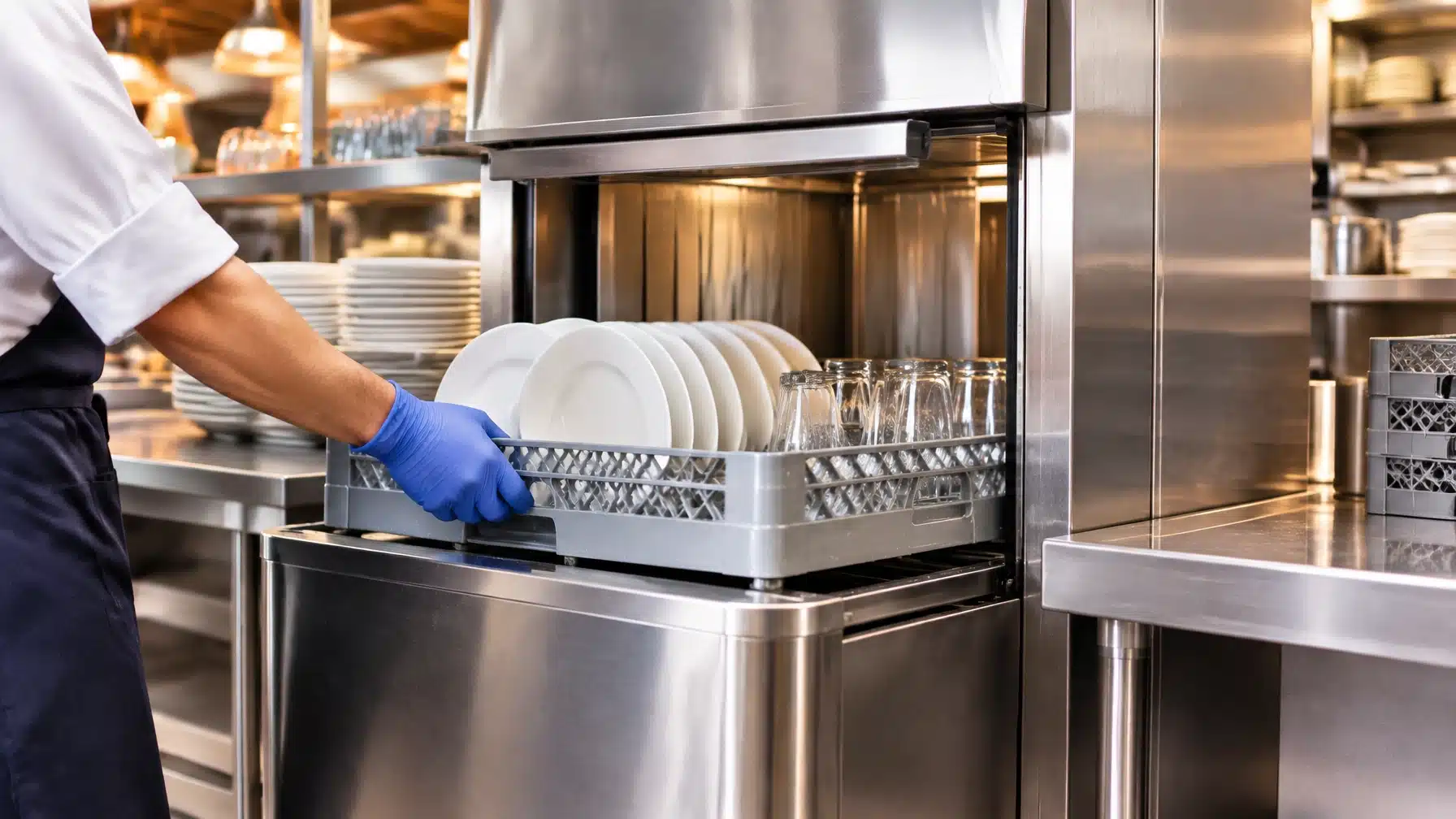
Machine dishwasher detergent is formulated for the conditions inside an automatic dishwasher. The machine controls the water flow, temperature, cycle time and detergent delivery. A suitable machine detergent provides the main cleaning action during the wash cycle, helping remove food soils from the load.
Machine products are generally designed to produce low foam. Manual washing up liquid is designed to make foam in a sink, so putting it in a dishwasher can create excessive suds. This can interfere with the machine’s operation and may cause leaks or poor washing results. Likewise, machine detergent is not suitable for hand washing dishes or skin.
In commercial settings, check the dishwasher manufacturer’s instructions as well as the detergent label. Some machines use automatic chemical dosing, while others have different arrangements. The specified detergent, dose and cycle conditions should be followed rather than guessed.
Dishwashers are commonly used for crockery because the machine can provide a controlled wash and rinse process. Effective results still depend on loading the machine properly, selecting the right cycle, maintaining the equipment and using products compatible with its design. There is no single final rinse temperature that applies by law to every commercial dishwasher. Use the operating conditions validated for the particular machine. A high temperature model may specify an 82°C final rinse, but this is not a universal statutory requirement for all commercial dishwashers.
Rinse aid helps water drain away
Rinse aid is a separate product used in many automatic dishwashers. It is typically dispensed during the final rinse. Its surfactant action helps water spread into a thin film and drain from crockery and glassware, rather than remaining as separate droplets.
That action can help items dry more quickly and reduce water marks or spotting. Rinse aid is not a replacement for machine detergent. It is not intended to remove substantial food soil, and it should not be poured into the wash chamber unless the machine instructions specifically direct this.
Water quality can affect drying and spotting. Hard water can leave mineral deposits as water dries, while very soft water may require different dosing. Some equipment guidance recommends considering water softening at around 100 parts per million calcium carbonate, but needs vary. Use the machine guidance and adjust dosing as directed, rather than treating any single water hardness figure as a rule for every site.
The Food Standards Agency cleaning guidance explains the importance of effective cleaning in food businesses. For equipment, the machine manufacturer’s instructions remain important: detergent, rinse aid, water conditions and cycle settings all work together.

Hand soap is for skin and handwashing
Hand soap is designed for washing hands at a suitable wash basin. It helps loosen soil and supports removal of transient contamination through rubbing and rinsing. Hands should be washed thoroughly and dried using an appropriate method.
Hand soap is not dishwashing detergent, and dishwashing detergent is not hand soap. A product made for dishes may be too harsh for frequent skin contact, while a hand soap is not formulated to clean crockery or kitchen equipment. Neither should be treated as a food surface disinfectant unless its label specifically supports that intended use.
In food businesses, handwashing is part of personal hygiene and should be supported by appropriate facilities and procedures. Staff should use the designated handwashing basin, not a food preparation sink. Employers should also consider frequent exposure to water and cleaning products, as repeated wet work and detergent contact can contribute to skin irritation or dermatitis. The HSE recommends assessing risks and following suitable controls where cleaning substances are used at work.

Cleaning and disinfection are separate steps
A common source of confusion is the assumption that any product labelled as a cleaner also disinfects. A cleaner may remove grease and visible soil without having a disinfectant claim. A disinfectant is designed to reduce microorganisms when used in the specified way.
The Food Standards Agency advises food businesses to clean effectively and to disinfect food areas and equipment after contact with raw food. Its guidance recommends checking product labels for either BS EN 1276 or BS EN 13697 when a disinfectant is required. The product must be suitable for the surface and purpose, and used at the stated dilution and contact time. If the label requires rinsing after use on food contact surfaces, that instruction should be followed.
A practical approach is to remove food debris, clean with an appropriate detergent, rinse where required, and then disinfect when the procedure calls for it. A dishwasher cycle has its own washing and rinsing stages. Do not assume that adding rinse aid disinfects crockery, or that a hand dishwashing detergent replaces a disinfectant step in a food hygiene procedure.
Glass cleaner and all purpose cleaner have different strengths
Glass cleaner is intended for glass and similar smooth surfaces, such as windows, mirrors and display panels. Its formulation is designed to lift fingerprints and light dirt while leaving little visible residue when used as directed. The result can be a clearer, less streaked finish.
An all purpose cleaner is intended for a broader range of compatible surfaces and routine cleaning tasks. It can be a practical option for everyday marks on desks, counters and other washable surfaces, but compatibility should always be checked. “All purpose” does not mean suitable for every material or every task. Some surfaces may be damaged by particular ingredients, and a cleaner should not be assumed to disinfect unless the label says so.
For either type, follow the product directions and avoid spraying near food, electrical equipment or people. Food preparation surfaces require products suitable for their intended use and any rinsing instructions on the label.
A heavy duty degreaser is for stubborn grease
A heavy duty degreaser is intended for tougher grease and oil than a routine surface cleaner is usually designed to handle. It may be used on compatible kitchen equipment, work areas or floors where grease has built up. The name describes the cleaning task, not a guarantee that it can be used on every surface.
Before use, check the label for suitable materials, dilution, contact time and rinsing requirements. Stronger formulations may damage certain coatings, metals or finishes. On food contact surfaces, follow the product’s directions carefully and rinse if instructed. A degreaser removes greasy soil; it should not automatically be treated as a disinfectant.
This distinction can help when choosing professional cleaning products for a site. A routine all purpose cleaner, a glass cleaner and a heavy duty cleaner each address different soils and surfaces. Using a specialised product where it is needed, and a milder suitable cleaner for everyday work, can make a cleaning schedule easier to follow.

Drain products are not surface cleaners
A drain cleaner unblocker is intended for a blockage or build up within a drain or waste pipe. It is not intended for dishwashing, handwashing or cleaning a worktop. Products designed to clear blockages may be corrosive, so the label and safety information should be checked before use. Never mix cleaning products, and take particular care to keep drain products away from food areas and other chemicals.
Biological drain maintenance products are different from products intended to clear an immediate blockage. Depending on the formulation, they may use enzymes or microorganisms to act on organic material over time. They are generally associated with ongoing maintenance rather than an instant solution to every obstruction. Follow the individual instructions, including any advice on use alongside other chemicals.
Choose by task, then check the label
For a straightforward choice, start with the job:
- Use manual dishwashing liquid for washing dishes by hand.
- Use machine detergent in the dishwasher, with the machine’s specified dose and cycle.
- Use rinse aid in the appropriate dishwasher dispenser to support drainage and drying.
- Use hand soap for handwashing at a designated basin.
- Choose glass cleaner for glass, and an all purpose cleaner for compatible routine surfaces.
- Use a heavy duty degreaser only where the soil and surface call for it.
- Reserve drain products for drains and pipes.
In a workplace, choosing the product is only part of the task. Staff need clear instructions for dilution, dosing, contact time, storage and protective equipment. The HSE guidance on safe use of cleaning substances in hospitality advises employers to assess risks, provide information and training, and keep substances stored and labelled appropriately. The HSE detergents guidance also explains detergent labelling and related requirements.
For food businesses, keep cleaning products away from food and use the cleaning schedule to specify what needs cleaning or disinfecting, how often, and which product is appropriate. The GOV.UK cleaning guidance for food businesses provides further advice.
Whether you manage a kitchen, an office or a home, selecting cleaning supplies by intended use makes routine work more consistent. It also reduces the likelihood of using the wrong formulation on dishes, hands, glass or equipment. For trade cleaning supplies and janitorial supplies, product categories are listed in the online shop.