

Table of Contents
ToggleHow The Iran Middle East War Is Quietly Raising The Price Of Cleaning
Chemical Supply Chain Disruption: Is the bottle of disinfectant on your shelf a casualty of war?
Yes, and the supply chain connecting Middle East oil fields to your cleaning products is more fragile than most people realise.
The Strait of Hormuz: The World’s Most Dangerous Chokepoint
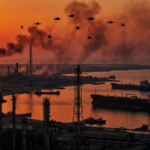
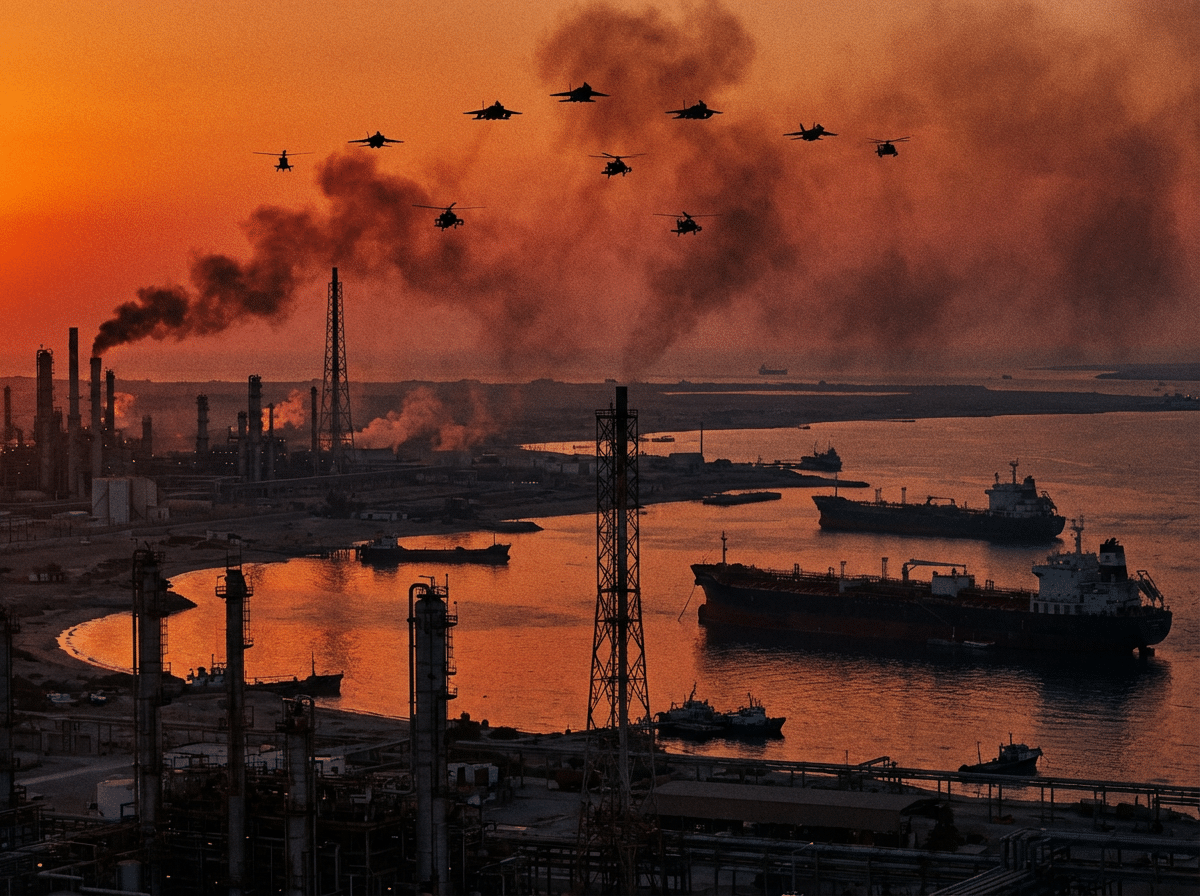
On 2 March 2026, Iran’s Islamic Revolutionary Guard Corps formally declared the Strait of Hormuz closed, following a joint U.S.-Israeli military campaign launched on 28 February targeting Iran’s nuclear programme and missile infrastructure. The consequences were immediate and global.
The Strait of Hormuz is not just a geopolitical flashpoint. It is the single most critical artery in the global chemical supply chain. According to the U.S. Energy Information Administration (EIA), approximately 20 million barrels of crude oil pass through it every day, roughly 20% of all oil consumed worldwide. An additional 20% of global LNG exports use this corridor. Saudi Arabia, the UAE, Iraq, Kuwait, Qatar and Iran collectively account for roughly 80% of OPEC’s output, and all depend on this narrow passage.
When it closes, the world’s cleaning products feel it first.
(Source: U.S. Energy Information Administration | Octus Intelligence, March 2026)
From Crude Oil To Your Cleaning Bottle: The Chemical Chain
Most people do not associate a bottle of floor cleaner with a barrel of crude oil. But the connection is direct and measurable.
The petrochemical value chain begins with crude oil and natural gas. Through refining and steam cracking, these produce two core chemical families:
- Olefins – ethylene (CH2=CH2), propylene (CH3CH=CH2), C4 streams
- Aromatics – benzene (C6H6), toluene (C7H8), xylenes (C8H10)
These base chemicals flow downstream into the ingredients that make up virtually every cleaning and hygiene product on the market.
The 5 Most Impacted Chemicals In Cleaning Products
- Surfactants (Linear Alkylbenzene Sulfonates – LAS)Derived from benzene + kerosene (both petroleum-based), surfactants are the active cleaning agents in detergents, dishwashing liquids and floor cleaners. Iran and the Gulf region supply a significant share of the benzene feedstock used in European surfactant manufacturing. Disruption to Hormuz shipping raises benzene prices and tightens LAS supply.
- Isopropyl Alcohol – IPA (C3H8O)IPA is the primary ingredient in hand sanitisers, surface disinfectants and antibacterial sprays. It is derived from propylene, a direct by product of crude oil refining. Any spike in crude prices or refinery disruption in the Gulf directly inflates IPA production costs.
- Ethylene Oxide (C2H4O)Used to produce non-ionic surfactants and ethoxylates, key ingredients in hospital grade disinfectants and commercial cleaning products. Ethylene oxide is derived from ethylene, which requires crude oil feedstock. Iran is a notable regional producer of ethylene based petrochemicals.
- Sodium Hypochlorite (NaOCl)The active ingredient in bleach and disinfectants. While chlorine-based, its production requires significant energy inputs, and energy prices across Europe have surged 30%+ since the Hormuz closure, according to Bloomberg (March 2026). Higher energy costs mean higher bleach costs.
- Methanol (CH3OH)Iran is one of the world’s top methanol exporters. Methanol is used as a solvent in cleaning formulations and as a feedstock for producing formaldehyde-based preservatives in hygiene products. The conflict has directly disrupted Iranian methanol exports, tightening global supply. (Source:Chemicals United, February 2026)
The Red Sea Multiplier Effect
The Hormuz closure does not stand alone. Simultaneously, Houthi controlled Yemen resumed attacks in the Red Sea in early March 2026, forcing global shipping to reroute around Africa’s Cape of Good Hope, adding 3,000 to 3,500 nautical miles and 10 to 14 days to Asia or Europe routes.
The last time this happened (late 2023), the results were stark:
- Container freight rates to Europe tripled
- Marine insurance premiums jumped from $10,000-20,000 to $150,000-500,000 per voyage
- Chemical freight rates became three times more expensive
- Extra cost per container: $200-400 per TEU
(Source: Chemicals United, 2026)
For cleaning product manufacturers sourcing raw materials from Asia or the Middle East, these are not abstract numbers. They translate directly into higher production costs, longer lead times, and ultimately higher prices on the shelf.
What This Means For The Cleaning And Hygiene Industry
Europe’s chemical sector was already under strain before this conflict, high energy costs, plant closures, and post pandemic supply chain fragility had left little buffer. The Hormuz closure has removed what remained.
Key industry impacts include:
- Raw material price inflation – surfactant and solvent feedstock costs rising sharply
- Product shortages – particularly in hospital grade disinfectants and IPA based sanitisers
- Longer lead times – manufacturers facing 2-4 week delays on chemical deliveries
- Reformulation pressure – brands exploring bio based or alternative source ingredients
- Price pass-through to buyers – B2B cleaning supply contracts facing renegotiation
For facilities managers, contract cleaners, hotels, care homes and schools, the businesses that rely on consistent, affordable janitorial and hygiene supplies, this is not a temporary blip. Analysts at Wood Mackenzie warn that a prolonged Hormuz disruption could push oil above $100 per barrel, with cascading effects across the entire chemical value chain. (Source: Wood Mackenzie, 2026)
The Resilience Lesson
Wars end. Supply chains adapt. But the businesses that survive disruption are those that act before shortages hit, not after.
The cleaning and hygiene industry has learned this lesson before, during COVID-19, when IPA and sodium hypochlorite disappeared from shelves overnight. The Iran conflict is a slower moving version of the same shock, and the window to prepare is still open.
Sourcing from suppliers with EU based manufacturing, diversified supply chains, and certified quality standards is no longer a premium option. It is a business necessity.
Sources: U.S. Energy Information Administration (eia.gov) | Octus Intelligence (octus.com) | Chemicals United (chemicalsunited.com) | Wood Mackenzie (woodmac.com) | Bloomberg | AP News
Did this article open your eyes to how global events affect your everyday cleaning costs?
Share it with your network, subscribe for more industry insights, and leave a comment below. We want to know how your business is responding to the supply chain disruption.